Key Takeaways
- You generally have two years to file a pedestrian-injury or wrongful-death claim under O.C.G.A. § 9-3-33; property-damage claims from the same crash carry four years under O.C.G.A. § 9-3-32.
- Buford Highway (US 23 / GA 13) through Chamblee is a seven-lane arterial with long gaps between signalized crossings — nationally documented as one of metro Atlanta's most dangerous corridors for people on foot.
- Georgia drivers owe a continuing statutory duty of due care to avoid pedestrians (O.C.G.A. § 40-6-93), even where the pedestrian is crossing mid-block.
- You can still recover if you were less than 50% at fault, though your award is reduced by your assigned share (O.C.G.A. § 51-12-33).
- If the driver fled or carried no insurance, your own UM/UIM coverage (O.C.G.A. § 33-7-11) often becomes the primary path to compensation.
- Corridor injury and wrongful-death suits are typically filed in the State Court or Superior Court of DeKalb County in Decatur.
- Georgia Auto Law offers a free consultation and works on contingency — no fees unless we win.
Chamblee Buford Highway Pedestrian Accident Lawyer: A Guide to the Corridor's Deadliest Stretch
If you or someone you love was struck while walking Buford Highway through Chamblee, the answer that matters most in the first 48 hours is this: under Georgia law you generally have two years from the date of injury to file a claim (O.C.G.A. § 9-3-33), and the driver who hit you owes you a legal duty of care even if you were crossing outside a marked crosswalk. A Chamblee Buford Highway pedestrian accident lawyer who knows this corridor will move quickly to preserve intersection video, pull DeKalb County crash reports, identify every source of insurance, and push back on the insurer's reflexive claim that the pedestrian was the one at fault.
Last reviewed: 2026-07-22
The Deadliest Stretch: Which Segments of Buford Highway Through Chamblee Take the Most Lives
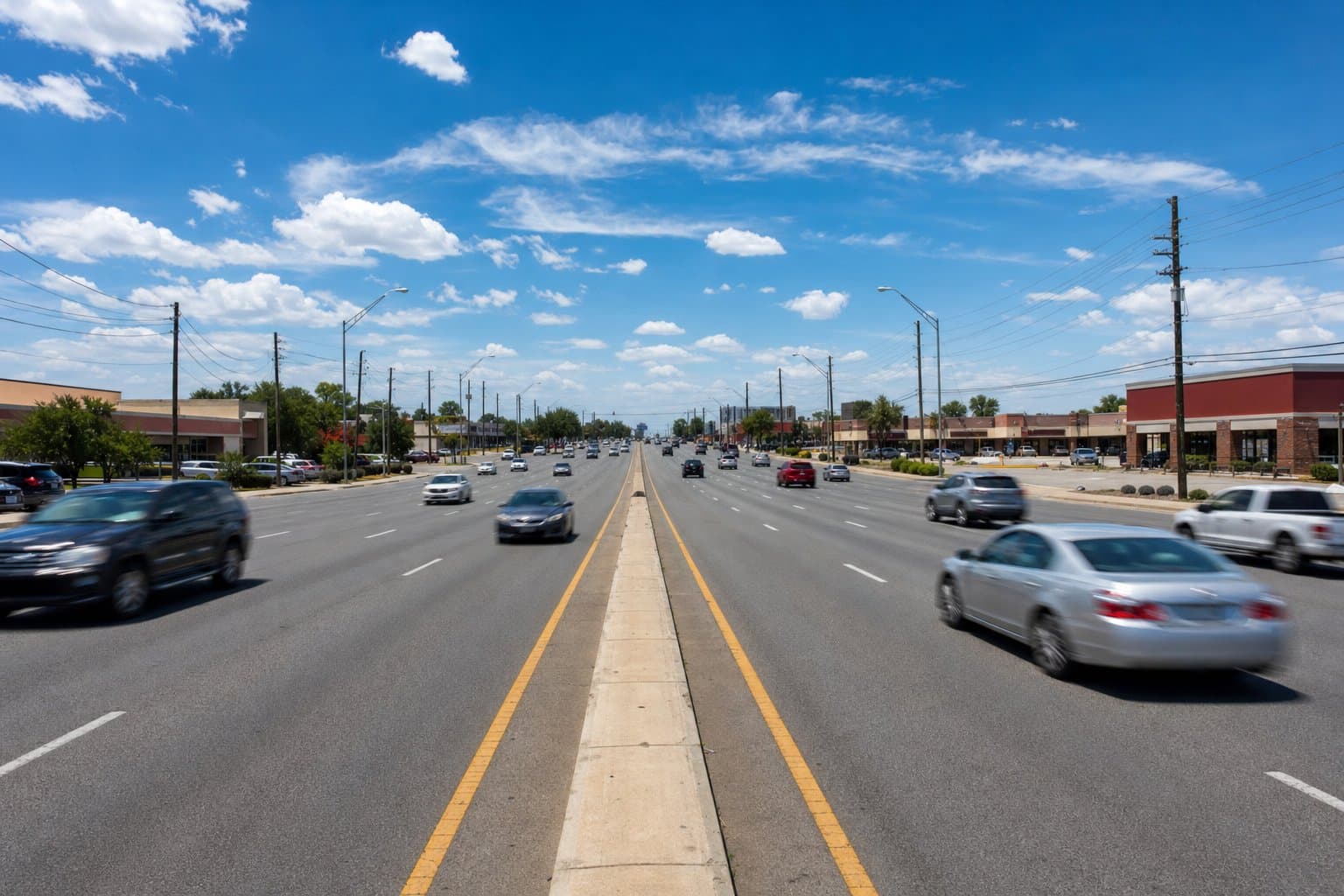
The mile of Buford Highway roughly between Chamblee-Tucker Road and Shallowford Road is where our office sees the heaviest concentration of pedestrian strikes in DeKalb County. On that stretch the roadway widens to seven lanes, the posted speed jumps to 45 mph, and the distance between signalized crossings sometimes exceeds a quarter mile. Add dense strip-retail on both sides — Plaza Fiesta, family markets, phone stores, and taquerías that draw constant foot traffic — and you have the classic ingredients of a fatal-strike corridor.
Move a mile north toward the Chamblee MARTA Station and the pattern repeats: transit riders funnel across Buford Highway to catch northbound trains, but the nearest marked crosswalk is often on the far side of a long block. Farther north, at Buford Highway and Clairmont Road, high-turn volumes into and out of the surrounding commercial parcels drive left-turn-across-path strikes. According to Georgia's Governor's Office of Highway Safety, Georgia pedestrian fatalities have climbed steadily over the past decade, and the DeKalb Buford Highway corridor is repeatedly cited in state and regional safety reviews as a top-priority segment. If a strike on this stretch has upended your family, start with an experienced Georgia pedestrian accident lawyer — the case-building steps below only work if they start early.
Why the Corridor's Design Creates Predictable, Preventable Fatalities
Roadway geometry, not pedestrian recklessness, drives most of the deaths on this corridor. Seven travel lanes create a crossing distance that pushes even a healthy adult past the 6-second walk-signal timing at signalized crossings. The mid-block gaps between marked crossings force transit riders and shoppers to choose between walking hundreds of extra yards or crossing where traffic is moving at highway speeds. And the corridor's raised commercial curb cuts introduce dozens of conflict points where turning drivers do not expect anyone on foot.
Speed is the decisive amplifier. According to AAA Foundation for Traffic Safety impact-speed research, a struck pedestrian's average risk of death reaches roughly 50% at about 42 mph — a speed a Buford Highway driver can easily be traveling in the posted 45 mph limit. According to NHTSA, 7,388 pedestrians were killed nationwide in 2021, the highest annual total since 1981, and the multi-lane urban arterial is the single most over-represented environment in those deaths. According to CDC transportation-safety data, pedestrians are roughly 1.5 times more likely to be killed per trip than passenger-vehicle occupants. Every one of those national trends is concentrated on the exact kind of road Chamblee residents cross every day.
The pattern is nationally documented. According to Smart Growth America's Dangerous by Design research, metro Atlanta consistently ranks among the most dangerous large U.S. metro areas for people walking, with Buford Highway repeatedly named among the region's most hazardous corridors. The foot traffic exposed to it never lets up: transit riders crossing to the Chamblee MARTA Station, families near Dresden Elementary School, and people walking to "Doc" Manget Memorial Aviation Park and Shallowford Park, while feeder routes like Chamblee Tucker Road (posted at 45 mph) push fast through-traffic into those same blocks. The corridor also continues north into Doraville, so many crashes involve drivers moving between the two cities — see our Doraville car accident lawyer page for that overlap.
Georgia's Pedestrian Right-of-Way Laws on Buford Highway
Pedestrians in a marked or unmarked crosswalk at an intersection generally have the right of way under O.C.G.A. § 40-6-91. When someone crosses outside a crosswalk, O.C.G.A. § 40-6-92 requires the pedestrian to yield — but that does not erase the driver's separate responsibility to look, slow, and avoid.
That separate responsibility is spelled out in O.C.G.A. § 40-6-93, which imposes a continuing duty on every driver to exercise due care to avoid hitting a pedestrian, to sound the horn when necessary, and to use proper caution around anyone who appears confused, impaired, elderly, or otherwise unable to move quickly. On a seven-lane, 45-mph arterial with quarter-mile gaps between crossings, a jury can readily find that a speeding or distracted driver breached that duty even where the pedestrian crossed mid-block. That is why the insurer's opening line — "he stepped out from between parked cars" — rarely survives the reconstruction our team runs on these cases. For a deeper look at these rules, see our guide to the Georgia pedestrian laws and regulations and our explainer on whether jaywalking is actually illegal in Georgia.
Have Questions About Your Case?
Get a free consultation with an experienced Georgia accident attorney.
Comparative Negligence and the "Jaywalking" Playbook
Even when fault is shared, recovery is still on the table. Georgia follows modified comparative negligence under O.C.G.A. § 51-12-33: you can recover as long as you are less than 50% at fault, and your award is reduced by your assigned percentage. A pedestrian found 20% at fault for a $500,000 claim still recovers $400,000. The insurer's whole strategy is to push your share past 50% — because at that line, recovery drops to zero.
That is exactly why speed and visibility evidence matters so much on this corridor. The difference between 30 mph and 42 mph — the AAA Foundation threshold above — is often the difference between a survivable injury and a fatal one, and proving the driver's true speed almost always shifts fault back where it belongs. Our breakdowns of vehicle speed and pedestrian injury and the pedestrian survival rate at 40 mph show how reconstruction turns a "he came out of nowhere" defense into a documented speeding case. Chamblee has extensive private CCTV coverage along Buford Highway (gas stations, quick-serve restaurants, storefront cameras), and the 72-hour window to preserve that footage is one of the reasons calling a Chamblee Buford Highway pedestrian accident lawyer the same day matters.
Deadlines, Venues, and Claim Types at a Glance
The controlling deadline for almost every Buford Highway pedestrian claim is the two-year personal-injury and wrongful-death limitations period under O.C.G.A. § 9-3-33. Miss it, and the claim is generally barred no matter how strong the liability picture is. A few other rules govern which court hears the case and which insurance policies apply.
| Situation | Governing rule | Deadline or key point |
|---|---|---|
| Pedestrian injury claim | O.C.G.A. § 9-3-33 | Generally 2 years from date of injury |
| Wrongful-death claim | O.C.G.A. § 51-4-2 + § 9-3-33 | 2 years; surviving spouse / children hold the claim |
| Driver fled or uninsured | O.C.G.A. § 33-7-11 | Pursue your own UM/UIM coverage promptly |
| MARTA bus involved | Governmental ante-litem notice required | Far shorter than 2 years — act immediately |
| Shared fault | O.C.G.A. § 51-12-33 | Recover if less than 50% at fault |
| Property damage only | O.C.G.A. § 9-3-32 | 4 years |
Personal-injury lawsuits from the Chamblee corridor are filed in the State Court of DeKalb County; higher-value injury and wrongful-death actions proceed in the Superior Court of DeKalb County — both housed at the DeKalb County Courthouse in Decatur. For city- and county-level guidance, see our Chamblee car accident lawyer and DeKalb County car accident lawyer pages. Fatal-crash claims often layer additional theories; see our guide to fatal pedestrian accidents in Georgia for the specifics on how surviving-family recovery works under Georgia's "full value of the life" standard.
How a Chamblee Buford Highway Pedestrian Accident Lawyer Builds Your Case
The first move on a corridor strike is evidence preservation. Within 72 hours we identify and issue letters to every storefront, gas station, and quick-serve restaurant with a camera pointing at the roadway; we pull the DeKalb County or Chamblee Police Department crash report; and we send a spoliation letter to the driver's insurer demanding the vehicle be held for download of any event-data-recorder module. On a seven-lane arterial, physical scene evidence — skid marks, glass debris, impact points on the vehicle — is often gone within days.
Mark Wade, Managing Partner of Georgia Auto Law, puts it directly for corridor cases: "The single most damaging thing an injured pedestrian can do is give the driver's insurer a recorded statement before talking to a lawyer — on a road like Buford Highway, one off-hand sentence about not looking gets turned into a 50% comparative-fault argument that wipes out the claim entirely." That is why we run every client interaction with the insurer through counsel from day one, and why our medical-records workflow pairs treating physicians with independent life-care planning for the catastrophic strikes this corridor produces — severe corridor strikes are routinely transported to Grady Memorial Hospital, the region's only Level I trauma center, and those records anchor the damages case.
Insurance Sources Beyond the At-Fault Driver
Your own uninsured/underinsured motorist coverage under O.C.G.A. § 33-7-11 frequently becomes the primary source of recovery when the driver flees or carries only the Georgia liability minimum of $25,000 — even as a pedestrian, your own auto policy can apply because the coverage follows the person, not the vehicle. A driver who hits a pedestrian and leaves also violates O.C.G.A. § 40-6-270, which requires every driver in an injury crash to stop and render aid — and the resulting criminal record becomes powerful evidence for the civil claim. We handle these as hit-and-run accident claims and uninsured motorist accident claims.
Commercial insurance is the other underexplored source. Buford Highway carries substantial delivery-truck, contractor-van, and rideshare traffic, and a strike caused by a driver on the clock often triggers a commercial liability policy several multiples larger than a personal auto policy. If the driver was engaged in interstate freight, our Georgia truck accident lawyer team applies federal motor-carrier evidence-preservation rules to protect ELD and driver-log data before it is overwritten. Where the strike is fatal, the estate's claim runs through our Georgia wrongful death lawyer practice under O.C.G.A. § 51-4-2.
If Your Crash Happened West of Atlanta (Cobb County Corridors)
Buford Highway is a DeKalb County corridor, but our office handles pedestrian and auto cases across the metro. If your crash actually happened on the Cobb County side — for example on South Cobb Drive (GA 280) through Fair Oaks, or on the Marietta or Smyrna stretches feeding I-75 — venue lies not in DeKalb but in the State Court or Superior Court of Cobb County in Marietta, with Cobb County Magistrate Court handling small-claim and pre-suit matters up to $15,000. For that geography, see our Marietta car accident lawyer, Marietta wrongful death lawyer, and Marietta truck accident lawyer pages, plus our Marietta service area and Smyrna service area hubs. Big-rig strikes on that corridor most often route through our tractor-trailer crash claims case-type page, and general-liability car crashes through our Georgia car accident lawyer pillar.
Frequently Asked Questions
How long do I have to file a Buford Highway pedestrian injury claim in DeKalb County?
You generally have two years from the date of the crash to file a personal-injury or wrongful-death lawsuit under O.C.G.A. § 9-3-33. Waiting is dangerous even if the deadline is far away, because Chamblee corridor evidence — private security video, physical scene marks, vehicle event-data-recorder downloads — routinely disappears within days.
Can I still recover if I was crossing outside a marked crosswalk?
Yes, in most cases. Georgia's O.C.G.A. § 40-6-93 imposes a continuing duty on every driver to exercise due care to avoid hitting a pedestrian, even one crossing mid-block. Whether you recover — and how much — depends on comparative-fault analysis under O.C.G.A. § 51-12-33: you can still recover as long as your share of fault is less than 50%.
What if the driver who hit me on Buford Highway fled the scene?
Georgia treats hit-and-run in an injury crash as a serious criminal offense, and Chamblee has extensive private surveillance coverage that often identifies the vehicle. Even if the driver is never found, your own uninsured motorist coverage under O.C.G.A. § 33-7-11 typically applies because the coverage follows you, not the vehicle. Report the crash to Chamblee Police or DeKalb County Police the same day so the UM claim isn't later disputed on notice grounds.
Which court will my case be filed in?
Personal-injury cases arising from Chamblee crashes are typically filed in the State Court of DeKalb County in Decatur; wrongful-death and higher-value injury cases go to the Superior Court of DeKalb County. Traffic citations from the crash may be handled in Chamblee Municipal Court.
What if a MARTA bus was involved in the crash?
Any claim touching MARTA is subject to a governmental ante-litem notice that is far shorter than the standard two-year window, and blowing that notice bars the entire claim regardless of how strong liability is. If a MARTA vehicle is anywhere in the collision sequence — even as a following vehicle — treat the deadline as immediate and call counsel that day. Our MARTA bus accident claims team treats these notice deadlines as urgent from day one.
Does the driver's insurance pay for my medical bills as they come in?
Generally no. The at-fault driver's liability insurer typically pays only at the end, in a lump-sum settlement or judgment. In the interim, your health insurance and MedPay coverage from your own auto policy — plus, in a commercial-vehicle strike, the commercial carrier's medical-payments coverage — are the usual sources.
How much does it cost to hire Georgia Auto Law for a Buford Highway pedestrian case?
The consultation is free and representation is on contingency: we advance case costs and take a percentage only if we recover for you. If we don't win, you pay no attorney's fee. Call (404) 662-4949 to start.
Talk to a Chamblee Buford Highway Pedestrian Accident Lawyer Today
If you or a family member was struck on the Chamblee stretch of Buford Highway, call Georgia Auto Law at (404) 662-4949 for a free, no-obligation consultation. We move on evidence within hours, not weeks, and we take these cases on contingency — you pay nothing unless we recover. From our office at 120 Ottley Dr NE in Atlanta, we serve DeKalb, Fulton, Cobb, and the surrounding metro counties.