
Key Takeaways
- Georgia personal-injury cases — including those arising from this article's topic — are governed by the two-year statute of limitations under O.C.G.A. § 9-3-33.
- Georgia uses modified comparative negligence under O.C.G.A. § 51-12-33: a plaintiff who is 50% or more at fault recovers nothing.
- According to the State Bar of Georgia, personal-injury matters are one of the most common civil case types filed in Georgia state and superior courts.
- Insurance disputes — including UM/UIM coverage — are governed by O.C.G.A. § 33-7-11, which sets minimum coverage requirements and policy-stacking rules.
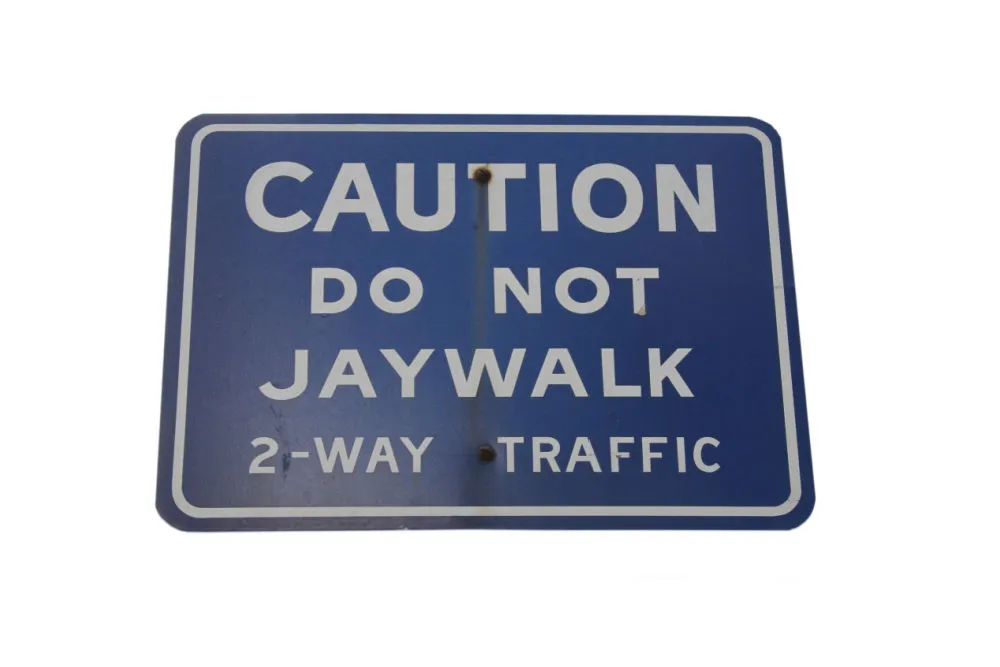
In Georgia, it is illegal to cross the street outside of a designated crosswalk. This is known as the jaywalking law, and a violation is a misdemeanor normally punished by a fine. In this blog post, we will examine the Georgia laws regarding the jaywalking law and the consequences for violating them.
Read on to ensure you understand the rules of the road and remain safe when crossing the street in Georgia.
What Is Jaywalking?
When it comes to pedestrian safety, few things are more dangerous than jaywalking. Jaywalking is the practice of crossing a road at an unsafe location rather than at a designated crosswalk, and doing so can be illegal in certain states, such as Georgia. Crossing a street illegally can lead to a citation and a fine.
The fine is rarely the real cost. If you are struck while crossing outside a crosswalk, the violation becomes evidence of your share of fault, and Georgia apportions damages under O.C.G.A. § 51-12-33 — your recovery is reduced by your percentage of fault and lost entirely at 50%. That does not bar a claim: drivers owe an independent duty of due care under O.C.G.A. § 40-6-93. However, understanding the local laws and regulations regarding jaywalking can help people stay safe while crossing roads.
In Georgia, for example, jaywalking may include crossing a street on red light signals or not utilizing a marked crosswalk. Penalties for being caught jaywalking vary between cities and counties, ranging from warnings to fines. It’s important for pedestrians to know the local laws in their area so they can make smarter decisions when it comes to crossing roads.
By knowing the risks involved with jaywalking, people can better protect themselves from potential dangers while on foot.
How To Understand The Law Of Jaywalking In Georgia?
Crosswalks are a vital part of pedestrian safety, and it’s important to understand the law surrounding their use. In Georgia, crossing the street unlawfully is known as jaywalking. This refers to crossing a road outside of a marked crosswalk or within an unmarked crosswalk at an intersection where there is no traffic signal. Crossing the street at any other time without a walk signal or authorization from law enforcement is also considered jaywalking.
If you’re caught jaywalking in Savannah, GA, you will likely be subject to a fine of $54. No pedestrian may abruptly leave a curb or other place of safety and walk or run into the path of a vehicle that is so close that it is impossible for the driver to yield. The driver of any other vehicle approaching from behind shall not overtake and pass any vehicle that is stopped at a marked crosswalk or at any unmarked crossing at an intersection to allow a pedestrian to cross the roadway.
There are limited circumstances in which crossing outside a crosswalk is not penalised — for instance where no crosswalk is available within a reasonable distance. Even then, the pedestrian must yield to traffic.
Extra caution is owed to children: drivers must exercise proper care around any child on or near a roadway, whether or not the child is using a crosswalk.
When crossing streets, remember that in Georgia a driver must yield to a pedestrian in a marked or unmarked crosswalk — but outside a crosswalk the pedestrian must yield to traffic. Always use caution when using crosswalks – even if they’re perfectly safe – and keep in mind that breaking the law can have serious consequences for your own safety and for that of other pedestrians on Georgia roads.
What Are The Laws Surrounding Pedestrians Crossing Roads In Georgia?
Pedestrians in Georgia have rights and responsibilities of their own when crossing roads. For example, jaywalking is unlawful in Georgia and is normally punished by a fine. Additionally, local ordinances may also have additional regulations governing pedestrian crossings.
There are a few things you can do to stay safe and avoid an accident when crossing roads.
First, be aware of your surroundings at all times. Make sure that you know where the traffic lights are located and how long they will stay red or green before making your move.
Second, use crosswalks and pedestrian signals whenever possible — they indicate when it is safe to cross.
Third, be aware of your surroundings when walking – never walk alone at night or in poorly-lit areas.
Finally, keep a close eye on children when they are crossing roads – they are more likely to wander off if they’re not supervised closely. And last but not least, never try to cross a busy road on foot if you can avoid it!
If you ever find yourself involved in a jaywalking accident in Georgia, be sure to contact an attorney as soon as possible for legal advice about your situation. It could be helpful to discuss the specifics of the law with them so that you can better understand your legal liability.
In addition, here are some tips for pedestrians on how to safely cross roads:
– Cross at designated intersections only – this will help ensure that cars have enough time to stop before reaching the intersection
– Wait until the traffic signal turns green before crossing – this will help ensure safety for both pedestrians and drivers
– Use audible signals when crossing streets – using these signals will let drivers know that you’re intending on entering their lane
– Wearing bright colours or carrying brightly coloured flags helps pedestrians stand out from the background and be seen more easily.
Does Jaywalking Cause Car Accidents?
Jaywalking is a dangerous activity that can increase the risk of injuries and fatalities. It can also cause congestion, and force drivers to brake suddenly or swerve around the pedestrian. A pedestrian crossing outside a crosswalk may be found partly at fault, which reduces but does not automatically defeat a claim.
When a driver hits a jaywalking pedestrian, fault is usually shared rather than clear-cut, and proving it takes more work than in an ordinary crosswalk case.
It’s essential to gather everything you can from the scene after the accident. Take photographs, note the position of the vehicles, and collect witness details — all of it bears on how fault is divided.
A skilled lawyer can establish the driver's share of fault, negotiate with the insurance company, and make sure you meet every deadline in your case.
If you are injured in a car accident, you have two years from the date of injury to file a lawsuit against the driver who caused the crash. You should act quickly to build a strong case and secure compensation for hospital bills, lost wages, and other expenses related to your injuries.
What Is Georgia’s Code Section About Crosswalks?
Jaywalking is the term used to describe a pedestrian crossing a street outside of a crosswalk. It is unlawful in Georgia, and it is dangerous for pedestrians and drivers alike.
Under O.C.G.A. § 40-6-92, pedestrians must cross roadways in crosswalks where they are available. They must also yield to oncoming vehicle traffic unless they are already in the roadway.
Pedestrians must also cross at an intersection straight across rather than diagonally, because a driver is far less likely to see someone crossing mid-block or on the diagonal.
Drivers are also required to stop and stay stopped for pedestrians in crosswalks. This matters most when a driver is approaching a stopped vehicle from behind, or when a pedestrian steps out from the far side of the road.
How To Avoid Pedestrian Accidents?
Jaywalking is a dangerous practice that has been illegal in many countries. However, it is still legal to cross a road as a pedestrian in places where there are no crosswalks or marked intersections.
In those instances the pedestrian must yield to traffic, but the driver still owes a duty of due care — see whether a pedestrian has right of way and our guide to right of way.
Drivers must also be careful to pay attention to other traffic on the road. This will help them avoid immediate danger of being involved in an accident with a pedestrian.
Pedestrians are also required to obey traffic laws and adhere to traffic signals when they are crossing the road. If you are a pedestrian and have been injured in an accident due to someone else’s negligence, contact a Georgia personal injury attorney for guidance on your case.
Pedestrians who are hurt in an accident caused by another driver are entitled to compensation for their injuries and damages. Regardless of whether the accident was caused by a drunk driver or a distracted motorist, a professional Georgia pedestrian accident lawyer can guide you through the legal process.
Overview Of Penalties For Jaywalking In Georgia
Jaywalking is a common offense in the United States, and across many states, crossing the street outside a designated crosswalk can result in a fine. In Georgia, crossing the street outside a crosswalk where one is available is a traffic violation carrying a fine.
First, it is important to understand that jaywalking is not only against state law; it is also against municipal ordinance in most cities in Georgia. If you are convicted of jaywalking as a result of violating a municipal ordinance, your punishment may be more severe than if you are convicted of violating state law.
Additionally, if you are found guilty of jaywalking while under the influence of alcohol or drugs (even if you were not actually crossing the street), your punishment may be even harsher.
Jaywalking laws in Georgia vary from municipality to municipality, but most municipalities have similar rules about when it is acceptable to cross at a crosswalk and when crossing elsewhere is unlawful.
Generally speaking, pedestrians may cross at designated crosswalks unless an obstruction prevents them from using that crossing safely, or a sign prohibits pedestrians from using that particular crossing.
However, there are some situations – such as when approaching or departing an emergency vehicle or police officers – where walking across streets at any time other than a designated crosswalk may be illegal.
Penalties for a pedestrian violation vary by municipality.
Fines commonly range from roughly $35 to $135 plus court costs, depending on the local ordinance.
A pedestrian violation does not put points on a driver's licence, but it can become powerful evidence of fault if the pedestrian is later struck and brings a claim.
In A Nutshell
Jaywalking Laws
Jaywalking is illegal in Georgia and can result in hefty fines and other penalties. It is important to understand the laws and potential risks associated with jaywalking so that you know your rights as a pedestrian. Always use designated crossings when crossing roads and be aware of your surroundings when walking.
If you are ever involved in a jaywalking accident, contact an attorney for legal advice about your situation. Taking these steps will help keep you safe when crossing roads in Georgia!
Frequently Asked Questions
What is the statute of limitations for personal-injury claims in Georgia?
Two years from the date of injury under O.C.G.A. § 9-3-33 for most personal-injury claims, including wrongful death. Property-damage-only claims have four years under O.C.G.A. § 9-3-32.
How does fault allocation work under Georgia law?
Georgia uses modified comparative negligence under O.C.G.A. § 51-12-33. A plaintiff who is less than 50% at fault can recover, with damages reduced by their percentage of fault. At 50% or more, no recovery.
What is uninsured-motorist coverage and is it required in Georgia?
Uninsured-motorist (UM) and underinsured-motorist (UIM) coverage are governed by O.C.G.A. § 33-7-11. Georgia requires insurers to offer UM coverage with every auto policy, although policyholders may reject it in writing. UM is the primary recovery path when the at-fault driver has no insurance.
Where can I verify Georgia law cited in this article?
Every statute referenced is a real Georgia code section, viewable through law.justia.com. For practice guidance, consult the State Bar of Georgia and the Supreme Court of Georgia.