Key Takeaways
- A Georgia personal-injury claim from a Sandy Springs crash must be filed within two years of the injury under O.C.G.A. § 9-3-33; wrongful-death claims carry the same two-year deadline, though probate can pause the clock.
- Georgia is a modified comparative-negligence state under O.C.G.A. § 51-12-33 — your recovery is reduced by your share of fault and barred entirely once you reach 50%.
- Sandy Springs sits in Fulton County, so injury suits are filed in the State Court of Fulton County (most auto-tort trials) or the Superior Court of Fulton County (wrongful death and higher-value claims).
- City Springs mixes heavy pedestrian and event traffic with Roswell Road's 35 mph arterial flow, while I-285 adds high-speed merging and tractor-trailer exposure the surface streets do not have.
- Uninsured and underinsured-motorist coverage under O.C.G.A. § 33-7-11 is often the real source of recovery when the at-fault driver is uninsured, fled, or carries only minimum limits.
- Seriously injured victims are usually routed to the Pill Hill hospitals — Northside, Emory Saint Joseph's, and Children's Healthcare of Atlanta at Scottish Rite — about 1.5 to 2 miles south, with Grady Memorial downtown reserved for the most catastrophic cases.
- Free consultation, contingency fee — no fees unless we win.
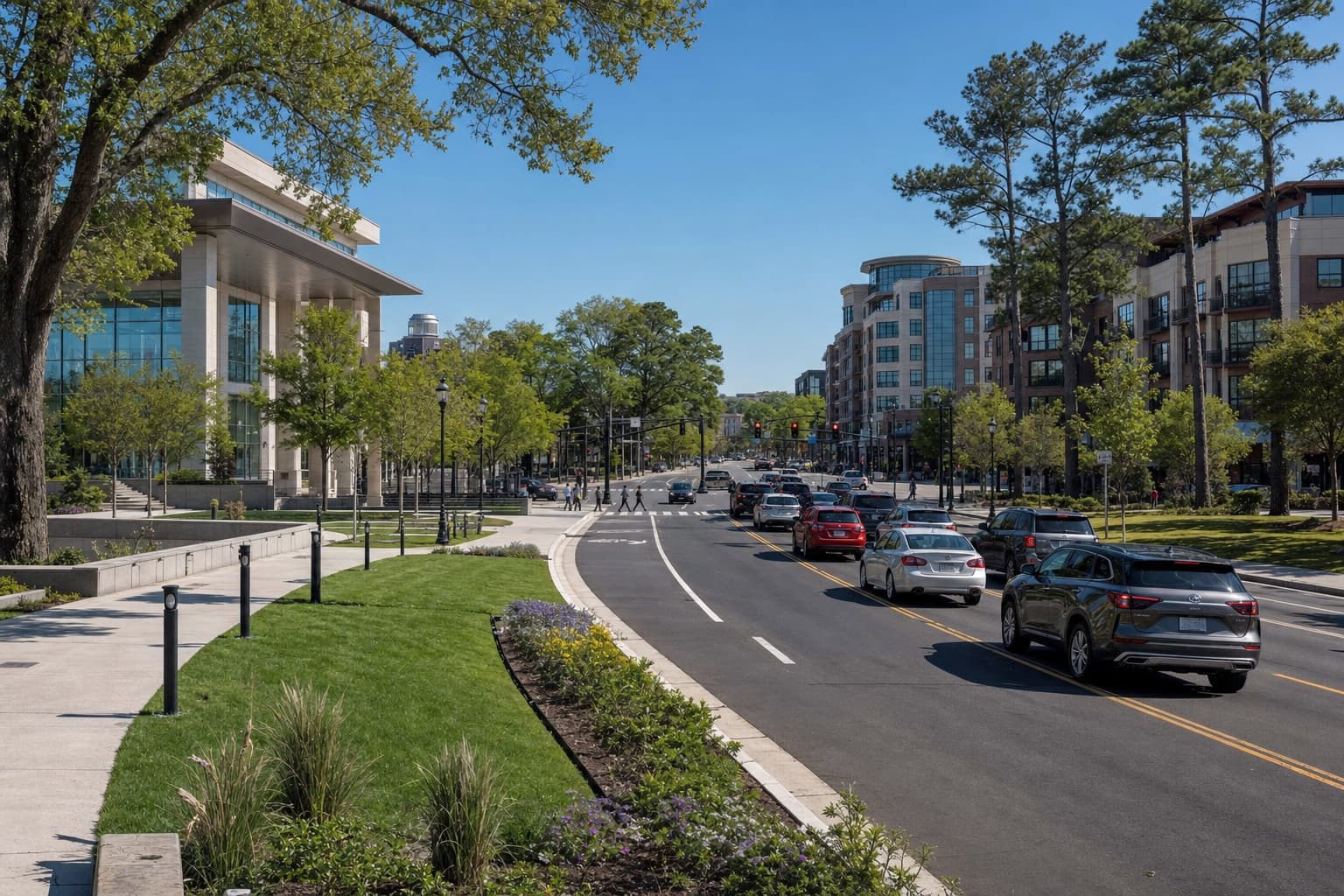
A Sandy Springs personal injury lawyer represents people hurt in and around City Springs — the civic heart of Sandy Springs where Roswell Road (US 19 / GA 9) meets Mount Vernon Highway — along the Roswell Road corridor, and on the Interstate 285 "Perimeter" that crosses the south edge of the city. If you were injured near City Springs, City Green, or the I-285 interchange, Georgia gives you two years to file suit under O.C.G.A. § 9-3-33, your recovery is governed by the state's 50% comparative-fault rule, and any civil suit is filed in Fulton County. This guide explains how those rules play out on this stretch of Sandy Springs.
Last reviewed: 2026-07-01
What Does a Sandy Springs Personal Injury Lawyer Actually Do?
A Sandy Springs personal injury lawyer builds and proves the civil claim that turns your injury into compensation — investigating fault, documenting damages, handling the insurers, and filing suit in Fulton County if the offer never gets fair. Around City Springs and the Roswell Road corridor, that work is broad on purpose: this district produces rear-end and left-turn crashes, City Green crosswalk pedestrian strikes, rideshare collisions, and high-speed I-285 wrecks, and the same Georgia rules govern all of them. Our Sandy Springs personal injury lawyer team handles the full range rather than a single crash type.
The core statutes stay constant no matter how you were hurt: two years to file under O.C.G.A. § 9-3-33, recovery reduced by fault under O.C.G.A. § 51-12-33, and your own uninsured/underinsured-motorist coverage under O.C.G.A. § 33-7-11 when the at-fault driver cannot cover your losses. Mark Wade, Managing Partner of Georgia Auto Law, tells clients that the most expensive mistake he sees near City Springs is giving the other driver's insurer a recorded statement before a lawyer reviews the crash — a few offhand sentences can hand the adjuster the comparative-fault percentage they need to cut the claim.
Why City Springs and Roswell Road Produce So Many Injury Claims
City Springs concentrates civic, retail, and event traffic exactly where a busy state arterial runs through it, and that overlap drives the crash volume. City Green hosts concerts, a farmers market, and festivals at the Sandy Springs Performing Arts Center, surging pedestrian and parking traffic onto blocks that Roswell Road already moves at 35 mph. When event foot traffic meets left-turning cars and rideshare drop-offs at the Mount Vernon Highway node, you get the left-turn, rear-end, and pedestrian conflicts this district is known for.
Roswell Road (GA 9 / US 19) is the primary north-south surface artery through downtown Sandy Springs, carrying heavy stop-and-go flow with constant left-turn conflict into driveways and side streets. According to the National Highway Traffic Safety Administration, rear-end collisions are the most common crash type on U.S. roads, accounting for roughly 29% of reported crashes. According to the Insurance Institute for Highway Safety, left-turn maneuvers are dramatically overrepresented in serious intersection crashes. Roswell Road reproduces both patterns in volume, which is why most claims here run through our Sandy Springs car accident lawyer practice.
Pedestrians face the sharpest exposure. According to the Governor's Office of Highway Safety, pedestrian deaths have accounted for roughly one in five Georgia traffic fatalities in recent years, and metro-Atlanta arterials like Roswell Road concentrate that risk. City Green crosswalk and midblock strikes are handled by our Sandy Springs pedestrian accident lawyer team, where the case usually turns on crosswalk right-of-way.
The I-285 "Perimeter" Adds a Different Kind of Crash
Interstate 285 crosses the south edge of Sandy Springs and injects a category of crash the surface streets cannot produce: high-speed merges, aggressive lane changes, and tractor-trailer traffic at a posted 65 mph. A five-lane freeway carrying the region's freight and the weekday commuter surge into the Central Perimeter office district turns a routine merge into a multi-vehicle wreck in seconds — and the injuries are correspondingly severe.
Truck crashes on the Perimeter are their own legal animal. A tractor-trailer can weigh 20 to 30 times what a passenger car does, and the evidence that decides the case — logging device data, engine control module downloads, and driver logs — can be overwritten within weeks if no one demands its preservation. Those cases run through our Sandy Springs truck accident lawyer team and our statewide guide to tractor-trailer crashes. Mark Wade notes that in every I-285 truck case, the first priority is a preservation letter out the door before the carrier's insurer lets critical black-box data cycle off.
I-285 cases also lean on public infrastructure evidence. According to the Georgia Department of Transportation, the interstate system carries a disproportionate share of the state's vehicle miles traveled, and Perimeter crashes frequently turn on GDOT roadway geometry and signal-timing data. When a Perimeter wreck is fatal, the claim shifts to our Sandy Springs wrongful death lawyer team under Georgia's "full value of the life" standard in O.C.G.A. § 51-4-2.
Have Questions About Your Case?
Get a free consultation with an experienced Georgia accident attorney.
How Sandy Springs Injury Cases Break Down
The legal path depends on where and how you were hurt, even though the same Georgia deadline and fault rules govern all of them. The table below maps this district's crash types to who is presumptively at fault, the controlling statutes, and the evidence that decides the case.
| Injury Scenario | Typical Location | Presumptive At-Fault Party | Key Georgia Statute(s) | Critical Evidence |
|---|---|---|---|---|
| Rear-end in stop-and-go traffic | Roswell Road near Mount Vernon Highway | Following driver (presumed) | O.C.G.A. § 9-3-33; § 51-12-33 | EDR data, brake-light photos, dashcam, signal timing |
| Left-turn collision | Roswell Road / Mount Vernon Highway intersection | Turning driver (presumed) | O.C.G.A. § 51-12-33 | Point-of-impact damage, witness statements, intersection video |
| Pedestrian strike at a crosswalk | City Green and City Springs crossings | Driver failing to yield | O.C.G.A. § 9-3-33; § 51-12-33 | Crosswalk signal phase, right-of-way analysis, surveillance |
| High-speed / tractor-trailer crash | Interstate 285 (the Perimeter) | Merging or trailing driver / carrier | O.C.G.A. § 51-12-33 | ELD data, ECM download, GDOT roadway data |
| Uninsured or hit-and-run driver | Any Sandy Springs corridor | At-fault driver; recovery via your UM policy | O.C.G.A. § 33-7-11 | Your own policy, police report, scene canvass |
| Fatal crash | I-285 or Roswell Road | Party who caused the death | O.C.G.A. § 51-4-2 | Full-value-of-life proof, economic loss records |
When the At-Fault Driver Can't Pay: UM/UIM Coverage
Your own uninsured/underinsured-motorist coverage is frequently the real source of recovery in Sandy Springs, because metro-Atlanta arterials carry above-average numbers of uninsured, hit-and-run, and minimum-limit drivers. Georgia's minimum liability limit is just $25,000 per person — nowhere near enough for a serious injury treated at the Pill Hill hospitals — so when the at-fault driver carries only the minimum or none at all, O.C.G.A. § 33-7-11 lets you turn to the UM/UIM coverage on your own policy.
There are two distinct tracks. When the at-fault driver has some coverage but not enough, the claim is an underinsured motorist claims matter that stacks your UIM on top of theirs. When the driver has no coverage or flees, it becomes an uninsured motorist accidents claim against your own carrier. According to the Insurance Research Council, roughly one in eight U.S. drivers is uninsured — so this is a routine part of how Sandy Springs injury claims actually get paid.
Which Court Hears a Sandy Springs Injury Case?
A Sandy Springs personal injury lawsuit is filed in Fulton County, because the city sits entirely within it. Most auto-tort and personal-injury cases are tried in the State Court of Fulton County; wrongful-death actions and higher-value claims go to the Superior Court of Fulton County. The Sandy Springs Municipal Court handles only traffic citations — so the traffic ticket from your crash and the civil claim for your injuries move on separate tracks.
Where you were treated matters as much as where you file. According to the Georgia Trauma Commission, the state's trauma network routes patients by injury severity, not by the nearest hospital. Northside Hospital, Emory Saint Joseph's, and Children's Healthcare of Atlanta at Scottish Rite sit clustered about 1.5 to 2 miles south of City Springs, so most seriously injured victims are treated close to the scene — with Grady Memorial Hospital, a Level I trauma center, downtown for the most catastrophic cases. Those records become the backbone of the damages claim.
Rideshare traffic threads all of this together. City Springs events generate heavy Uber and Lyft drop-off volume, and a rideshare crash brings a layered commercial insurance framework that a private-car wreck does not. When a passenger, driver, or bystander is hurt by a rideshare vehicle, our Sandy Springs rideshare accident lawyer team sorts out which policy applies. For how Georgia injury law works statewide, see our Georgia personal injury lawyer hub; for the local service area, our Sandy Springs page.
Frequently Asked Questions
How long do I have to file a personal injury claim after a Sandy Springs crash?
Two years from the date of the injury, under O.C.G.A. § 9-3-33. That deadline applies to most car, truck, pedestrian, and rideshare injury claims in Sandy Springs, and wrongful-death claims carry the same window — though probate can pause the clock. Miss it, and the court will almost always dismiss the case.
What if the crash near City Springs was partly my fault?
You can still recover, as long as you are less than 50% at fault, under Georgia's modified comparative-negligence rule in O.C.G.A. § 51-12-33. Your compensation is reduced by your percentage of fault, and fault is apportioned among every responsible party. This is why insurers push injured people to give recorded statements early — a few careless words can inflate your assigned share and shrink the claim.
Which court will my Sandy Springs injury case be filed in?
Fulton County. Most personal-injury and auto-tort cases are tried in the State Court of Fulton County, while wrongful-death and higher-value claims go to the Superior Court of Fulton County. The Sandy Springs Municipal Court only handles traffic citations, so your civil injury suit and any traffic ticket from the crash proceed separately.
What happens if the driver who hit me had no insurance or took off?
Your own uninsured-motorist coverage becomes the claim under O.C.G.A. § 33-7-11. Georgia arterials like Roswell Road carry a meaningful share of uninsured and hit-and-run drivers, and UM coverage on your policy is built for exactly that situation. If the at-fault driver had insurance but not enough to cover your injuries, underinsured-motorist coverage stacks on top of their limits.
Are I-285 truck crashes handled differently from a Roswell Road fender-bender?
Yes. I-285 tractor-trailer crashes turn on electronic evidence — logging device data, engine control module downloads, and driver logs — that can be overwritten within weeks unless a preservation letter goes out immediately. They also involve commercial carriers, higher speeds, and more severe injuries than a surface-street collision, so Perimeter truck cases follow a distinct investigative track from the start.
How much does it cost to hire a Sandy Springs personal injury lawyer?
Nothing up front. Georgia Auto Law handles Sandy Springs injury cases on a contingency fee: the consultation is free and you pay no attorney's fees unless we win compensation for you. That structure lets injured people near City Springs and the Perimeter get a case evaluated without any financial risk.
Where will I be treated after a serious crash near City Springs?
Most seriously injured victims are routed to the Pill Hill hospitals about 1.5 to 2 miles south — Northside Hospital, Emory Saint Joseph's, or Children's Healthcare of Atlanta at Scottish Rite for pediatric injuries. The most catastrophic cases go to Grady Memorial Hospital downtown, a Level I trauma center. Those records anchor the damages side of your claim.
If you were injured near City Springs, along Roswell Road, or on I-285, a Sandy Springs personal injury lawyer at Georgia Auto Law can evaluate your claim for free. Call (404) 662-4949 — no fees unless we win.