Key Takeaways
- Georgia gives you two years to sue under O.C.G.A. § 9-3-33, but a claim against the City of Atlanta requires written notice within six months.
- Recovery is barred only if you are 50% or more at fault under O.C.G.A. § 51-12-33; below that, damages drop by your percentage.
- Crossing outside a crosswalk keeps your case alive — drivers owe an independent due-care duty under O.C.G.A. § 40-6-93.
- Courtland Street Northeast runs four lanes as half of a one-way couplet, producing the multiple-threat crash pattern.
- Seven MARTA rail stations sit within 0.9 miles, so most local pedestrians are riders walking to a platform.
- Downtown security video is often overwritten within days to a few weeks — send a preservation letter immediately.
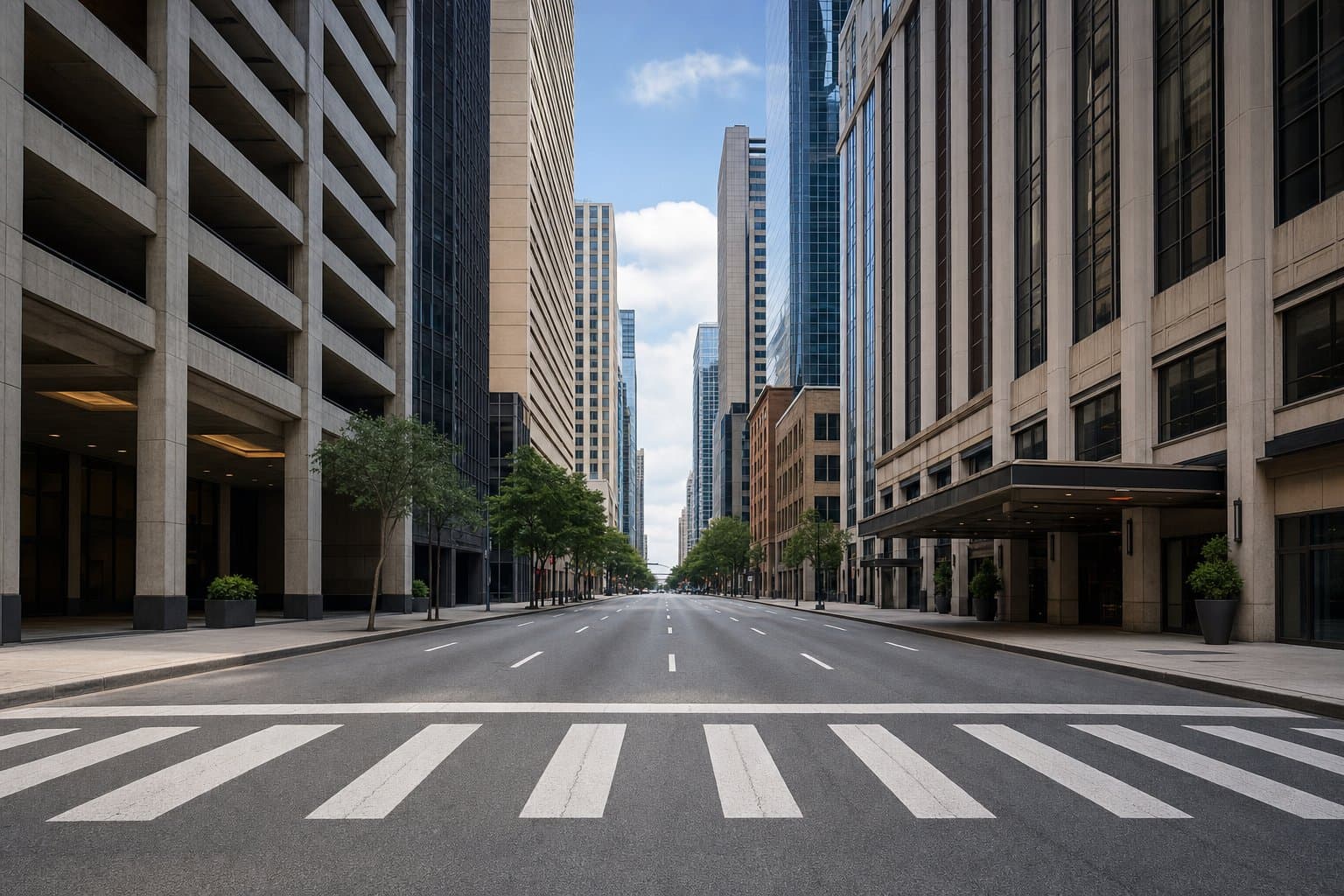
If a driver hit you while you were crossing Courtland Street, you very likely still have a claim — even if the report notes you were outside the crosswalk. An Old Fourth Ward Courtland Street pedestrian accident lawyer works from two Georgia rules that pull against each other: O.C.G.A. § 40-6-91 requires a driver to stop and remain stopped for a pedestrian in a crosswalk, while O.C.G.A. § 40-6-92 requires a person crossing elsewhere to yield. Which rule controls your recovery is settled by apportionment under O.C.G.A. § 51-12-33, not by a line of paint. Suit is generally filed in the State Court of Fulton County within two years under O.C.G.A. § 9-3-33.
Last reviewed: 2026-08-07
Why Courtland Street Is So Dangerous for People on Foot
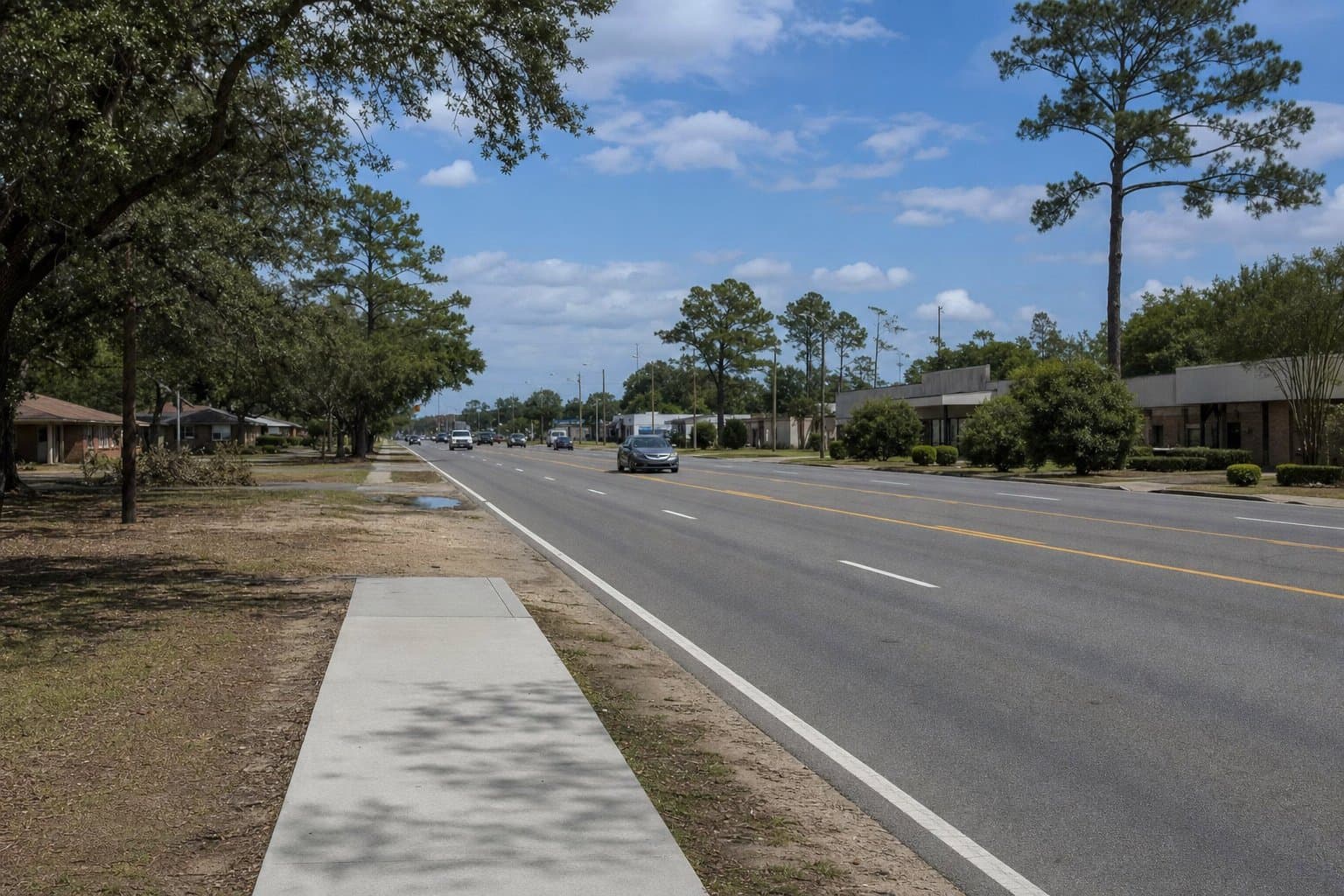
Courtland Street Northeast is dangerous on foot because it carries four lanes of one-way traffic through the densest walking environment in Georgia. Mapped roadway data shows it as a four-lane secondary paired with the four-lane Courtland Street Southeast — a one-way couplet, the geometry that produces the multiple-threat strike. A driver in the curb lane stops for someone crossing; the driver in the next lane has his view blocked by that stopped vehicle, keeps rolling, and hits a pedestrian already committed to the crossing.
The surrounding land use loads that geometry with people. Seven MARTA rail stations fall within 0.9 miles, led by Peachtree Center at 0.2 miles, and every boarding ends as a walking trip on these streets. Christo Rey Atlanta Jesuit High School sits 0.15 miles away, Herzing University 0.35 miles, and Georgia State University 0.43 miles, putting student crossings on a class schedule that ignores signal timing. Event let-outs at State Farm Arena (0.7 miles) and Mercedes-Benz Stadium (0.98 miles) then push crowds on foot into the same grid carrying vehicle egress.
The national numbers explain why those crossings turn fatal. According to IIHS, the Insurance Institute for Highway Safety, more than 7,500 pedestrians were killed nationwide in 2022 — the highest total in four decades. According to NHTSA, the National Highway Traffic Safety Administration, speeding contributed to 29% of U.S. traffic deaths in 2022, killing 12,151 people. According to FHWA, the Federal Highway Administration, raised medians and refuge islands are a proven safety countermeasure cutting pedestrian crashes 46% at marked crosswalks and 39% at unmarked crossings — protection a flat four-lane street lacks. According to GOHS, the Georgia Governor's Office of Highway Safety, more than 1,700 people die on Georgia roads every year.
The First 48 Hours After a Downtown Crossing Crash
Get treated at the downtown Atlanta emergency department first, then move immediately to lock down the report and the video. A gap between the crash and your first medical record is the adjuster's most reliable tool for discounting a claim, and head and pelvic trauma often surfaces hours later.
Courtland Street Northeast is a City of Atlanta street, so the Atlanta Police Department writes the report. Request it as soon as it clears, then move on the cameras: hotels, parking decks, office lobbies, and storefronts here record continuously, but retention runs days to a few weeks and nobody preserves footage for you voluntarily. Written preservation demands to each building are often the difference between a documented crossing sequence and a swearing contest. Photograph the crossing itself — the signal head, the markings, the lane you were struck in — and give the driver's insurer no recorded statement before you talk to a lawyer.
Georgia's Crosswalk Rules Cut Both Ways
Georgia law imposes duties on the driver and the pedestrian at the same moment, and six statutes carry nearly every argument in a Courtland Street case:
| Georgia statute | Who it binds | What it requires |
|---|---|---|
| O.C.G.A. § 40-6-91 | Driver | Stop and remain stopped for a pedestrian on the driver's half of the roadway |
| O.C.G.A. § 40-6-92 | Pedestrian | Yield to vehicles when crossing outside a crosswalk |
| O.C.G.A. § 40-6-93 | Driver | Exercise due care to avoid colliding with any pedestrian, wherever that pedestrian is |
| O.C.G.A. § 40-6-22 | Pedestrian | Obey pedestrian-control signals at signalized intersections |
| O.C.G.A. § 40-6-71 | Driver | Yield the right of way when turning left across a crossing path |
| O.C.G.A. § 40-6-144 | Driver | Stop before crossing the sidewalk area when leaving a driveway, alley, or building |
Insurers lead with § 40-6-92 because it is the only one of the six that helps them, and after an arena or Hotel District event they add O.C.G.A. § 40-6-95, covering pedestrians who have been drinking. Those are arguments, not verdicts. Section 40-6-93 applies on its own terms, so a driver who was speeding or distracted carries a share of the fault regardless of where you left the curb. The full statutory framework lives on our Georgia pedestrian accident claims page, and the citywide picture on our Atlanta pedestrian accident lawyer page.
Have Questions About Your Case?
Get a free consultation with an experienced Georgia accident attorney.
How the 50% Bar Decides a Courtland Street Case
Fault in Georgia is split by percentage, and your claim survives as long as your share stays under half. Under O.C.G.A. § 51-12-33 a jury assigns every party a number and your award drops by yours: on $600,000 in damages, a 20% share leaves you $480,000, and a 50% share leaves you nothing. Every fight over the signal phase, the lane of impact, and the phone records is a fight over that percentage.
Mark Wade, Managing Partner of Georgia Auto Law, puts it plainly: "Downtown, the adjuster writes 'crossed mid-block' in the file within 48 hours and treats it as the whole case. What actually decides these claims is the part nobody photographs — which lane the car was in, whether the driver beside him had already stopped, and how long the walk signal had been up."
Garage Exits, Hotel Driveways, and Left Turns
Pedestrians in the Hotel District are frequently struck at a garage mouth or a hotel porte-cochere rather than at a corner, and those cases run on a different statute. O.C.G.A. § 40-6-144 requires a driver emerging from a driveway, alley, building, or parking deck to stop before crossing the sidewalk area and yield to anyone on it. A driver who rolls the sidewalk while looking left for a gap in one-way traffic has breached a specific duty, and the sidewalk location insurers treat as a defense becomes the strongest fact in the file.
Left turns are the corridor's other signature conflict. O.C.G.A. § 40-6-71 requires a turning driver to yield, and on a one-way grid that driver hunts a gap in traffic while the pedestrian enters from the side of the windshield he is ignoring. Plead both theories alongside the crosswalk duties.
Who Pays When the Driver Flees or Carries Minimum Limits
Your own uninsured motorist coverage is usually the deepest pocket in a downtown pedestrian case. Georgia requires only $25,000 per person and $50,000 per crash in bodily injury liability under O.C.G.A. § 33-7-11 — a limit one orthopedic surgery can exhaust — which is why underinsured motorist claims so often carry the recovery. Whether your policy is add-on coverage that stacks on the driver's limits or reduced-by coverage that offsets them changes the math entirely, and it has to be read off the declarations page.
Hit-and-run is common here and still recoverable. Leaving the scene violates O.C.G.A. § 40-6-270, and Georgia uninsured motorist coverage reaches unknown vehicles, with the driver named through the John Doe procedure at O.C.G.A. § 33-7-11(d) — the route we walk clients through in hit-and-run accident claims and as an Atlanta hit-and-run lawyer. If the fleeing driver is prosecuted, O.C.G.A. § 9-3-99 can toll your civil deadline while that case is pending.
Pedestrians who own no car are routinely told they have no UM — often wrong, because Georgia UM can reach a resident relative's policy, which matters enormously where most people arrive by rail. When the striking vehicle is a transit bus, the notice deadlines shift; see our Georgia bus and MARTA accident claims page. Head trauma is the usual reason these files need traumatic brain injury representation, and a fatal strike splits into the family's claim under O.C.G.A. § 51-4-2 and an estate claim, handled as fatal pedestrian accident claims.
Where a Courtland Street Case Gets Filed and How Long You Have
A Courtland Street pedestrian suit is normally filed in the State Court of Fulton County, the primary venue for pedestrian-injury claims arising in the City of Atlanta. The Superior Court of Fulton County takes wrongful death and catastrophic-injury claims; Magistrate Court handles only small claims. Your driver's citation is answered separately in the Municipal Court of the City of Atlanta. If an out-of-state carrier is a defendant, the case can be removed to the United States District Court for the Northern District of Georgia, Atlanta Division.
The deadlines are less forgiving than the two-year headline suggests. Injury and wrongful death actions run two years under O.C.G.A. § 9-3-33. If any part of your theory blames the roadway — signal timing, crosswalk striping, lighting — a much shorter notice clock runs independently: six months to the City of Atlanta under O.C.G.A. § 36-33-5, and twelve months under the Georgia Tort Claims Act, O.C.G.A. § 50-21-26, for state entities. MARTA is a creature of its own enabling act rather than the O.C.G.A., and its notice window is also far shorter than two years. Missing an ante litem deadline ends a claim the statute of limitations would have kept alive.
Cost should not keep you from calling. Georgia Auto Law handles pedestrian cases on a contingency fee: the consultation is free, and there is no fee unless we recover. See how we work as an Atlanta personal injury lawyer, visit our Atlanta office, or — if a transit vehicle was involved — our Atlanta bus accident lawyer page. Call (404) 662-4949.
Frequently Asked Questions
Do I still have a case if I was not in a crosswalk on Courtland Street?
Usually, yes. Crossing outside a crosswalk creates a duty to yield under O.C.G.A. § 40-6-92, but it leaves the driver's separate due-care duty under O.C.G.A. § 40-6-93 fully intact. Your recovery is reduced by your share of fault and barred only once that share reaches 50% under O.C.G.A. § 51-12-33.
Who writes the police report for a pedestrian crash on Courtland Street?
The Atlanta Police Department, because Courtland Street Northeast is a City of Atlanta street. The driver's traffic citation is answered in the Municipal Court of the City of Atlanta, while your injury suit proceeds separately in the State Court of Fulton County. A guilty plea in traffic court helps, but never replaces independent liability proof.
How long do I have to file a pedestrian injury claim in Fulton County?
Two years from the date of injury under O.C.G.A. § 9-3-33 against a private driver. If the City of Atlanta, the State, or MARTA may share responsibility for the crossing or the vehicle, written notice can be due within six to twelve months — or sooner for MARTA. The shortest notice deadline is your real deadline.
What if the driver who hit me left the scene?
You may still recover through your own uninsured motorist coverage. Leaving the scene violates O.C.G.A. § 40-6-270, and Georgia UM under O.C.G.A. § 33-7-11 reaches unknown vehicles through the John Doe procedure at § 33-7-11(d). Report it to Atlanta police the same day and preserve nearby camera footage — corroboration is what opens that coverage.
I do not own a car. Do I have uninsured motorist coverage?
Quite possibly. Georgia UM follows the person, not the vehicle, so a pedestrian who owns no car is often an insured under a resident relative's auto policy. In a neighborhood built around seven MARTA rail stations, this is the most commonly missed source of recovery.
What does an Old Fourth Ward Courtland Street pedestrian accident lawyer cost?
Nothing up front. Georgia Auto Law takes pedestrian cases on a contingency fee, so our fee comes out of the recovery and there is no fee unless we win. The first consultation is free — call (404) 662-4949 to talk through what happened on Courtland Street.