Key Takeaways
- Georgia personal-injury claims from car accidents must be filed within two years under O.C.G.A. § 9-3-33; wrongful-death claims share the same deadline.
- According to the Centers for Disease Control and Prevention, motor vehicle crashes remain a leading cause of death and disability nationwide — proper documentation in the first hours after a crash heavily influences outcomes.
- Modified comparative negligence under O.C.G.A. § 51-12-33 means insurance adjusters will argue any percentage of fault they can attach to you. Counter-evidence (scene photos, witness statements, dashcam) is what reduces that percentage.
- A crash that results in injury, death, or apparent property damage over $500 triggers mandatory reporting under O.C.G.A. § 40-6-273 — the police report is foundational evidence.
Among all automobile accidents, collisions between motor vehicles account for the majority of fatalities. The National Highway Traffic Safety Administration estimates that close to 40,000 people die each year on U.S. roads. However, other forms of vehicle accidents pose an equally large risk.
What Are The Different Types of Vehicle Accidents?
Several types of car crashes are more likely to cause fatalities than others. Understanding the dynamics of these accidents can help you protect yourself and your passengers. Listed below are the main categories of accident, and what makes each of them dangerous:
One of the most hazardous forms of accidents is a head-on collision. Two cars colliding head-on expends a lot of momentum. This can result in catastrophic injuries and worse, death. In these crashes, there are many factors involved, including the speed of the vehicles and the direction of travel.
Rollover crashes are another common type of auto crash. They happen disproportionately in tall, narrow vehicles — SUVs, vans, and pickups — because a high centre of gravity makes them easier to tip.
Side impact crashes can also cause major injuries, because a car’s door and pillar offer far less protection than its crumple zones. They occur most often at intersections, and are typically caused by a failure to yield, a failure to brake in time, or simply not seeing the other vehicle.
Single-vehicle crashes are also very common. These types of crashes are usually caused by driver errors. Typically, the driver makes a minor mistake, such as overcorrecting or braking too hard. If the vehicle swerves or runs off the road, the crash can be very serious.
Pedestrian incidents are another common type of crash. These incidents can occur on any type of roadway. These types of crashes can be deadly, especially if the pedestrian is hit.
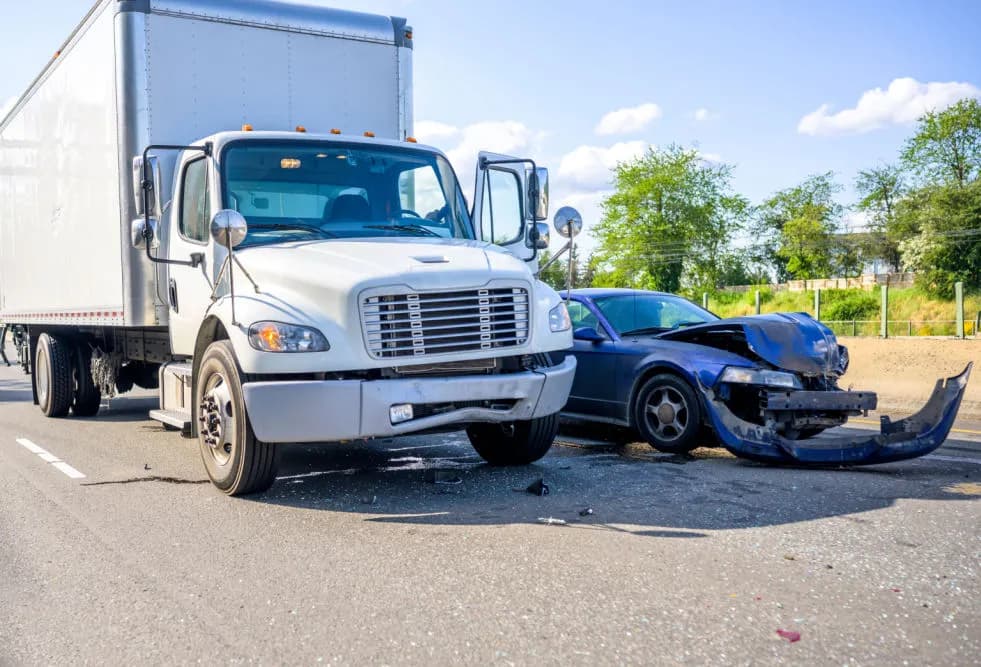
Other automobile accidents can also be deadly. For instance, truck accidents are extremely dangerous. Whether it is a head-on collision or a rear-end collision, the impact can cause severe injury and death. These crashes are disproportionately fatal because of the sheer difference in mass, and because a car can pass underneath a trailer so that the point of impact is the windscreen rather than the bumper.
Roadway departures are one of the deadliest forms of car accident. One occurs when a vehicle leaves the road and strikes a fixed object — a tree, a pole, a barrier. Road conditions and overcorrection contribute, and distraction is one of the most common reasons a vehicle drifts off the road in the first place.
T-bone accidents are another particularly dangerous type of crash. In a T-bone, the front of one vehicle strikes the side of another, usually at an intersection where someone ran a light or failed to yield. The struck vehicle can be spun or pushed into other traffic, and the occupants on the impact side have almost nothing between them and the other car.
Several types of car accidents are fatal, but the most deadly is a head on collision. This can be caused by drunk driving, distracted driving, or getting into the wrong lane. Pedestrians are also at risk. The best way to avoid this type of accident is to keep an eye on your surroundings.
How Dangerous is Head On Collision?
Among the most dangerous types of car crashes, head on collisions are a serious threat to both drivers and passengers. They are comparatively rare, because they require a vehicle to be travelling the wrong way, but they carry a far higher risk of death than any other configuration: the closing speed is the sum of both vehicles’ speeds. With the potential for fatalities and injuries, it is important to understand the risks of this type of crash.
Head on collisions can lead to serious internal organ damage, broken bones, and traumatic brain injuries. These are all very painful and can last for months or years. It is imperative that you seek medical treatment right away after a head on collision.
Negligent driving is the primary cause of most head-on crashes. This may include excessive speed, distracted driving, drowsiness, or driving under the influence of alcohol. Taking defensive driving steps can help prevent this type of crash.
What Injuries Can You Get From A Head On Collision?
Symptoms of a moderate to severe TBI range from headaches and dizziness to loss of consciousness and, in the worst cases, coma. Memory loss around the time of the crash is common. Another injury you can acquire is neck and back pain. The spinal cord runs through the spine, and injuries can result in total or partial paralysis.
Often, these injuries require corrective surgery. In addition, back injuries can cause herniated discs and other spinal problems. Bruising is common, especially around the chest, shoulder, and pelvis. In addition, there is a chance for abrasions and cuts.
What Are The Things You Should Do When You Get Involved in a Car Accident?
When a car accident occurs, it is best to document the incident as soon as possible. Take photos of the vehicles and the scene, and gather all of the pertinent information. This will be important for a number of reasons. It will help you get the best deal on your settlement, and it will save you from making mistakes that could jeopardize your case.
Seek medical attention immediately. It is important to have yourself checked first before you take another step in repairing or taking legal action regarding the accident.
Contact an accident lawyer. An experienced attorney will know how to navigate the legal system, how to find and use all the relevant evidence, and how to present it to your insurance company. It is always worth checking with a lawyer before accepting a settlement, because signing a release ends the claim permanently — you cannot reopen it if your injuries turn out to be worse than they first appeared.
Is It Necessary To Hire An Accident Lawyer?
Depending on the severity of your injuries, you may need the help of a qualified legal professional to file a claim. This is especially true if you are involved in a serious car accident. The last thing you want to do is admit fault at the scene. No outcome is guaranteed — a court awards compensation only where negligence is proved, and in Georgia only where your own share of the fault is under 50 percent. Whether you are seeking compensation from an insurance company or suing the driver, a good lawyer can help you navigate the legal system and make sure you get the fairest possible deal.
A lawyer can investigate the crash and determine if the other party is at fault. The right lawyer can also identify and quantify the damages you suffered. Ultimately, it is your lawyer’s job to calculate the cost of your medical bills, lost wages, and other losses.
If you or a loved one has been injured in a head on collision, you need to seek the help of a personal injury lawyer. Your attorney should be experienced and equipped to handle your case in court. You may have a case for compensation for your medical expenses, noneconomic losses, and pain and suffering.
How Do You Avoid Car Accidents?
Taking the time to learn how to avoid car accidents can save you a lot of grief and pain. Not to mention the money that you will lose if you are injured. A few of the most obvious steps include using seat belts. It can reduce the risk of serious injury in a car crash. Another helpful tip is to check out the road ahead before you enter it. This will give you an idea of how much time you have before you need to change lanes. Leaving a safe distance between you and the vehicle in front of you will also help to reduce the chance of an accident.
If you are going to change lanes, it is a good idea to look behind you to make sure that your signal has been seen. It is not uncommon for drivers to fail to see cars in their rear view mirrors before making a turn.
Other useful habits are to follow traffic rules, keep your hands on the wheel, and never use your phone while driving. That last one is not merely advice in Georgia — the Hands-Free Georgia Act makes holding a phone behind the wheel a misdemeanour.
The best car accident-preventing strategy is to follow the speed limit. While this is not the most fun thing to do, it is a must. This is particularly true on busy roadways. Aside from the usual speed limits, you should also be aware of the weather. Bad weather can lead to a number of car accidents. Wet and slick roads can cause an automobile to skid, which can make it difficult to stop.
Frequently Asked Questions
How is fault determined in a Georgia car accident?
Fault is determined through the police report, scene photos, witness statements, traffic-camera footage where available, vehicle damage patterns, and (for serious crashes) accident-reconstruction analysis. Insurance adjusters apply Georgia’s comparative-negligence rule under O.C.G.A. § 51-12-33 when allocating fault percentages.
How long do I have to file a car-accident claim in Georgia?
Two years from the date of the crash under O.C.G.A. § 9-3-33 for personal injury and wrongful death. Property-damage-only claims have four years under O.C.G.A. § 9-3-32. Missing the deadline almost always bars the claim entirely, even if the at-fault driver clearly caused the crash.
What is modified comparative negligence in Georgia?
Under O.C.G.A. § 51-12-33, a Georgia plaintiff who is less than 50% at fault can still recover, but their damages are reduced by their percentage of fault. At 50% or more, recovery is barred entirely. This is why insurance adjusters work hard to assign you any percentage of fault they can.
What if the at-fault driver has no insurance?
Georgia requires every auto policy to offer uninsured-motorist (UM) coverage under O.C.G.A. § 33-7-11. UM coverage on your own policy pays when the at-fault driver is uninsured, underinsured, or flees the scene. Multiple household policies can sometimes be stacked for higher limits.