Key Takeaways
- Georgia personal-injury claims from car accidents must be filed within two years under O.C.G.A. § 9-3-33; wrongful-death claims share the same deadline.
- According to the Centers for Disease Control and Prevention, motor vehicle crashes remain a leading cause of death and disability nationwide — proper documentation in the first hours after a crash heavily influences outcomes.
- Modified comparative negligence under O.C.G.A. § 51-12-33 means insurance adjusters will argue any percentage of fault they can attach to you. Counter-evidence (scene photos, witness statements, dashcam) is what reduces that percentage.
- A crash that results in injury, death, or apparent property damage over $500 triggers mandatory reporting under O.C.G.A. § 40-6-273 — the police report is foundational evidence.
- Georgia requires only $25,000 per person and $50,000 per crash in liability coverage — minimums set in 2009 and unchanged in over 15 years, leaving most serious-injury claims under-covered by the at-fault driver alone.
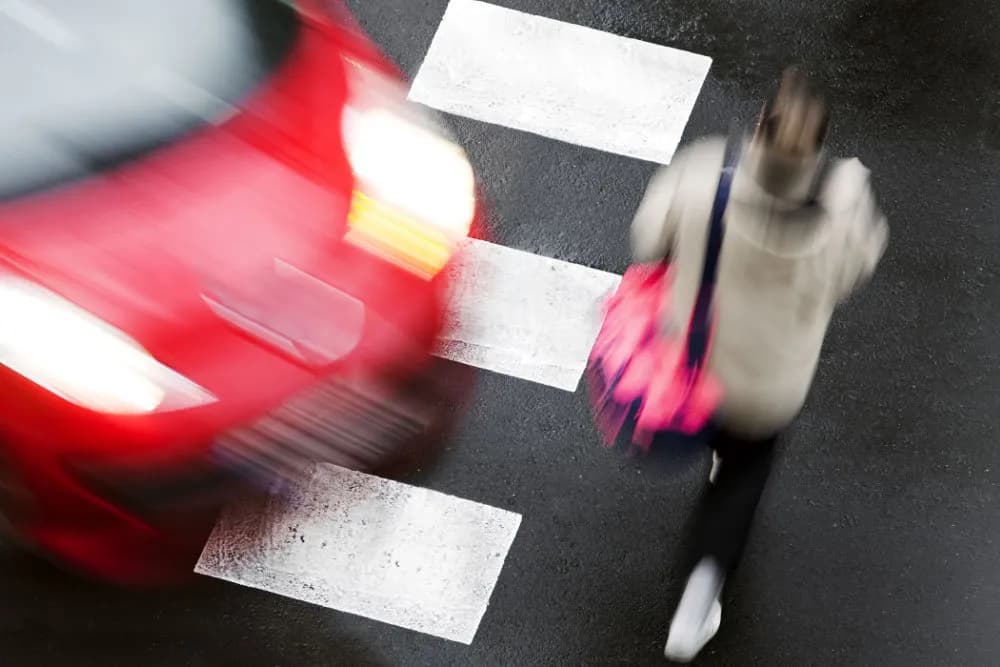
Pedestrian accidents and serious pedestrian injuries and fatalities are some of the most devastating incidents that can occur on the road. They involve a collision between a person on foot and a motor vehicle, and with no metal, airbag, or crumple zone in between, the injuries a pedestrian sustains are frequently severe and often fatal. In this article, we will explore some of the most common injuries sustained in pedestrian accidents and discuss their causes, symptoms, and treatment options.

Head Injuries
Traumatic brain injuries are among the most serious consequences of being hit by a car. When a pedestrian is struck, the head is often thrown against the bonnet, the windscreen, or the road surface, any of which can produce a traumatic brain injury (TBI). TBIs can range in severity from mild concussions to severe brain damage and death, and the symptoms can be varied and long-lasting.
Symptoms of a mild TBI can include headaches, dizziness, and confusion, while severe TBIs can cause seizures, coma, and death. Treatment can include medication, surgery, and long-term rehabilitation, depending on the severity of the injury.
Spinal Cord Injuries
Pedestrian collisions also produce neck and spinal cord injuries (SCI), which can permanently damage the nerves running through the spinal column. SCIs can cause paralysis or loss of feeling in the arms, legs, and torso, and can also affect the injured person’s ability to breathe.
Symptoms of an SCI can vary depending on the location and severity of the injury. Some common symptoms include loss of sensation, loss of movement, and difficulty breathing. Treatment for an SCI can include surgery, physical therapy, and medication, but unfortunately, many people with an SCI never fully recover.
Broken Bones
Fractures are another common injury in pedestrian accidents. When a pedestrian is hit, the body can be thrown in any direction, fracturing bones in the upper and lower extremities. The bones most often broken are in the legs — struck first by the bumper — along with the arms, ribs, pelvis, and spine.
Symptoms of a broken bone can include pain, swelling, and difficulty moving the affected limb. Treatment for a broken bone can range from immobilization with a cast or brace to surgery, depending on the severity of the injury.

Have Questions About Your Case?
Get a free consultation with an experienced Georgia accident attorney.
Soft Tissue Injuries
Soft tissue injuries are also common. Soft tissues — muscles, tendons, and ligaments — are damaged when the body is thrown or twisted during a collision. Common soft tissue injuries in pedestrian collisions include sprains, strains, tears, and contusions.
Symptoms of a soft tissue injury can include pain, swelling, and limited mobility in the affected area. Treatment for a soft tissue injury can include rest, ice, compression, and elevation (RICE), physical therapy, and medication.
Road Rash
Road rash is a type of abrasion that occurs when a pedestrian’s body or skin is scraped against the roadway or pavement during an accident. Road rash ranges in severity from mild scrapes to deep wounds that require stitches or skin grafts.
Symptoms of road rash can include pain, swelling, and bleeding from the affected area. Treatment for road rash can include cleaning the wound, applying antibiotic ointment, and covering the wound with a sterile bandage.
Post-Traumatic Stress Disorder
Pedestrian accidents and other vehicle and pedestrian collisions can have traumatic injuries and also cause emotional trauma, such as post-traumatic stress disorder (PTSD). PTSD can develop after a serious accident or traumatic event and can cause anxiety, depression, and flashbacks.
Symptoms of PTSD can be long-lasting and can affect a person’s ability to work or carry out daily activities. Treatment for PTSD can include therapy and medication, but many people with PTSD never fully recover.

Causes of Pedestrian Accidents
Pedestrian accidents have a variety of contributing causes, but some of the most common are:
Distracted driving: Drivers who are distracted by their surroundings or their mobile devices may fail to notice pedestrians crossing the road or walking on the sidewalk.
Speeding: Drivers travelling above the speed limit may not have enough time to react to a pedestrian who appears in their path — and impact speed is the single biggest determinant of whether a struck pedestrian survives.
Intoxication: Drivers who are under the influence of drugs or alcohol may have impaired judgment, making it difficult to avoid hitting a pedestrian.
Failure to yield: Drivers who fail to yield to pedestrians in crosswalks or at intersections can cause serious accidents.
Poor visibility: Pedestrians wearing dark clothing or walking in poorly lit areas can be difficult for drivers to see, especially at night.
Preventing Pedestrian Accidents
There are steps that pedestrians can take to reduce their risk of being involved in an accident. Some of these include:
Wearing bright or reflective clothing: This can make it easier for drivers to see pedestrians, especially at night.
Being aware of surroundings: Pedestrians should be aware of their surroundings at all times, and should avoid using their mobile devices or headphones while walking.
Walking on sidewalks: Pedestrians should always walk on sidewalks when possible, and should only walk on the road if there is no sidewalk available.
Making eye contact with drivers: Pedestrians should make eye contact with drivers before crossing the road to ensure that they have been seen.

Do crosswalks prevent pedestrian accident injuries?
Crosswalks are designed to provide pedestrians with a safe and designated area to cross the road. They are marked with white lines and, in some cases, may also include signs, signals, or other markings to indicate that pedestrians have the right of way. In Georgia, O.C.G.A. § 40-6-91 requires a driver to stop and stay stopped for a pedestrian crossing within a crosswalk on the driver’s half of the roadway.
While crosswalks can be an effective tool for improving pedestrian and driver safety, they do not guarantee that pedestrian accidents will be prevented. Drivers may still fail to yield to pedestrians in crosswalks or may not be paying attention to their surroundings, which can result in accidents.
In addition, the effectiveness of a crosswalk can be affected by a variety of factors, including:
Visibility: Crosswalks that are poorly marked or located in poorly-lit areas may be difficult for drivers to see, especially at night or in adverse weather conditions.
Speed: Drivers who are traveling at a high speed may not have enough time to react to a pedestrian in a crosswalk, even if they see them.
Driver behavior: Some drivers may intentionally disregard crosswalks or may be distracted, impaired, or aggressive, which can increase the risk of accidents.
Despite these limitations, crosswalks are still an important tool for improving pedestrian safety. When used in conjunction with other safety measures, such as education, enforcement, and engineering improvements, they can help to reduce the number of pedestrian accidents and injuries.
What Drivers Can Do
Drivers can also take steps to reduce their risk of causing a pedestrian accident. Some of these include:
Avoiding distractions: Distracted driving refers to any activity that diverts a driver’s attention away from the road and driving task. This can include a wide range of activities, from texting or using a mobile phone to eating, drinking, or talking to passengers.
Distraction is what turns a survivable situation into a collision: a driver who never saw the pedestrian never braked, so the impact happens at full speed.
Obeying traffic laws: Drivers should obey traffic laws and signals, and should always yield to pedestrians in crosswalks or at intersections.
Driving at a safe speed: Driving at a safe speed means operating a vehicle at a speed that is appropriate for the road and weather conditions, as well as the driver’s level of experience and the capabilities of the vehicle.
The speed limit is a maximum, not a target. Driving at the posted limit is not always safe — particularly in adverse weather, or in areas with heavy pedestrian or bicycle traffic.
Being aware of surroundings: Drivers should be aware of their surroundings at all times, and should be on the lookout for pedestrians, especially in residential areas or areas with heavy foot traffic.

Recovery and Rehabilitation
Treatment and rehabilitation after a pedestrian accident can be a long and difficult road. Depending on the severity of the injury, the person may require hospitalisation, surgery, and months or years of rehabilitation.
Rehabilitation may include physical therapy, occupational therapy, and speech therapy, depending on the injuries sustained. The goal is to help the person regain strength, mobility, and independence, and to adjust to any long-term limitations.
Compensation for Pedestrian Accident Injuries
If a pedestrian is injured or killed by a driver’s negligence, they — or, where the pedestrian died, their family — may be entitled to compensation. This compensation may include medical expenses, lost wages, pain and suffering, and other damages.
In order to receive financial compensation, the injured pedestrian will need to file a personal injury claim against the other vehicle or driver responsible for the accident. It is important to work with an experienced personal injury attorney who can navigate the legal and insurance process and make sure the recovery reflects what you have actually lost.
If you have been hit by a car while on foot, it is strongly recommended that you consult with a personal injury lawyer to discuss your legal options. A lawyer can help you navigate the complex legal process, ensure that your rights are protected, and help you obtain the compensation you deserve.
Pedestrian accident cases for pedestrian injuries can be complicated and often involve dealing with insurance companies, medical bills, and other legal issues. A personal injury lawyer can help you understand your legal rights and options, negotiate with insurance companies on your behalf, and represent you in court if necessary.
An experienced personal injury lawyer can also help you gather the evidence — police reports, witness statements, medical records — needed to build a strong case for compensation. They can also help you calculate the full extent of your damages, including medical expenses, lost wages, and pain and suffering.
Alongside a free consultation, many personal injury lawyers work on a contingency basis, meaning the attorney’s fee is owed only if the case is won. Ask specifically how case expenses — filing fees, records, expert witnesses — are handled, since those are treated separately from the fee.
Preventing Pedestrian Accidents in the Future
In addition to taking steps to prevent both pedestrian injuries and motor vehicle accidents as an individual pedestrian or driver, there are also steps that communities and governments can take to reduce the risk. Common examples include:
Installing crosswalks and pedestrian signals in areas with heavy foot traffic.
Designing roads and sidewalks to be pedestrian-friendly, with well-lit sidewalks, curb cuts, and other safety features.
Enforcing traffic laws and cracking down on distracted driving and speeding.
Educating the public about pedestrian safety and encouraging safe behavior among both pedestrians and drivers.
By working together to prevent pedestrian deaths and injuries, we can reduce both the number of these collisions and the harm they cause.
Conclusion
Pedestrian accidents cause serious injuries and have long-term consequences for everyone involved. By taking steps to prevent them and advocating for pedestrian safety, we can reduce both how often they happen and how badly they end. If you or a loved one has been injured in a pedestrian accident, it is important to seek the advice of an experienced Georgia pedestrian accident attorney who can help you understand your legal rights and options and work to ensure that you receive the compensation you deserve.
Frequently Asked Questions
What if the at-fault driver has no insurance?
Georgia requires every auto policy to offer uninsured-motorist (UM) coverage under O.C.G.A. § 33-7-11. UM coverage on your own policy pays when the at-fault driver is uninsured, underinsured, or flees the scene. Multiple household policies can sometimes be stacked for higher limits.
Do I need a lawyer for a Georgia car accident claim?
For minor property-damage claims, often no. For any claim involving injuries, missed work, lasting symptoms, or disputed fault, a Georgia personal-injury attorney typically recovers far more than the policyholder would negotiating alone, even after the contingency fee. Initial consultations are free.
Should I give a recorded statement to the other driver’s insurer?
No. The adjuster’s job is to minimize the payout, and recorded statements are mined later for any admission of fault, exaggeration, or inconsistency. You can decline politely and refer them to your attorney or your own insurer.
How is fault determined in a Georgia car accident?
Fault is determined through the police report, scene photos, witness statements, traffic-camera footage where available, vehicle damage patterns, and (for serious crashes) accident-reconstruction analysis. Insurance adjusters apply Georgia’s comparative-negligence rule under O.C.G.A. § 51-12-33 when allocating fault percentages.