
Key Takeaways
- Georgia's two-year personal-injury statute of limitations (O.C.G.A. § 9-3-33) applies to truck-crash injury claims — the clock starts on the crash date, not the date of diagnosis.
- Commercial-driver hours-of-service rules from the Federal Motor Carrier Safety Administration limit drivers to 11 hours of driving per shift and 60 hours over 7 consecutive days. Logbook violations are common evidence of negligence.
- According to the FMCSA, large trucks were involved in 5,837 fatal crashes in 2022 — an 18% increase from 2021 and the highest number in over four decades.
- Under Georgia's modified comparative negligence rule (O.C.G.A. § 51-12-33), both the driver and the trucking company can be held liable, especially when the carrier controlled hiring, training, routing, or maintenance.
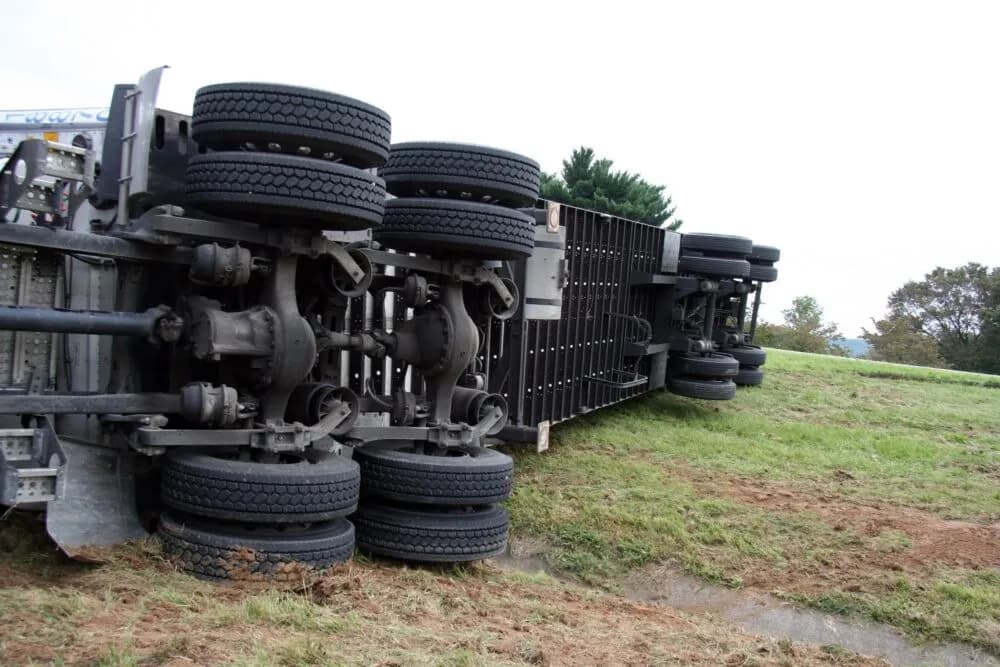
The American Trucking Associations — the industry's own trade body — reports that in accidents involving cars and trucks, 80% were caused by the car driver. Independent federal data is less lopsided: FMCSA's Large Truck Crash Causation Study assigned the critical reason to the truck in a substantial share of two-vehicle crashes. Either way, the driver of the smaller vehicle is the one who pays for the mistake — which is reason enough to drive defensively around trucks. Because of this, you must learn how to avoid a semi-truck accident while you are driving your car.
Do you want to learn more about how you can practice safe driving and prevent a car accident with a semi-truck or other commercial vehicle? Keep reading these 5 tips to avoid a commercial accident. And if you are involved in a crash, an experienced Georgia truck accident lawyer can help you pursue compensation.
1. Stay Out of Blind Spots
One of the most important things that you need to be aware of to avoid a vehicle accident with a semi is their blind spots. While every car has blind spots, semi-trucks have larger blindspots in several different places.
Semi-trucks have a blind spot on the driver’s side of the truck that extends out one lane. They also have a roughly 30-foot blind spot directly behind the trailer, the full width of the vehicle. And from the cab, a driver cannot see the area immediately in front of the bumper or a wide wedge along the passenger side. Because there are so many blind spots, you need to be extremely careful driving anywhere near a semi-truck.
The length of the truck you are alongside is a rough guide to how large its blind spots are. Because a semi has no rear-view mirror through the trailer, the only way its driver sees other lanes is with the side mirrors — so if you cannot see those mirrors, the driver cannot see you.
To avoid a semi-truck accident, it is best to change lanes next to a semi when you are completely in front of or behind them. You also should avoid passing a semi-truck on its right side. Because the driver sits on the left side of the cab, the blind spot on the right runs longer and wider, and is much harder to check.
It is safer to assume that semi-truck drivers cannot see you. This way, you will be more cautious as you drive near a truck driver.
2. Give Them Plenty of Space
Next, you want to always give truck drivers plenty of space. This is something you need to remember when you are following a semi-truck or even when you are passing them.
As was mentioned before, semi-trucks do not have a rearview mirror. If you are tailgating a truck, you will not have enough time to react if the truck driver suddenly stops or if another emergency occurs.
Tailgaiting can result in your car getting caught under the trailer of the semi-truck.
You also need plenty of space when you change lanes in front of a semi. As a rule, wait until you can see both of its headlights in your rear-view mirror before moving across. Because a loaded semi takes far longer than a passenger car to slow down, that margin is what stops a lane change from turning into a rear-end collision.
3. Watch Out for Wide Turns
Many people do not realize that truck drivers need a lot more space to complete a turn. Most trucks have a sign on the back of their truck that cautions other drivers of their wide right turns.
Some trucks will even have signs saying that you should not pass a turning truck. This is because a truck turning right will not be able to turn as tight as other vehicles. The long trailer following the front of the truck will need more room. Otherwise, it may hit a curb or a pedestrian.
Because of this, truck drivers will generally give themselves a few extra feet on the right side of their truck when they are turning. Some cars see this opening and think that they can quickly turn before the semi-truck. However, this often results in accidents as it puts the cars in the blind spot of a semi-truck.
To further reduce the risk of a truck accident, give semi-trucks plenty of room — especially when they are turning.
4. Pass Trucks Quickly
If you have to pass a semi-truck, you want to make sure you do it as quickly as possible. While you want to avoid speeding on the highway, you also don’t want to linger in the blind spot of a semi-truck driver. First, they may not realize that you are driving next to them and they may merge into your lane.
Semi-trucks may also have tire blowouts on the freeway, which could cause them to swerve into your lane. When you pass trucks quickly, you will keep yourself out of danger in these situations.
5. Never Try to Beat a Truck
Finally, you never want to try to beat a truck. Whether a truck is going to pass you or merge in front of you, trying to be faster than the truck can result in serious injury and even death.
It is always better to let a truck pass, or to let it merge, than to prove you had the right of way. Being right is no protection at all in a collision with 80,000 pounds.
Been in a Semi-Truck Accident? Find a Lawyer to Help
When you are involved in a semi-truck accident, you may feel overwhelmed. Whether you suffered physical injuries or financial losses from the crash, a lawyer can help you with your case. Georgia Auto Law handles auto and truck accidents, and nothing else.
Contact our team today to learn more about our car accident, truck accident, and commercial accident work, or to speak with one of our attorneys.
Frequently Asked Questions
What evidence is unique to truck-accident cases?
Federal regulations from the Federal Motor Carrier Safety Administration require commercial carriers to maintain driver logs, hours-of-service records, electronic logging device (ELD) data, drug and alcohol test results, maintenance records, and post-crash inspection reports. These records have short retention periods and must be preserved by formal demand.
How much insurance do trucking companies carry in Georgia?
Interstate commercial carriers must maintain at least $750,000 in liability coverage under FMCSA regulations — far above the Georgia auto minimum of $25,000. Many carriers exceed the federal floor and carry $1 million or more, which is why truck-crash recoveries can be substantially larger than passenger-vehicle cases.
What causes most large-truck crashes?
According to FMCSA crash data, the leading contributing factors are driver fatigue, unfamiliarity with the route, brake problems, speeding, and distraction. Many of these correlate with violations of federal hours-of-service rules — a logbook audit early in the case can reveal those violations.
How long do I have to file a Georgia truck-accident claim?
Two years from the date of the crash under O.C.G.A. § 9-3-33 for personal injury. Cargo or property claims have four years under O.C.G.A. § 9-3-32. However, evidence-preservation letters to the carrier should go out within days to prevent logbook and ELD data from being overwritten.