Key Takeaways
- Georgia's statute of limitations for car-accident injury claims is two years from the crash date under O.C.G.A. § 9-3-33. Property-damage-only claims have four years under O.C.G.A. § 9-3-32.
- Georgia uses modified comparative negligence under O.C.G.A. § 51-12-33 — recovery is reduced by your percentage of fault and barred entirely at 50% or more.
- According to the National Highway Traffic Safety Administration, an estimated 39,345 people died in U.S. traffic crashes in 2024 — down 3.8% from 40,901 in 2023 and the first year below 40,000 deaths since 2020.
- Uninsured-motorist (UM) coverage under O.C.G.A. § 33-7-11 is the primary recovery path when the at-fault driver flees, has no insurance, or carries the state minimum of $25,000.
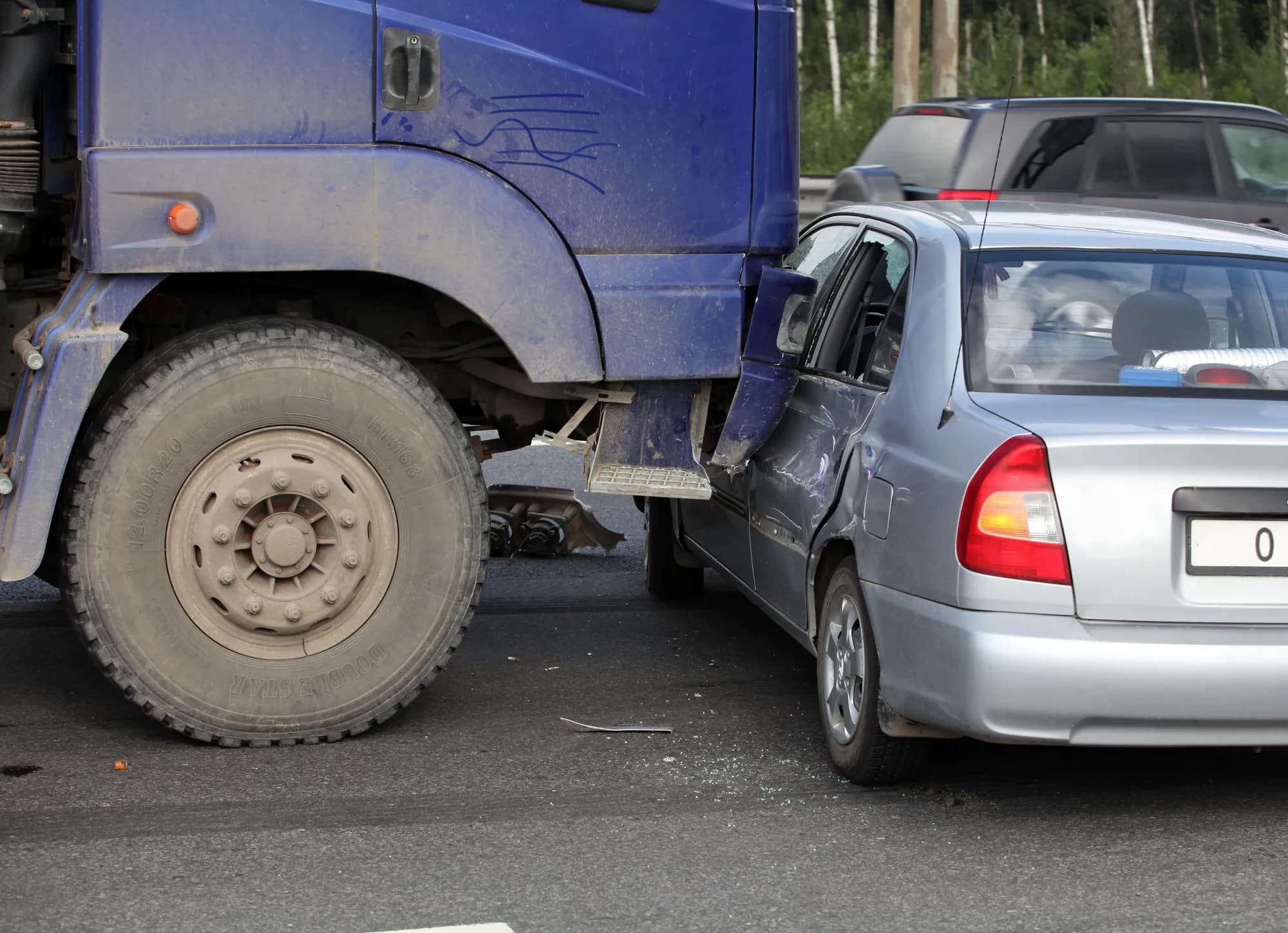
In 2017 there were 4,761 fatal crashes involving large trucks, killing close to 4,900 people — and roughly two thirds of those killed were occupants of other vehicles rather than of the truck.
A commercial truck can weigh 20 to 30 times more than passenger cars, which is one of the many reasons why those accidents are often fatal.
In 2018, the number of deaths by commercial truck accidents increased.
Whether it’s a truck or not, a commercial motor vehicle accident is not just another auto accident. Company vehicles and their drivers are insured by commercial policies.
When a crash occurs, there’s much more to investigate as the fault could lie with the driver, the company they work for, or even the truck’s manufacturer.
If you’ve been in an accident with a commercial driver, it’s essential to know what to do. The same foundational steps in our guide on what to do after a car accident in Georgia apply, though commercial vehicle crashes carry additional complexities.
Keep reading to learn more about why commercial vehicle accidents are different and what to do if you’ve been in one.
Was It Actually a Commercial Vehicle?
This is worth establishing early, because it changes how much insurance is available and who else can be held responsible. The test is not whether the vehicle looked like a truck — it turns on weight, passenger count, cargo and use. Our guide to what counts as a commercial vehicle in Georgia works through the thresholds, and whose insurance pays after a commercial vehicle crash covers the coverage layers that follow from it.
What Are the Leading Causes of Commercial Driver Accidents?
There are 3 primary causes of commercial driver accidents.
Poorly Maintained Vehicles
Commercial vehicles are often driven thousands of miles in short periods. Thus, if they aren’t adequately cared for, they can quickly become dangers on the road.
Because most commercial vehicles are large trucks, minor defects can lead to significant accidents on the road.
A poorly maintained vehicle can be the fault of the driver, who is responsible for maintaining a healthy truck while making deliveries. However, it could also be the company’s fault for not keeping up with the required checks and repairs.
Driver Error
Sometimes commercial truck drivers drive recklessly, despite the size and impact of the vehicle they drive over long periods.
Plus, companies often push their drivers to reach mileage goals. And if a driver doesn’t get adequate sleep or drives while under the influence, an accident is more likely to occur.
Improperly Loaded Cargo
Cargo must always be loaded on the beds of commercial trucks according to the law. If the contents spill out as a result of improper loading, they can cause accidents and injuries on the road.
When Does Negligence Occur?
Commercial truck drivers operate big and heavy vehicles. Especially when driving long distances, these drivers must take extra care so as not to be negligent.
Some of the ways in which companies and their drivers are negligent are:
- Careless maneuvers during adverse weather conditions
- Lack of training
- Fatigue
- Speeding
- Driving under the influence
- Aggressive driving
If you’ve been in a commercial vehicle accident, there are many ways in which your life could be worse for the wear.
What Should You Do If You’ve Been in a Commercial Vehicle Accident?
As with any other accident, the first thing you should do in the event of a crash is to make sure you and your passengers are out of harm’s way.
Once you confirm that you’re safe from additional harm, move everyone and your car out of the way.
If your car is drivable, pull over to an area where there’s no chance of you being hit again.
Call the police and take note of any witnesses.
Call an ambulance for anyone who’s been injured.
Don’t be polite or apologize for your role in the crash. Wait for the police to determine fault and investigate the scene.
While you wait, if you feel ok to do so, take as many photos as you can and document the crash to the best of your ability. Take pictures of all vehicles involved, from all angles.
If there are any witnesses, ask them to take photos or videos of the same wreck. Get their contact info.
As scary as accidents are, try to remain calm while you wait for help to come.
Make sure you get a copy of any police report and get checked out by a doctor as soon as you can.
Many people who are hurt in an accident don’t feel pain right away because they’re in shock. Injuries can be realized and felt later on, so it’s essential that you see a doctor as soon as possible.
The Records That Prove the Case Are on a Deletion Schedule
This is what separates a commercial claim from an ordinary one, and it is why the first week matters more than the first month.
Federal regulations require carriers to keep records that would otherwise never exist — hours-of-service logs and electronic logging device data, driver qualification files, drug and alcohol testing results, maintenance and inspection records, and post-crash reports. Those records are frequently the whole case: they show the driver was over hours, the brakes were overdue, or the company kept a driver it should have removed.
They also have retention periods, and some are short. A carrier that is not on notice may destroy them lawfully in the ordinary course of business. A written preservation demand — a spoliation letter — sent early is what stops that clock, and it is the single most valuable thing done in the opening days of a commercial case.
The practical consequence: reporting the crash to the carrier's insurer is not the same as preserving evidence, and the adjuster who calls promptly is not calling to help you do it.
Who Else Is Liable Besides the Driver
An employer answers for a worker's negligence committed in the course of the job under O.C.G.A. § 51-2-2 — so the company behind the vehicle is a defendant alongside the person who was driving it, and usually a far better-funded one.
Beyond that, a carrier can be liable for its own negligence: hiring a driver with a disqualifying record, retaining one after repeated violations, dispatching schedules that force hours-of-service breaches, or failing to maintain the vehicle. These are separate claims, and they are proved from the carrier's own files — which is the same reason preservation matters.
If You Were Driving a Company Vehicle
The reverse situation is common and the answer surprises people. Being behind the wheel of your employer's vehicle when someone else caused the crash does not cost you a claim against that driver. What changes is the insurance picture: the employer's commercial policy is in play, workers' compensation may cover medical treatment and lost wages regardless of fault, and any recovery may be subject to a workers' compensation lien.
Those layers interact, and the order in which they are resolved affects what you keep. Do not sign anything the employer's insurer puts in front of you on the assumption that the company policy is the only route.
Rear-End Collisions With a Truck
Rear-end crashes involving heavy vehicles are their own category. Being struck from behind by a loaded tractor-trailer delivers force an ordinary car cannot, and striking one from behind carries the risk of underride — the passenger compartment travelling beneath the trailer, which is why these crashes produce catastrophic head and neck injuries at speeds that would otherwise be survivable.
Fault is not automatic in either direction. A driver who rear-ends a truck is not necessarily at fault where the trailer was unlit, stopped in a live lane, lacked required reflective markings, or had a defective or missing underride guard.
Call a Lawyer
If you’ve been in a commercial accident, call a lawyer who specializes in what you’ve just experienced.
Aside from injuries, there are so many ways a car accident can affect your life, from emotional trauma to missed work.
Plus, when it comes to commercial vehicle accidents, there is a lot more investigating to be done. It’s not like your typical car accident where the police will determine fault and insurance companies have the final word.
When a commercial vehicle is involved, there are so many other people who could be held liable.
And if the accident wasn’t your fault, why should you have to deal with medical visits, injuries, trauma, missed work, and a damaged car without compensation?
A reputable auto accident lawyer will be able to get you the injury compensation you deserve.
A Commercial Motor Vehicle Accident Requires the Help of a Lawyer
Most commercial vehicles weigh 20 to 30 times more than passenger cars. Plus, commercial vehicles are maintained by their drivers and the companies that own them.
Trucks aren’t always loaded by their drivers, and sometimes the manufacturers make mistakes in the manufacture of the vehicles.
Even if your accident involved a commercial driver of a passenger car, it’s still in your best interest to call a lawyer.
Have you been in a commercial motor vehicle accident and want to know how we can help?
Contact us for a FREE case evaluation so that you can get some peace of mind in a better understanding of your situation. We are here to help.
Frequently Asked Questions
How long do I have to file a car-accident claim in Georgia?
Two years from the date of the crash under O.C.G.A. § 9-3-33 for personal injury and wrongful death. Property-damage-only claims have four years under O.C.G.A. § 9-3-32. Missing the deadline almost always bars the claim entirely, even if the at-fault driver clearly caused the crash.
What is modified comparative negligence in Georgia?
Under O.C.G.A. § 51-12-33, a Georgia plaintiff who is less than 50% at fault can still recover, but their damages are reduced by their percentage of fault. At 50% or more, recovery is barred entirely. This is why insurance adjusters work hard to assign you any percentage of fault they can.
What if the at-fault driver has no insurance?
Georgia requires every auto policy to offer uninsured-motorist (UM) coverage under O.C.G.A. § 33-7-11. UM coverage on your own policy pays when the at-fault driver is uninsured, underinsured, or flees the scene. Multiple household policies can sometimes be stacked for higher limits.
Do I need a lawyer for a Georgia car accident claim?
For minor property-damage claims, often no. For any claim involving injuries, missed work, lasting symptoms, or disputed fault, a Georgia personal-injury attorney typically recovers far more than the policyholder would negotiating alone, even after the contingency fee. Initial consultations are free.