Key Takeaways
- Georgia personal-injury claims from a motorcycle crash must be filed within two years under O.C.G.A. § 9-3-33.
- Georgia requires all riders and passengers to wear DOT-approved helmets under O.C.G.A. § 40-6-315; failure to wear one can be raised in comparative-fault analysis even when the helmet had no causal link to the injury.
- According to the Insurance Institute for Highway Safety, motorcyclists were nearly 24 times more likely than passenger-vehicle occupants to die in a traffic crash per mile traveled in recent NHTSA data.
- Under Georgia's modified comparative negligence rule (O.C.G.A. § 51-12-33), your damages are reduced by your share of fault and barred entirely at 50% or more.
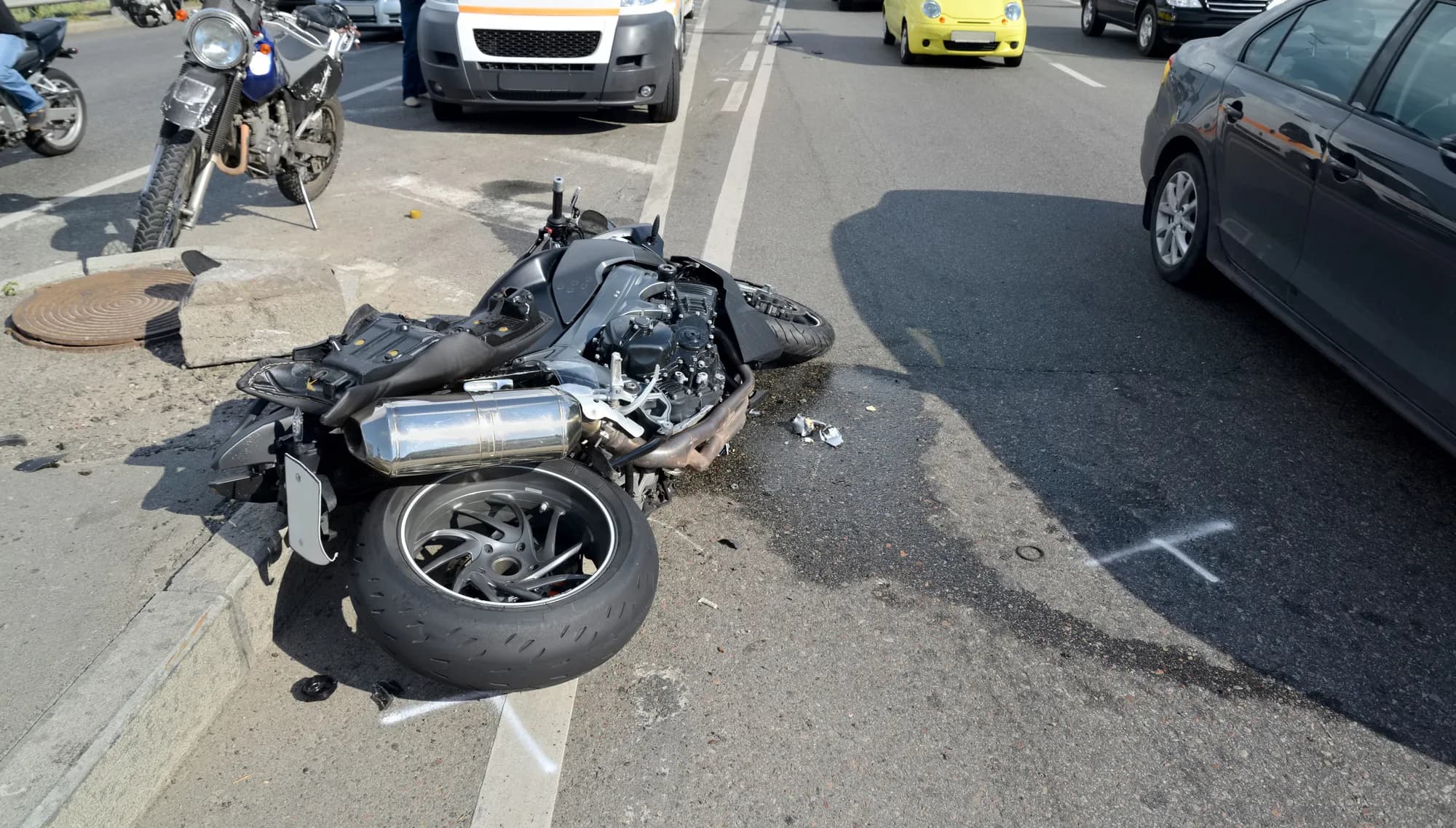
Per mile travelled, a motorcyclist is roughly twenty-four times more likely to be killed in a crash than a passenger-car occupant.
If you’re a motorcycle rider or are considering starting riding one, it’s important that you’re aware of the causes of motorcycle accidents. By knowing this you can become a safer driver.
If you want to ride your motorcycle as safely as you possibly can, read on and we’ll tell you what you need to know.
Why Motorcycles Are Risky and How to Be Safer
No matter what kind of vehicle you use to travel with, there are risks involved. Even though many people get in car accidents, those who travel in automobiles are less likely to be injured because they are usually wearing seatbelts and have their cars to protect them from collisions.
Unfortunately, those who ride motorcycles don’t have these kinds of protection. This is why it’s important that motorcycle riders make smart decisions while on the road.
Start with the helmet. It will not stop a crash happening, but it is the single largest factor in whether you survive one — and in Georgia a DOT-approved helmet is required by law for every rider and passenger, not merely recommended.
If you aren’t comfortable riding your motorcycle on a busy road, you should also consider enrolling in a motorcycle safety course.
One of the Leading Causes of Motorcycle Accidents: Left-Turning Cars
When a car turns left in front of you while you are on a motorcycle, it’s easy to get into a motorcycle accident. In order to prevent this from happening, you need to know how to recognize if a car that’s in front of you is about to turn.
If the car in front of you is waiting at an intersection or in a gap between traffic, it’s a good idea to simply assume that the car is planning to make a turn. Make sure to slow down before you get too close to the car.
Accidents often happen when motorcycle drivers try to pass left-turning cars. It’s often the case that cars don’t see the motorcycle that’s passing them. They therefore will often collide with passing motorcycles.
Slipping on a Patch of Gravel
Loose gravel is a recurring cause, and riders who have come off on it almost always say the same thing: they did not see it until they were on it.
If you’re going too quickly around a sharp turn and hit a patch of gravel, you’re probably going to lose control and your motorcycle might slip onto its side. If you want to practice motorcycle safety, consider slowing down and making wide turns around corners. Slowing before the corner and taking a wider line increases how far ahead you can see, which is what gives you time to spot a gravel patch at all.
Have Questions About Your Case?
Get a free consultation with an experienced Georgia accident attorney.
A Car Switches Lanes in Front of You
If you’ve been riding your motorcycle for a while, you’ve probably found yourself in a situation where a driver doesn’t see you and cuts you off.
It’s one of the leading motorcycle accident causes and it can be frustrating when you get into an accident that’s not your fault. If it happens to you, get a motorcycle accident lawyer involved early — these claims turn on lane position and sight lines, and the evidence for both disappears quickly.
Getting Hit From Behind
Rear-end collisions can be one of the most deadly kinds of motorcycle accidents. Unfortunately, it’s often the case that it’s not the motorcycle rider’s fault.
A rider is far more exposed here than a car occupant, and following drivers routinely misjudge how quickly a motorcycle can stop. Keeping an escape route in mind — space to the side rather than only in front — matters more on a bike than in a car, and covering the brake in slowing traffic buys the time to use it.
Hitting an Open Car Door
Since cars greatly outnumber motorcycles on the road, most drivers are not on the lookout for motorcycle riders. This is why it’s so common for people to open their car doors without looking behind them in order to make sure that there is no oncoming traffic.
The reliable defence is position rather than attention: ride outside the door zone, roughly a full door's width clear of parked cars, even where that puts you further into the lane. No amount of looking ahead helps if you are already alongside the door when it opens.
Drunk Driving
Alcohol impairs balance and reaction time, and a motorcycle demands more of both than a car does. Georgia's DUI limit is the same on two wheels as on four, and a rider has none of the crash protection that might otherwise make a lapse survivable.
If you don’t drink and drive, you also have to worry about others on the road who do. This is why it’s important that you know how to recognize the signs of a drunk driver. If you do suspect that somebody is driving while drunk, keep a distance from them and call the police.
Hire a Top Motorcycle Lawyer if You Get In an Accident
There are many different causes of motorcycle accidents. Even though accidents are not always the motorcycle rider’s fault, motorcycle riders are much more likely to get injured in an accident than automobile drivers.
In the unfortunate circumstance that you do get in a motorcycle accident, it’s important that you hire the best lawyer that you can get. Georgia Auto Law handles motorcycle, car, and truck accidents, and can help you pursue the compensation available to you. Please don’t hesitate to contact us to find out more about how we can help.
Frequently Asked Questions
Can I still recover damages if I was partially at fault?
Yes, as long as you are less than 50% at fault under O.C.G.A. § 51-12-33. Your recovery is reduced by your percentage of fault. At 50% or more, you recover nothing.
How long do I have to file a Georgia motorcycle-accident claim?
Two years from the date of the crash under O.C.G.A. § 9-3-33. Wrongful-death claims share that deadline. Insurance claims should be opened much sooner — typically within days — but the legal filing deadline is the hard line.
Does Georgia require motorcyclists to wear helmets?
Yes. O.C.G.A. § 40-6-315 requires DOT-approved helmets for every rider and passenger. Eye protection is also required when the motorcycle has no windshield. Helmet non-use can be raised in comparative-fault analysis even when it had nothing to do with the cause of the crash.
Is lane-splitting legal in Georgia?
No. Lane-splitting and lane-sharing are illegal under Georgia law. Adjusters sometimes argue a rider was lane-splitting even when they were not — dashcam footage, witness statements, and lane-position photos are the standard counter-evidence.