Key Takeaways
- Georgia truck-crash injury claims must be filed within two years under O.C.G.A. § 9-3-33; cargo-damage or property claims have four years under O.C.G.A. § 9-3-32.
- According to the National Highway Traffic Safety Administration, trucks weigh 20–30 times more than passenger cars, and the height of their bumpers contributes to underride collisions that cause disproportionately severe injuries.
- The Federal Motor Carrier Safety Administration requires interstate commercial carriers to maintain at least $750,000 in liability insurance for general freight — far more than passenger-vehicle minimums.
- Both driver and motor carrier can be sued in Georgia under respondeat superior and the carrier's independent duties to inspect, train, and supervise — a key distinction from ordinary auto cases.
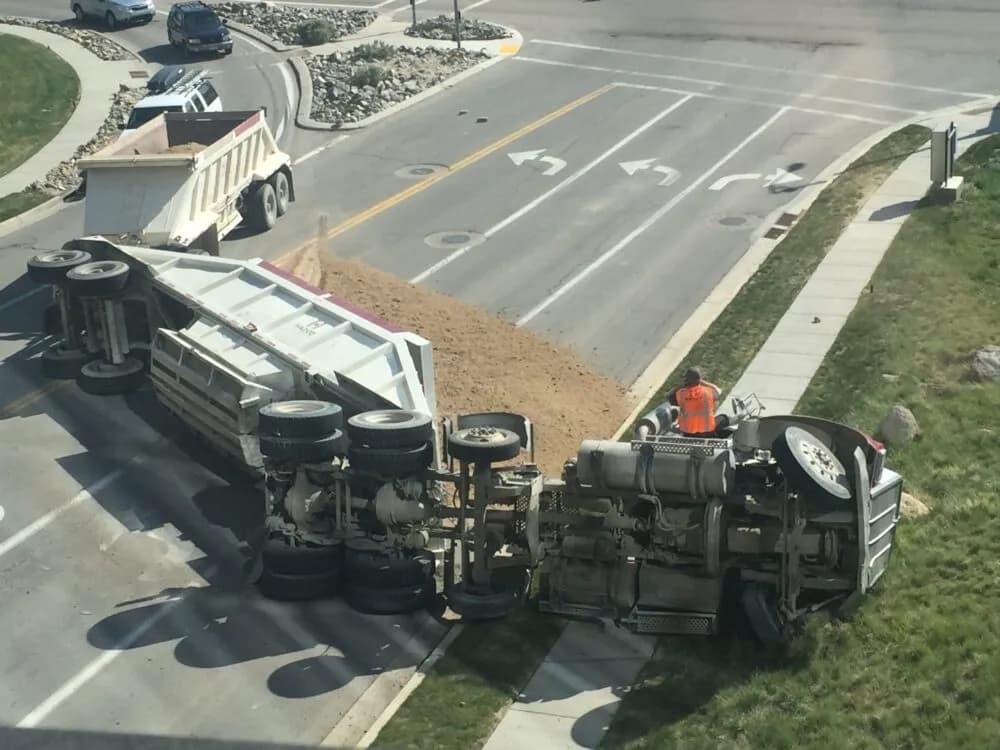
Trucking is a dangerous job, and truck accidents are common. No one wants to be involved in a truck accident, but unfortunately it’s one of the most common accidents. There are many reasons as to why truck accidents occur. What are 3 cause levels of truck accidents? Individual, truck, and environmental factors.
Those three categories matter to anyone hurt in a truck crash, because they point at different defendants. Understanding which one drove the collision and the injuries that followed is the first step in working out who is responsible, and a Georgia truck accident lawyer can help protect your rights while that evidence is still available. By understanding the causes of truck accidents, we can help make the roads safer for everyone.
How Can Road Conditions Be Affected By The Weather And Cause Truck Accidents?
It’s no secret that poor road conditions can be dangerous for drivers of all types of vehicles. Road conditions are a major factor in truck accidents, and these three weather conditions can make roads incredibly slick and difficult to navigate. Ice, snow, and rain can create slippery surfaces that drivers cannot handle well, while poor visibility can lead to accidents. These conditions are especially dangerous for inexperienced drivers who may not be accustomed to driving in adverse weather conditions.
A loaded tractor-trailer needs far more room to stop than a car does, and wet or icy pavement stretches that distance further still. Give trucks extra following distance in bad weather, avoid lingering in the blind spots along their sides, and don’t cut back in front of one until you can see the whole cab in your mirror. If a crash does happen, judge whether it is safer to stay in the vehicle or get out. If you have neck or back pain, or you cannot exit without stepping into live traffic, stay belted in and call 911. If the vehicle is in a travel lane, smoking, or leaking fuel, get clear of it and well off the roadway.
Is Inclement Weather the Top Reason for Truck Accidents?
No. Weather is a contributing condition far more often than it is the critical reason a truck crashes. Federal crash research consistently puts driver-side factors — fatigue, speed too fast for conditions, inattention, unfamiliarity with the route — well ahead of the weather itself. Rain and ice matter because of how a driver and a carrier respond to them: whether the driver slows down, whether the schedule allowed for slowing down, and whether the brakes and tires were in condition to cope.
Understanding the causes of truck accidents can help make our roads safer for everyone by providing us with more knowledge about how to prevent these incidents from happening in the first place.
By learning about what leads to collisions between large trucks and other vehicles, we can put measures in place that will keep everyone safe – both drivers and pedestrians alike!
What Do I Need To Know About Road Conditions?
Road conditions can play a big role in causing accidents in large trucks. In fact, poor road conditions are often the result of bad weather or inadequate maintenance. This means that truck drivers need to be aware of potential hazards on the road and take measures to avoid them when possible.
Here are four things worth knowing about road conditions and truck crashes:
Poor road conditions can be the result of bad weather or inadequate maintenance. For example, if there’s been a lot of rain, the roads will be wet and slippery. Or, if the roads have been neglected, they may be in bad condition overall.
Road conditions also depend on how work zones are designed and signed. Poorly marked lane closures, abrupt merges and inadequate advance warning cause crashes, and where a government agency or contractor is responsible, they can share liability — though claims against a public body run on much shorter notice deadlines than ordinary claims.
Hazards such as potholes, broken pavement, standing water and debris are dangerous for any vehicle, but a truck that swerves to avoid one puts everything in the neighbouring lane at risk.
If you are involved in a truck accident – even if it’s not your fault – it’s important to contact a qualified personal injury lawyer as soon as possible so that you can get help getting compensation for your injuries and damages (including lost wages). A lawyer will know exactly what steps to take on your behalf so that you can receive justice for what happened to you.
What Is Driver Error?
First and foremost, driver error is defined as any action or lack of action on the part of the truck driver that results in an accident. This can include anything from fatigue to distracted driving to improper turning. Many truck accidents are caused by driver error, often due to factors like fatigue or distraction. By staying aware and focused on the road at all times, drivers can minimize their chances of making a mistake that leads to an accident.
What Are The Reasons For Distracted Driving?
Distracted driving kills thousands of people on American roads every year, and a distracted driver at the wheel of an 80,000-pound vehicle is a different order of danger. The distractions are ordinary ones: a phone, a meal eaten on the move, a conversation, a dispatch device, a GPS being re-programmed at speed.
Phone use is the distraction that draws the most attention, and for commercial drivers it is flatly prohibited: federal rules bar texting and hand-held phone use behind the wheel of a commercial vehicle, and Georgia’s Hands-Free Act applies to everyone else. In a crash case, phone records and the truck’s own electronic data are among the first things a lawyer moves to preserve.
Next on our list is eating and drinking while driving. Many people think that eating and drinking while driving isn’t a big deal because they’re not actually interacting with the road. However, studies have shown that even small amounts of food or drink can impair your ability to drive safely because of the distraction.
Talking on the phone while driving also poses a serious threat to your safety. According to reports, talking on your cell phone while you’re behind the wheel increases your chances of being involved in an accident. Not only does this increase your chances of getting into an accident; it also increases your chances of being injured in one! If you must talk on your phone while driving, please do so using hands-free technology or pull over into a safe spot until you’re finished talking.
Another dangerous distraction is fidgeting with objects inside your vehicle. This includes adjusting the seat belts or turning up the radio volume – anything that takes up valuable attention time should be avoided when behind the wheel.
Can Fatigue Cause Truck Accidents?
Truck drivers often work long hours and may not get enough rest, which can lead to fatigue. Fatigue is one of the leading causes of truck accidents, and it can also cause truck drivers to make mistakes. Drowsy driving is one of the effects of fatigue. If you are a truck driver, be sure to get plenty of rest – your safety depends on it.
Federal hours-of-service rules exist precisely because fatigue is so hard to see from the outside. When a truck drifts across a lane line, brakes late, or fails to react to slowed traffic ahead, the driver’s logs and electronic logging device data are where the explanation usually sits — which is why those records need to be demanded early, before the carrier’s retention period runs out.
Why Is Drunk Driving Dangerous?
Impairment is one of the biggest dangers on the road generally, and a drunk driver is a danger to everyone around them. Among commercial truck drivers it is comparatively rare — NHTSA data shows large-truck drivers in fatal crashes test positive for alcohol at a far lower rate than passenger-vehicle drivers do, and federal rules subject them to random testing. Rare is not never, though, and when it does happen the carrier’s testing records and its decision to put that driver in the cab become central to the case.
A commercial driver found over the limit faces disqualification as well as prosecution — and the trucking company that failed to test, or kept a driver on after a positive result, can be held directly responsible alongside them.
Do You Need To Check The Vehicle Before Driving?
Trucking companies are often criticized for their poor maintenance practices. Poorly maintained trucks are more likely to break down or have mechanical issues, which can lead to accidents, severe injuries, and even deaths. It is important for truckers and the public to hold these companies accountable for their actions.
Many truck crashes trace back to deferred maintenance. Federal rules require a driver to inspect the vehicle before and after each trip and to file a written report on any defect affecting safe operation; brake, tire, lighting and steering defects are among the most common violations found at roadside inspections. Skipping those checks saves minutes and creates exactly the failures — brakes out of adjustment, worn tires, dead trailer lights — that turn a routine situation into a collision.
It is up to all of us – drivers and the public alike – to make sure that trucking companies maintain proper safety standards by holding them accountable for their actions. Drivers should also check their vehicles regularly for any signs of wear and tear, as well as any mechanical problems that they may be experiencing. Trucking companies should be required to maintain records of all maintenance activity so that consumers can have a better understanding of how they’re being treated.
Why Should Trucking Companies Maintain Their Vehicles?
Because the duty is not optional. Federal regulations require every motor carrier to systematically inspect, repair and maintain the vehicles under its control, and to keep the records proving it did. Those maintenance files, inspection reports and repair invoices are discoverable — and when they show a defect that was reported and never fixed, the claim stops being about one driver’s mistake and becomes a claim against the company itself.
What Are The Common Vehicle Malfunctions?
Here are four different types of vehicle malfunction and what you can do to prepare for them:
Tire failure. A blowout on a steer tire can take a truck across a lane in seconds. Causes include underinflation, overloading, tread worn below the federal minimum, and retreads run past their life — most of which a pre-trip inspection is meant to catch.
Brake failure. Air brakes out of adjustment, worn linings and leaking lines are among the defects inspectors cite most often. A loaded tractor-trailer already needs roughly twice the stopping distance of a car; degraded brakes stretch that further, and the gap is usually measured in the length of the crash.
Steering and suspension defects. Worn steering components and damaged suspension make a truck harder to hold in its lane, particularly in a crosswind or an emergency manoeuvre.
Coupling and load-securement failures. A trailer that separates from the tractor, or a load that shifts or spills, can put debris across several lanes at once. Responsibility here often extends past the driver to whoever loaded and secured the freight.
Have Questions About Your Case?
Get a free consultation with an experienced Georgia accident attorney.
How Do I Stay Safe Around Trucks?
You cannot control how a truck is maintained or how long its driver has been awake, but you can control how much room you leave. Keep well back — if you cannot see the truck’s mirrors, the driver cannot see you. Pass decisively on the left rather than sitting alongside, and never merge back in until the whole cab is visible in your rear-view mirror.
Give trucks extra room at intersections, where a right-turning trailer swings wide and will run over anything sitting beside it. Avoid stopping directly in front of a truck at a light, and stay off your phone — Georgia’s Hands-Free Act applies to you as well. And wear your seat belt: in a collision with a vehicle twenty times your weight, it is the single measure that most reduces how badly you are hurt.
Frequently Asked Questions
Can I sue both the truck driver and the trucking company?
Yes. Under Georgia respondeat superior law, the trucking company is generally liable for the driver’s on-duty negligence. The carrier also has independent duties to inspect, train, supervise, and route — violations of those duties create direct claims against the company beyond the driver’s actions.
What evidence is unique to truck-accident cases?
Federal regulations from the Federal Motor Carrier Safety Administration require commercial carriers to maintain driver logs, hours-of-service records, electronic logging device (ELD) data, drug and alcohol test results, maintenance records, and post-crash inspection reports. These records have short retention periods and must be preserved by formal demand.
How much insurance do trucking companies carry in Georgia?
Interstate commercial carriers must maintain at least $750,000 in liability coverage under FMCSA regulations — far above the Georgia auto minimum of $25,000. Many carriers exceed the federal floor and carry $1 million or more, which is why truck-crash recoveries can be substantially larger than passenger-vehicle cases.
What causes most large-truck crashes?
According to FMCSA crash data, the leading contributing factors are driver fatigue, unfamiliarity with the route, brake problems, speeding, and distraction. Many of these correlate with violations of federal hours-of-service rules — a logbook audit early in the case can reveal those violations.