Key Takeaways
- A tort claim against MARTA requires written ante litem notice within 6 months of the injury under O.C.G.A. § 36-33-5(b) — the single most time-sensitive step after any West End Station incident.
- Georgia's general personal-injury statute of limitations is two years (O.C.G.A. § 9-3-33), but the six-month MARTA notice runs first and can bar your claim long before that.
- Under Georgia's modified comparative negligence rule (O.C.G.A. § 51-12-33), you recover only if you are less than 50% at fault, and any award is reduced by your share of fault.
- MARTA controls the key evidence — onboard video, operator logs, and maintenance records — so a prompt preservation request matters as much as the notice itself.
- West End injury suits are filed in Fulton County: the State Court of Fulton County or the Superior Court of Fulton County.
- West End Station is a high-volume bus-to-rail transfer hub beside Lee Street SW and Ralph David Abernathy Boulevard, with I-20 ramps and stadium event traffic concentrating crash risk.
If you were hurt on a MARTA bus, train, escalator, or platform at the West End Station in Southwest Atlanta, the most important thing a West End Station MARTA accident lawyer will tell you is this: you do not have the usual two years to act. A claim against MARTA is a claim against a public transit authority, and Georgia law requires written notice of that claim within six months of the injury — far sooner than the general personal-injury deadline. Miss that six-month window and your case can be barred even though the two-year lawsuit clock has not run out. This post explains why West End Station crashes happen, who can be held responsible, and the exact deadlines that decide whether you keep your right to recover.
Last reviewed: 2026-06-11
Why West End Station Is a High-Risk Spot for MARTA Accidents
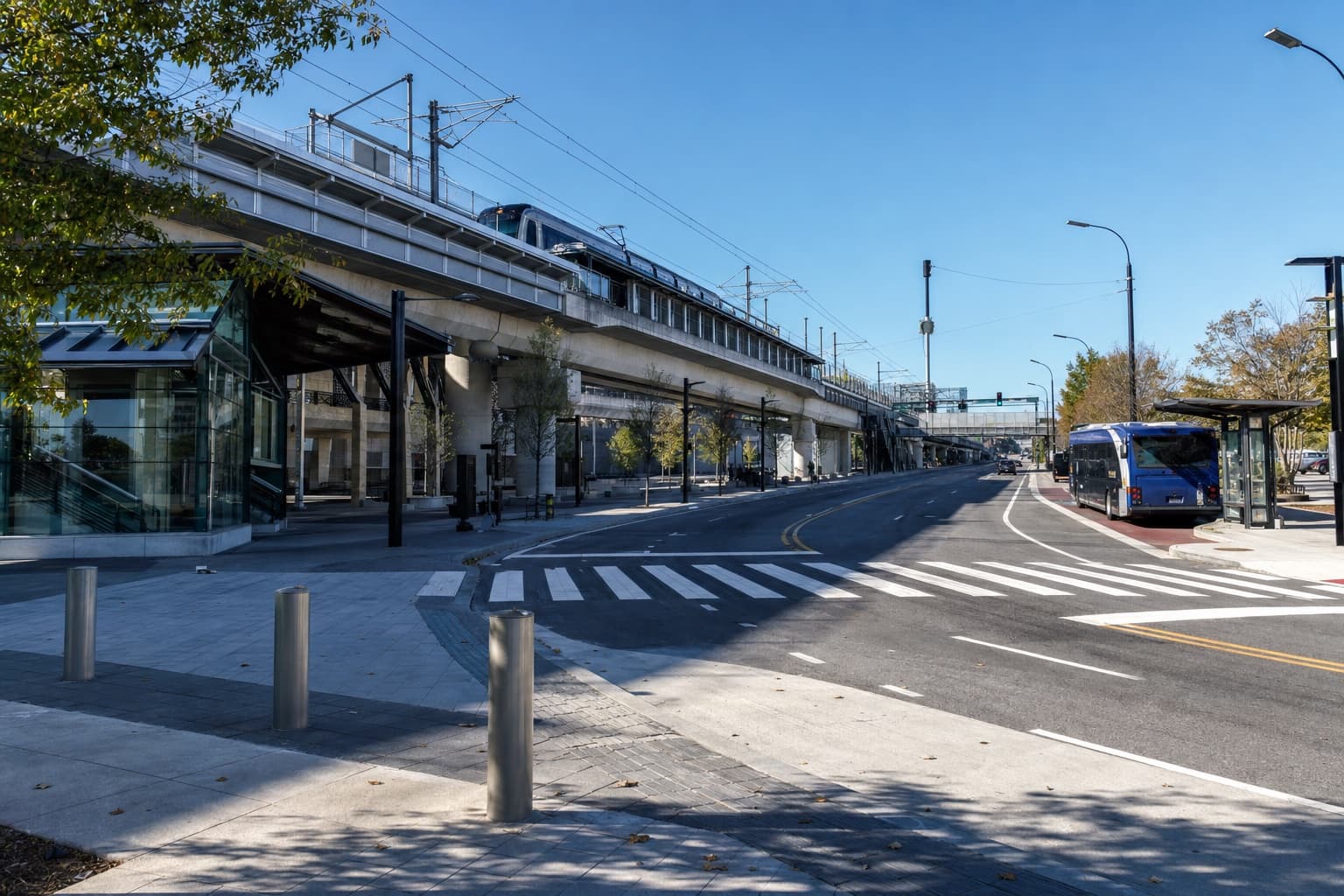
West End Station sits at the heart of one of Atlanta's oldest neighborhoods, on MARTA's south rail line and at a busy bus-to-rail transfer hub. According to MARTA — the Metropolitan Atlanta Rapid Transit Authority — the station blends rail boarding with a cluster of bus bays, which means buses, rideshare drop-offs, and pedestrians all converge in a compact footprint during the morning and evening rush.
The street grid around the station amplifies the danger. Riders routinely cross Lee Street SW (carrying US 29 / GA 14, a five-lane arterial) and Ralph David Abernathy Boulevard (four lanes) to reach the platform and bus bays. Just to the north, Interstate 20 — the Ralph David Abernathy Freeway — feeds fast-moving traffic down on- and off-ramps onto these surface streets, mixing highway-speed drivers with stop-and-go transit movement.
Event surges make a hard situation worse. Mercedes-Benz Stadium and State Farm Arena sit roughly 1.5 to 1.8 miles northeast, and before and after Falcons, Atlanta United, and Hawks games — and major concerts — large crowds push onto West End Station platforms and into the surrounding crosswalks. Add steady Atlanta University Center student foot traffic to the daily commute, and the result is a transit hub where pedestrians, buses, cars, and rideshare vehicles are constantly negotiating the same few intersections.
According to NHTSA, the National Highway Traffic Safety Administration, pedestrian fatalities nationwide reached 7,522 in 2022 — the highest figure since 1981. According to GOHS, the Governor's Office of Highway Safety, more than 1,500 people are killed on Georgia roads in a typical recent year. In a dense, walkable, transit-first neighborhood like West End, that risk does not spread evenly — it concentrates right where riders meet traffic at the station.
The 6-Month Deadline That Can End Your Case Before It Starts
Here is the trap that catches most MARTA victims. Because MARTA is a public transit authority, a claim against it is not treated like an ordinary crash between two private drivers. Georgia's ante litem notice rule for municipal-type entities, O.C.G.A. § 36-33-5(b), requires that written notice of the claim be served within six months of the injury. That notice must describe the time, place, and extent of the injury and the negligence claimed. If it is not properly served in time, the claim is generally barred — even though Georgia's two-year personal-injury statute of limitations under O.C.G.A. § 9-3-33 has not yet expired.
That gap is exactly where people lose their rights. Many injured riders assume they have two years to "get around to it," focus on recovering, and never serve the six-month notice. By the time they speak with a lawyer, the strongest claim is already gone.
Mark Wade, Managing Partner of Georgia Auto Law, puts it bluntly: a MARTA case runs on two clocks, and most people only know about the two-year lawsuit deadline, so they wait while the six-month notice clock quietly runs out first — and by the time they call, the claim may already be barred. Because the precise notice requirements for a transit authority are technical and unforgiving, anyone hurt at West End Station should treat the calendar as the first emergency and have an attorney confirm the exact deadline that applies to their specific incident.
A West End Station MARTA accident lawyer handles that notice as the very first task, then preserves the evidence MARTA controls before it is overwritten — onboard bus and rail video, operator logs, and maintenance records. You can read more about how these transit claims work on our MARTA bus accident claims page and our broader Georgia bus accident lawyer overview.
Who You Can Sue After a MARTA Accident at West End Station
Liability depends on what type of incident happened and who caused it. In many West End Station cases, MARTA itself is the responsible party — as the employer of the bus or train operator, or as the entity responsible for maintaining the station's stairs, escalators, and platforms. In others, a third party shares or carries the blame: another driver who collided with a MARTA bus, or a rideshare driver who stopped in a travel lane on Ralph David Abernathy Boulevard.
The path is rarely "all or nothing." A single crash at the bus bays can involve MARTA and a private motorist at the same time, which is one reason these claims benefit from early investigation and an experienced Georgia personal injury lawyer sorting out each party's share of fault.
Have Questions About Your Case?
Get a free consultation with an experienced Georgia accident attorney.
Types of MARTA Accidents at West End Station
| Incident at West End Station | Typical cause | Who may be liable |
|---|---|---|
| MARTA bus strikes a person in a crosswalk | Operator fails to yield turning onto Lee Street SW | MARTA, as the operator's employer |
| Bus-versus-car collision at the bus bays | Bus pulling in or out with a blocked sightline | MARTA and/or the other driver |
| Boarding or alighting fall on a bus or train | Sudden start/stop, closing doors, platform gap | MARTA |
| Slip, trip, escalator, or stair fall in the station | Wet floor, broken handrail, poor maintenance | MARTA (premises responsibility) |
| Rideshare or kiss-and-ride crash at the entrance | Driver stops in a travel lane on RDA Boulevard | The other driver and/or rideshare insurer |
Boarding and alighting injuries — the falls, sudden stops, and door incidents in that table — frequently produce whiplash and neck injuries. Falls on platforms or stairs and pedestrian strikes near the station are a common source of concussion injuries. In the most serious cases — a rider struck and killed crossing to the station — families may pursue a claim for fatal pedestrian accidents.
How Fault Affects What You Recover
Georgia follows modified comparative negligence under O.C.G.A. § 51-12-33. Two rules matter for a West End Station case. First, you can recover only if you are less than 50% at fault for your own injury. Second, whatever you are awarded is reduced by your percentage of fault — so a $100,000 case in which you are found 20% responsible yields $80,000.
This is exactly where transit cases get fought. MARTA's insurer will often argue that a pedestrian crossed Lee Street SW outside the crosswalk, or that a rider boarded carelessly. Hard evidence — the onboard video, the operator's logs, witness accounts, and the geometry of the crossing — is what keeps a victim on the right side of that 50% line. A seasoned pedestrian accident attorney builds that record before MARTA's account becomes the only one on file.
What to Do After a MARTA Accident at West End Station
The steps you take in the first days shape the entire claim:
- Get medical care immediately. Grady Memorial Hospital — a Level I trauma center — sits a few miles northeast in downtown Atlanta, and Hughes Spalding Hospital handles pediatric trauma nearby. A documented medical record is the backbone of any injury claim.
- Report the incident to MARTA and make sure an incident or operator report is created.
- Preserve evidence fast. Photograph the scene — the bus bay, crosswalk, platform, or stairwell — and note bus or train numbers, times, and witnesses. MARTA's onboard video can be overwritten, so a prompt records-preservation request is critical.
- Do not give a recorded statement to MARTA's claims office or an insurer before you have legal advice.
- Calendar the six-month notice deadline under O.C.G.A. § 36-33-5(b) — and call a lawyer well before it.
According to Federal Transit Administration data reported in the National Transit Database, MARTA ranks among the ten largest public transit systems in the United States — which means its claims operation is experienced, well-resourced, and focused on limiting payouts. That imbalance is the reason early legal help matters.
How a West End Station MARTA Accident Lawyer Builds Your Case
A West End Station MARTA accident lawyer moves on parallel tracks from day one: serving the six-month ante litem notice, sending preservation demands for video and operator records before they cycle out, reconstructing the crash at the station's specific crosswalks and bus bays, and documenting the full scope of your injuries and losses. Suits that follow are filed in Fulton County — the State Court of Fulton County or the Superior Court of Fulton County — and Georgia Auto Law handles every step on a contingency basis. The consultation is free, and there are no fees unless we win. You can also learn more about the surrounding neighborhood on our West End, Atlanta location page.
To talk to a lawyer about a MARTA accident at West End Station, call Georgia Auto Law at (404) 662-4949 for a free consultation.
Frequently Asked Questions
How long do I have to file a claim after a MARTA accident at West End Station?
You must serve written ante litem notice on MARTA within six months of the injury under O.C.G.A. § 36-33-5(b). That is far shorter than Georgia's general two-year personal-injury statute of limitations (O.C.G.A. § 9-3-33), and missing the six-month notice can bar your claim entirely. Contact a lawyer immediately to confirm and meet the deadline.
Can I sue MARTA if I was hurt on a bus or train?
Yes. MARTA can be held responsible as the employer of its bus and train operators and as the entity responsible for maintaining its stations. Because MARTA is a public transit authority, your claim must follow the six-month notice rule and is litigated in Fulton County, so it follows a different path than an ordinary two-driver crash.
What if a private driver — not MARTA — caused the crash near the station?
Then your claim may run against that driver, a rideshare insurer, or both — and sometimes MARTA shares the blame. Crashes at the West End Station bus bays and along Ralph David Abernathy Boulevard frequently involve multiple parties, which is why early investigation of fault is important.
What if MARTA says the accident was partly my fault?
Georgia's modified comparative negligence rule (O.C.G.A. § 51-12-33) lets you recover as long as you are less than 50% at fault, with your award reduced by your share. MARTA's insurer often argues rider fault, so onboard video and witness evidence are key to protecting your recovery.
Which hospital will treat serious injuries from a West End Station accident?
Grady Memorial Hospital, a Level I trauma center, is a few miles northeast in downtown Atlanta, and Hughes Spalding Hospital handles pediatric trauma nearby. Always seek prompt medical care — your medical records are the foundation of any injury claim.
Where would my MARTA case be filed?
West End injury suits are filed in Fulton County — typically the State Court of Fulton County or the Superior Court of Fulton County, depending on the nature and value of the claim.
How much does it cost to hire a West End Station MARTA accident lawyer?
Georgia Auto Law works on a contingency-fee basis. The consultation is free, and you pay no attorney fees unless we recover compensation for you. Call (404) 662-4949 to get started.