Key Takeaways
- Georgia gives most injured pedestrians two years from the crash date to file a personal-injury lawsuit under O.C.G.A. § 9-3-33.
- Drivers must yield to pedestrians in crosswalks under O.C.G.A. § 40-6-91 and must exercise due care to avoid hitting anyone on foot under O.C.G.A. § 40-6-93.
- Georgia's modified comparative negligence rule (O.C.G.A. § 51-12-33) lets you recover even if partly at fault — unless you are 50% or more responsible.
- The Georgia Avenue and Hank Aaron Drive corridor concentrates fast five-lane traffic, event crowds, and out-of-area drivers into a dense Summerhill residential grid.
- Most Summerhill pedestrian injury cases are filed in the State Court of Fulton County; larger matters can go to the Superior Court of Fulton County.
- A nearby Level I trauma center (Grady Memorial Hospital) sits roughly two miles north — fast emergency care strengthens both your recovery and your medical record.
- A Summerhill pedestrian accident lawyer can preserve event-day camera footage and witness accounts before they disappear.
If you were hit while walking near Georgia Avenue or Hank Aaron Drive, a Summerhill pedestrian accident lawyer can tell you the short version first: under Georgia law you generally have two years to file a personal-injury claim, drivers owe you a legal duty of care even outside a marked crosswalk, and you can still recover compensation as long as you were less than 50% at fault. The Summerhill stretch of the Georgia Avenue and Hank Aaron Drive corridor packs five-lane arterial traffic, event-day surges from the nearby stadium district, and Downtown Connector spillover into a few dense residential blocks — a combination that puts people on foot at real risk. This guide walks through who is liable, the Georgia statutes that decide your case, and the steps that protect your claim.
Last reviewed: 2026-06-05
Why the Georgia Avenue and Hank Aaron Drive corridor is dangerous for pedestrians
Summerhill sits in a cluster of intown South Atlanta neighborhoods — alongside Peoplestown, Mechanicsville, and the edge of Grant Park — wedged between the Downtown Connector (I-75/85) and the downtown stadium district. That geography is exactly what makes walking here risky.
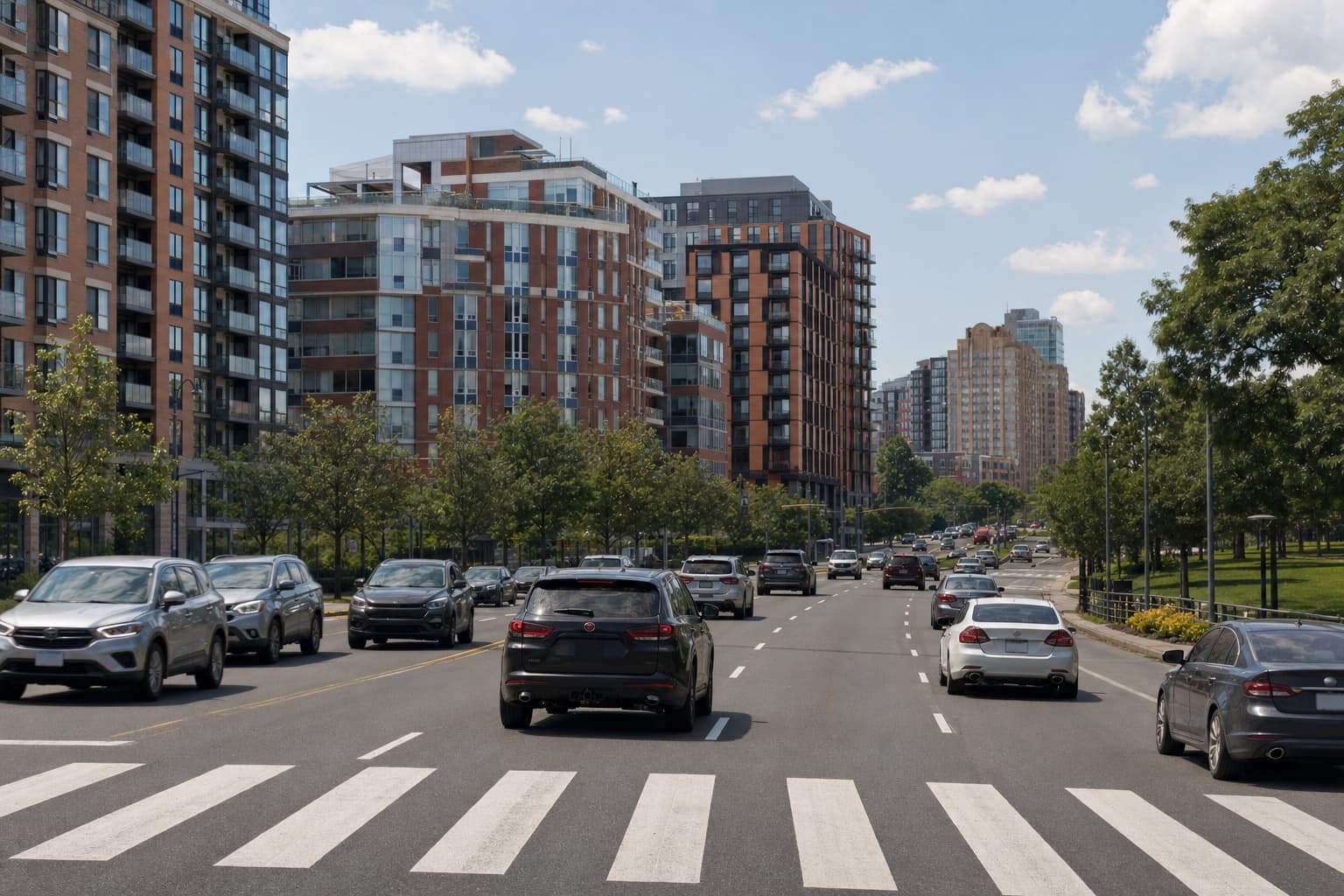
Georgia Avenue and Ralph David Abernathy Boulevard are five-lane arterials, and Hank Aaron Drive is a high-volume event corridor. These wide, fast roads cut straight through a residential grid of narrow streets like Martin Street SE and Pulliam Street SW. When a five-lane arterial meets a neighborhood block, you get a speed mismatch: drivers moving at arterial speeds, pedestrians crossing on a residential scale.
The redevelopment along the Georgia Avenue and Hank Aaron Drive corridor has added foot traffic, on-street parking turnover, and new crossings — more people walking to and from new housing, restaurants, and greenspaces like Phoenix II Park and D.H. Stanton Park. According to CDC (Centers for Disease Control and Prevention) data, drivers struck and killed more than 7,000 pedestrians nationwide in a single recent year, the highest count in decades. According to GOHS (the Georgia Governor's Office of Highway Safety), Georgia consistently ranks among the states with the most pedestrian deaths, with well over 300 reported in a single year. According to NHTSA (the National Highway Traffic Safety Administration), a pedestrian is killed in a traffic crash roughly every 75 minutes in the United States. Those numbers are the backdrop for every crossing on Georgia Avenue.
Event days make it worse. When crowds let out of State Farm Arena and Mercedes-Benz Stadium — both about 1.7 miles north — pedestrians, rideshare vehicles, and post-event drivers stack onto the same corridors at the same time. Many of those drivers are out-of-area and unfamiliar with the residential street grid, and Connector on- and off-ramp spillover funnels fast-moving traffic onto neighborhood arterials. The result is a predictable surge in conflict points right where people are crossing on foot.
What Georgia law says about pedestrian right-of-way
Two statutes control most pedestrian cases in Summerhill.
O.C.G.A. § 40-6-91 governs pedestrian right-of-way in crosswalks. When you are crossing within a marked crosswalk — or an unmarked crosswalk at an intersection — a driver must stop and yield when you are on the driver's half of the roadway or close enough to be in danger. This is the core rule that protects people crossing Georgia Avenue at a corner.
O.C.G.A. § 40-6-93 imposes a broader duty: every driver must exercise due care to avoid colliding with any pedestrian, must sound the horn when needed, and must use proper caution around children and obviously confused or incapacitated people. This duty applies even when you are not in a crosswalk. A common myth is that stepping outside the lines erases your claim. It does not. The driver still has a legal duty of care, and a Summerhill pedestrian accident lawyer can use § 40-6-93 to hold a careless driver accountable even in a mid-block strike.
Georgia's main personal-injury deadline lives in O.C.G.A. § 9-3-33: two years from the date of the injury. Vehicle-only property damage gets a longer four-year window under O.C.G.A. § 9-3-32, but the two-year clock is the one that matters for your bodily-injury claim. Miss it, and the court can throw the case out regardless of how badly you were hurt.
How fault and comparative negligence work
Georgia follows modified comparative negligence under O.C.G.A. § 51-12-33. Your compensation is reduced by your own share of fault, and you are barred from recovering anything only if you are 50% or more at fault. In practical terms, if a jury values your damages at $200,000 and finds you 20% responsible, you recover $160,000.
This matters because insurers routinely try to push fault onto the pedestrian — "you were jaywalking," "you stepped out suddenly," "you were on your phone." Those arguments are designed to nudge you over the 50% line so the carrier pays nothing. Strong, early evidence is the counterweight.
| If the pedestrian is found... | Under O.C.G.A. § 51-12-33 |
|---|---|
| 0% at fault | Full recovery |
| 20% at fault | Recovery reduced by 20% |
| 49% at fault | Recovery reduced by 49% — still recovers |
| 50% or more at fault | No recovery |
Mark Wade, Founder and Lead Attorney at Georgia Auto Law, points out that the single most damaging thing an injured pedestrian can do is give a recorded statement to the driver's insurance company before talking to a lawyer — a few off-hand words about "not looking" can be twisted into a comparative-fault argument that costs you the entire claim. Getting the facts documented correctly, early, is what keeps that argument from sticking.
Have Questions About Your Case?
Get a free consultation with an experienced Georgia accident attorney.
What to do after a pedestrian crash in Summerhill
The steps you take in the first hours shape the case for the next two years.
- Get medical care immediately. Grady Memorial Hospital, a Level I trauma center, is roughly two miles north, and Hughes Spalding Hospital is about 1.3 miles north. Pedestrian impacts cause head injuries that are not always obvious at the scene — if you have any sign of a concussion, get evaluated. Severe head trauma can become the basis for traumatic brain injury claims.
- Call 911 and get a police report. Georgia drivers have a duty to report crashes under O.C.G.A. § 40-6-273. A police report anchors the official record of what happened.
- Document the scene. Photograph the crossing, the vehicle, the lighting, and any crosswalk markings on Georgia Avenue or Hank Aaron Drive. Get names and numbers of witnesses before the event-day crowd disperses.
- Preserve camera footage fast. Redevelopment and businesses along the corridor often have cameras, and so do nearby venues. That footage gets overwritten in days, not months.
- Do not give a recorded statement to the at-fault insurer. Politely decline until you have spoken with an attorney.
- Call a lawyer. Free consultations are standard, and the firm works on contingency — no fees unless you win.
If the driver fled, the case becomes a hit-and-run matter. Drivers who leave the scene violate O.C.G.A. § 40-6-270, and even when the driver is never identified, your own auto policy's uninsured motorist coverage under O.C.G.A. § 33-7-11 may still pay your injury claim. The procedures specific to leave-the-scene cases overlap with hit-and-run accident claims.
Where Summerhill pedestrian cases are filed
Summerhill, Peoplestown, Mechanicsville, and the Grant Park area (ZIP 30315) all fall within Fulton County. Most pedestrian personal-injury suits are filed in the State Court of Fulton County, while the Superior Court of Fulton County handles larger matters and cases involving equitable relief. Knowing the right venue — and the local rules that come with it — is part of why having a Georgia personal injury lawyer familiar with Fulton County matters.
The corridor's traffic mix complicates some cases. Event-day crashes near the stadium district often involve out-of-area drivers, and post-event impairment is a real factor on these roads after let-out. When a pedestrian is killed by an impaired driver, the family's case can move into fatal DUI crash claims territory under Georgia's wrongful-death framework. Whatever the facts, the foundation is the same body of pedestrian and negligence law.
Why local knowledge matters
A pedestrian claim on Georgia Avenue is not the same as one in a quiet suburb. The five-lane geometry, the event-day surge, the Connector spillover, and the dense school zones nearby — Martin Luther King Jr. Middle School and others sit within a half-mile — all feed into how fault is analyzed and how damages are proven. A firm that knows this corridor knows where the cameras are, how the let-out traffic moves, and how to rebut the "the pedestrian came out of nowhere" defense with specifics. That is the value a dedicated Georgia pedestrian accident lawyer brings, and it is reinforced by the broader experience of our Atlanta personal injury attorneys and our work across Downtown Atlanta and the wider Georgia car accident lawyer practice.
Frequently Asked Questions
Do I have a case if I was not in a crosswalk when I was hit in Summerhill?
Possibly, yes. While O.C.G.A. § 40-6-91 governs crosswalk right-of-way, O.C.G.A. § 40-6-93 requires every driver to exercise due care to avoid hitting any pedestrian, crosswalk or not. Being outside the lines may factor into comparative fault under O.C.G.A. § 51-12-33, but it does not automatically end your claim. A Summerhill pedestrian accident lawyer can evaluate the full picture.
How long do I have to file a pedestrian accident claim in Georgia?
Generally two years from the date of injury for the personal-injury claim, under O.C.G.A. § 9-3-33. Property-damage claims have a four-year window under O.C.G.A. § 9-3-32, but do not wait — evidence like camera footage along the Georgia Avenue corridor disappears within days.
What if the driver who hit me on Hank Aaron Drive left the scene?
Leaving the scene violates O.C.G.A. § 40-6-270. Even if the driver is never identified, your own uninsured motorist coverage under O.C.G.A. § 33-7-11 may pay your injury claim. Preserve any witness information and nearby camera footage as fast as possible.
Can I still recover money if I was partly at fault?
Yes, as long as you were less than 50% at fault. Georgia's modified comparative negligence rule (O.C.G.A. § 51-12-33) reduces your recovery by your share of fault but only bars it entirely at 50% or more. This is why insurers work hard to inflate the pedestrian's blame.
Which court handles a Summerhill pedestrian accident case?
Summerhill falls within Fulton County. Most pedestrian injury suits are filed in the State Court of Fulton County, while the Superior Court of Fulton County hears larger or equity-involving matters.
Why are event days at the stadiums more dangerous for pedestrians?
When crowds let out of State Farm Arena and Mercedes-Benz Stadium, pedestrians, rideshare vehicles, and post-event drivers all stack onto Hank Aaron Drive and Georgia Avenue at once. Many drivers are out-of-area and unfamiliar with the residential grid, and some are impaired, multiplying the risk to people on foot.
How much does it cost to hire a Summerhill pedestrian accident lawyer?
Consultations are free, and these cases are handled on a contingency-fee basis — you pay no attorney fees unless we recover compensation for you.
What injuries are common in pedestrian crashes on these corridors?
Because of the speed mismatch on five-lane arterials, pedestrian impacts frequently cause head trauma, fractures, and internal injuries. Head injuries in particular can support traumatic brain injury claims, and fast care at Grady Memorial Hospital or Hughes Spalding Hospital both protects your health and documents the harm.
Talk to a Summerhill pedestrian accident lawyer
If you or a loved one was hurt walking on the Georgia Avenue or Hank Aaron Drive corridor, the deadlines are real and the evidence is perishable. Georgia Auto Law offers a free consultation and works on contingency — no fees unless we win. Call (404) 662-4949 to speak with a Summerhill pedestrian accident lawyer about your rights.