Key Takeaways
- A Pill Hill Peachtree Dunwoody hit and run lawyer almost always opens civil recovery through the victim's own UM/UIM policy under O.C.G.A. § 33-7-11 — not by waiting for police to find the fleeing driver.
- The Pill Hill corridor on Peachtree Dunwoody Road sits adjacent to I-285 on-ramps at Johnson Ferry Road, giving a fleeing driver an interstate escape within roughly 90 seconds of impact.
- ZIP 30342 spans three police jurisdictions — Sandy Springs PD north, Brookhaven PD east, and APD Zone 2 south — and a misfiled report kills the UM claim before the file ever opens.
- Georgia's two-year statute of limitations under O.C.G.A. § 9-3-33 controls the injury claim; most UM policies impose much shorter notice deadlines.
- The fleeing driver's criminal duties under O.C.G.A. §§ 40-6-270 and 40-6-271 describe what should have happened — those statutes do not pay medical bills.
- Doorbell-camera and hospital-driveway security-camera canvassing within 24 to 48 hours is the single highest-leverage step in any Pill Hill Peachtree Dunwoody hit-and-run case.
- Civil claims are filed in Fulton County State Court at 185 Central Ave SW, Atlanta — not in any municipal court inside 30342.
- Georgia personal-injury claims must be filed within two years of the crash under O.C.G.A. § 9-3-33, with modified comparative negligence under O.C.G.A. § 51-12-33 reducing recovery by the plaintiff's share of fault.

A Pill Hill Peachtree Dunwoody hit and run lawyer represents people struck on Peachtree Dunwoody Road inside the Pill Hill medical corridor — Northside, Children's at Scottish Rite, and Emory Saint Joseph's — by a driver who fled toward the I-285 on-ramps at Johnson Ferry Road. Most cases never identify the at-fault car, so civil recovery runs through the victim's own uninsured motorist coverage under O.C.G.A. § 33-7-11, and the doorbell footage that supports it overwrites within 7 to 14 days.
What a Pill Hill Peachtree Dunwoody Hit and Run Lawyer Actually Does
A Pill Hill Peachtree Dunwoody hit and run lawyer represents people struck on the segment of Peachtree Dunwoody Road that runs north through Atlanta's hospital corridor, past the campuses of Northside Hospital, Children's Healthcare of Atlanta at Scottish Rite, and Emory Saint Joseph's Hospital, and toward the I-285 on-ramps at Johnson Ferry Road. The work is fundamentally different from a routine car-accident case for one reason: there is almost never an identified defendant. Recovery happens through the victim's own uninsured motorist (UM) coverage and through a fast, structured evidence canvass — not through normal liability litigation.
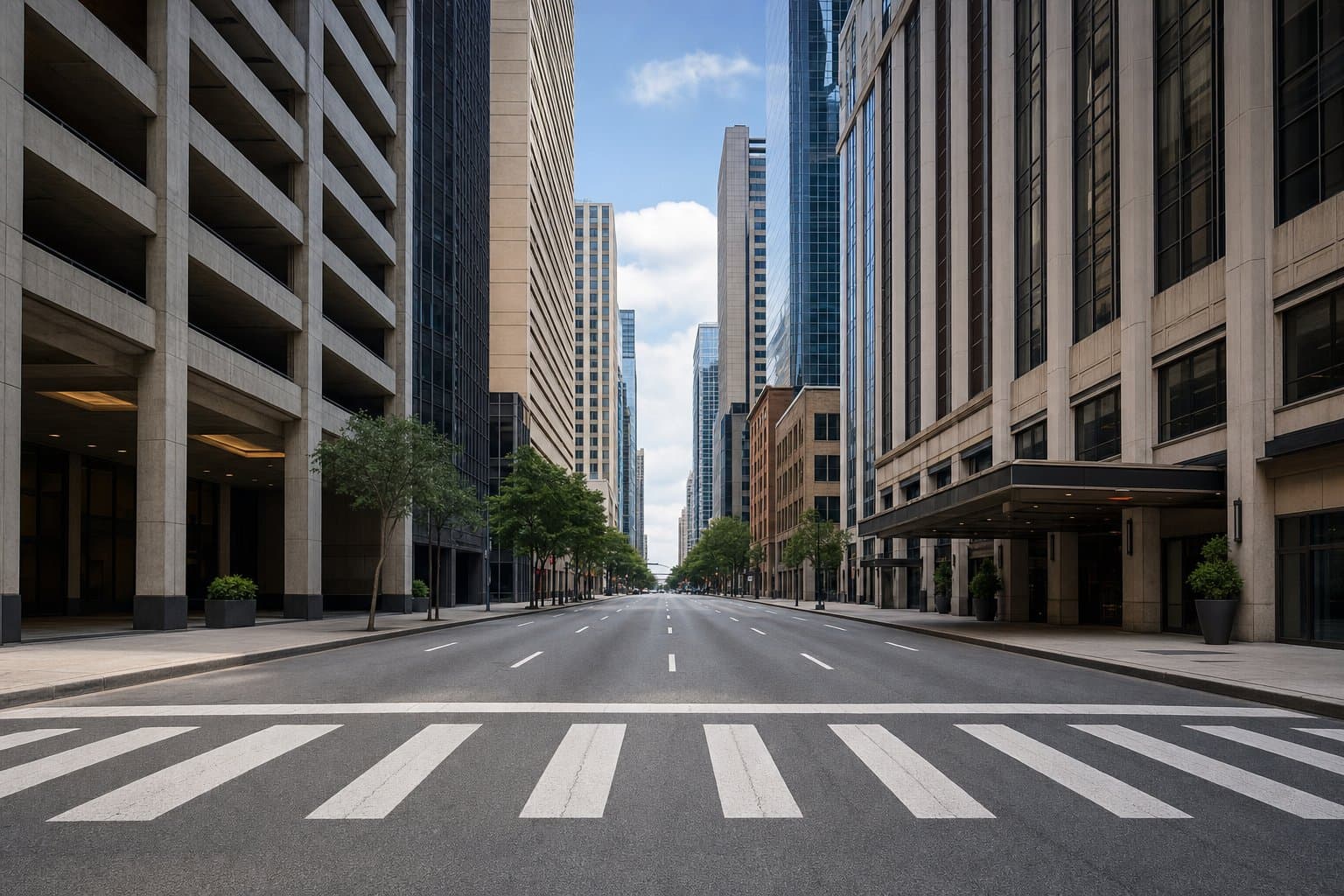
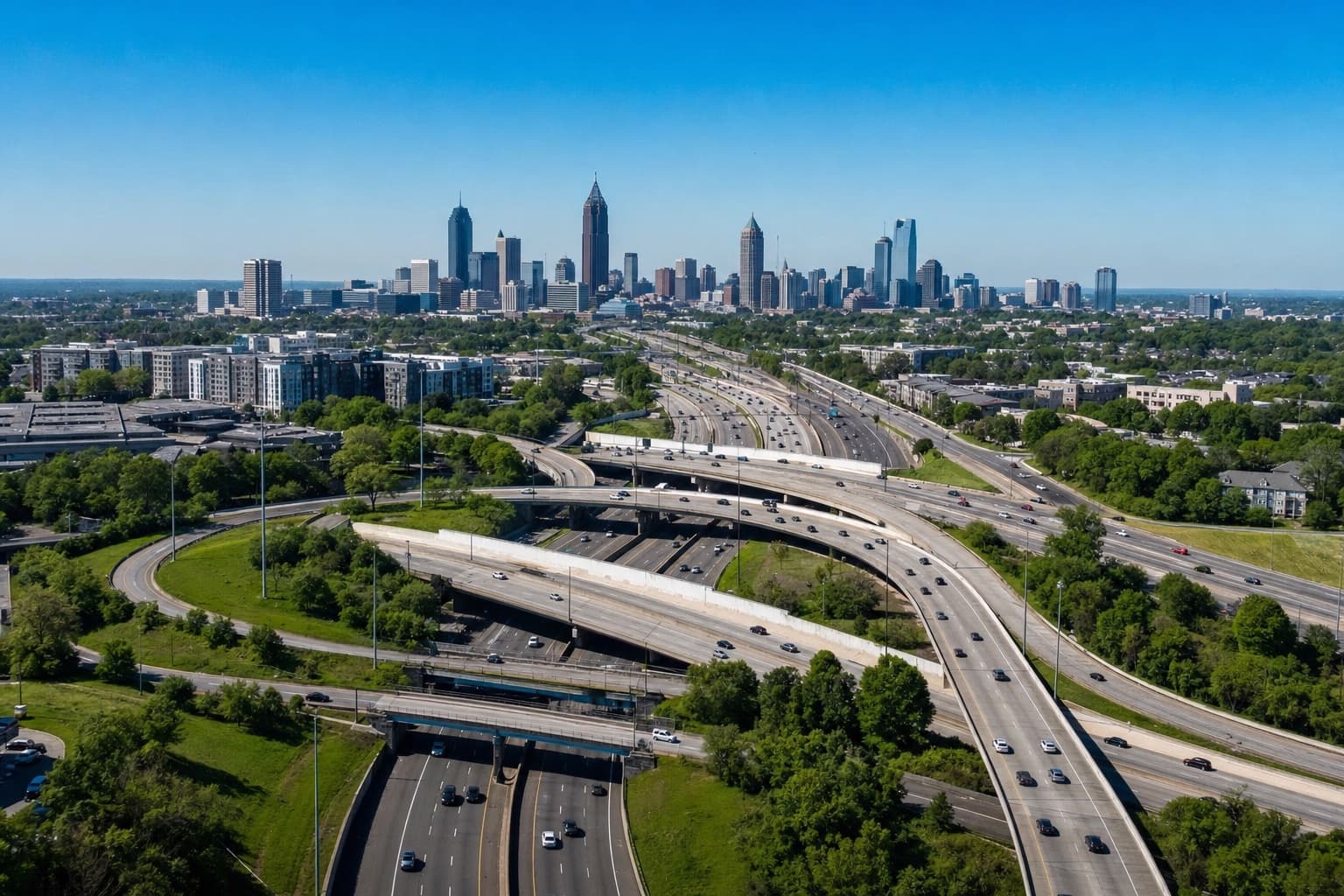
This corridor produces a documented concentration of hit-and-run flight cases for one reason: geometry. Peachtree Dunwoody Road runs straight north into a cluster of I-285 ramps clustered at Johnson Ferry Road, the Glenridge Connector, and the Northside Drive frontage. A driver who strikes someone at a hospital driveway entry on Peachtree Dunwoody can reach the interstate on-ramp at Johnson Ferry Road in under 90 seconds and be moving westbound on I-285 toward Cobb County or eastbound toward DeKalb before the first patrol car reaches the scene. According to the AAA Foundation for Traffic Safety's hit-and-run analysis, more than one in five U.S. pedestrian fatalities now involves a fleeing driver, with the fatal hit-and-run rate rising consistently since 2009 and concentrated on multilane arterials at night and on corridors with immediate highway access — the exact profile of the Pill Hill stretch of Peachtree Dunwoody after dark.
Mark Wade, lead attorney at Georgia Auto Law, points out that the Pill Hill cases look different from the Chastain Park hit-and-run pattern and from the East Palisades trailhead pattern even though all three involve fleeing drivers. The Chastain corridor produces flight on Roswell Road's wide, signal-rich grid after concert release. East Palisades produces flight on residential trailhead approach roads with no good escape. Pill Hill produces flight straight onto the interstate. A serious lawyer maps the case to the corridor's specific escape geometry before deciding where to canvass, which police agency to chase, and which surveillance source — residential doorbell or hospital driveway — to pull first.
Why the Pill Hill Segment of Peachtree Dunwoody Is a Documented Flee Pattern
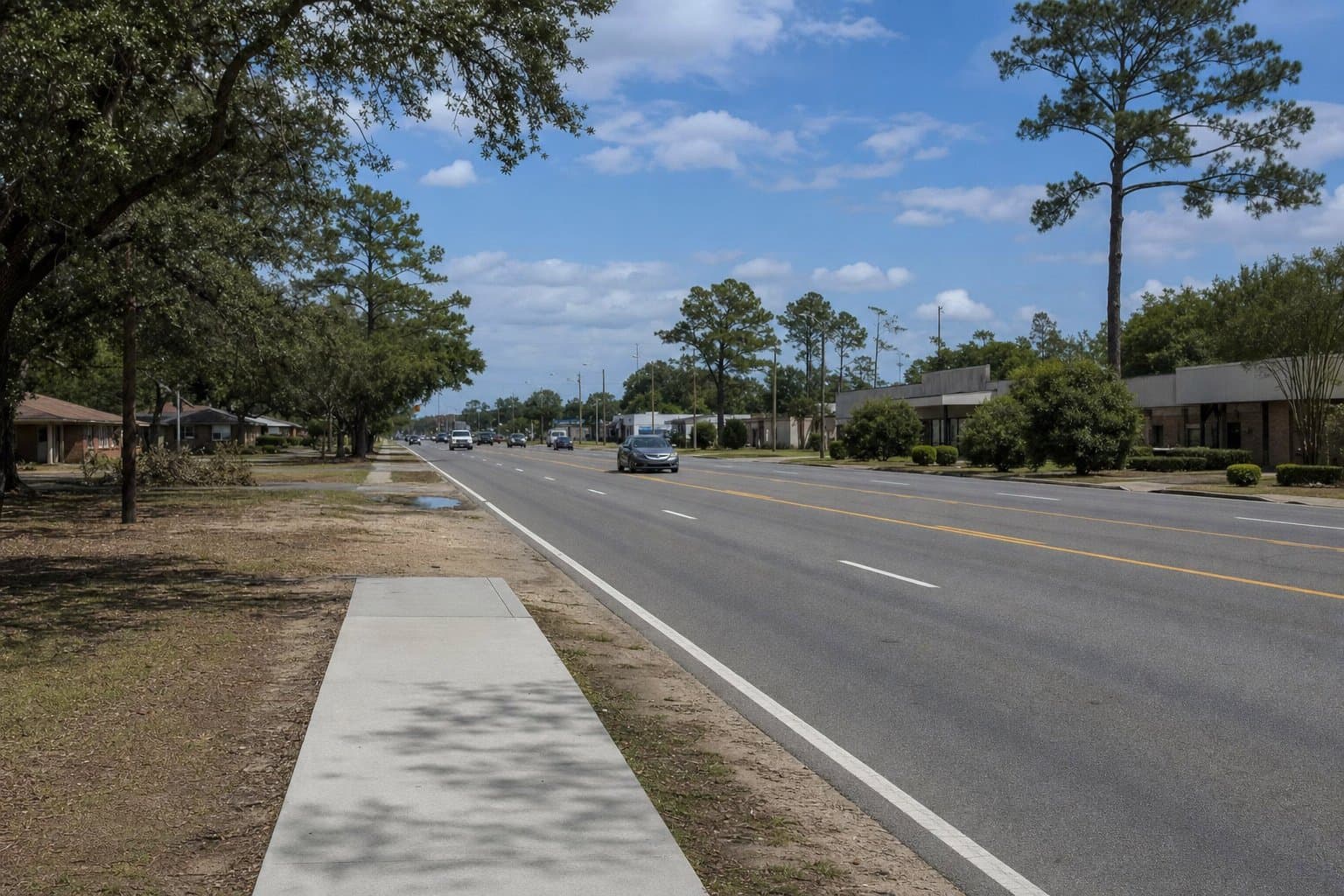
The Pill Hill segment of Peachtree Dunwoody Road has every feature traffic-safety researchers associate with elevated hit-and-run risk. The roadway itself is a two-lane secondary corridor with a posted 35 mph limit, no shoulder margin, and dense commercial driveways feeding the three hospital campuses. Hospital shift changes — twice daily on a 12-hour rotation, at roughly 6:30 a.m./6:30 p.m. and 7:00 p.m./7:00 a.m. — produce predictable surges of fatigued staff drivers on the same corridor families use for outpatient surgery appointments and oncology infusion visits. I-285 backups at the Glenridge Connector and Roswell Road exits divert commuters onto Peachtree Dunwoody Road as a parallel route, adding through-traffic that has no business in a hospital zone.
A driver who strikes someone at a hospital entry has dozens of escape options inside of two minutes. The Johnson Ferry Road / I-285 cloverleaf sits just north of the Northside Hospital driveway. The Glenridge Connector reaches I-285 from the Emory Saint Joseph's frontage. South of the cluster, Peachtree Dunwoody itself feeds toward Mt. Vernon Highway and back into North Buckhead. The mature loblolly pines and hardwoods crowding the shoulders make license-plate identification from a moving witness vehicle nearly impossible at night — and most of these crashes happen at the early-evening or late-night shift change in low light. Visitors served by Brookhaven personal injury attorney practice on the east side of ZIP 30342 face the same geometry from the opposite jurisdictional approach.
According to the National Highway Traffic Safety Administration, U.S. traffic fatalities remained above 40,000 in 2022 and 2023, with vulnerable road users — pedestrians and cyclists — a rising share of the total. The Governors Highway Safety Association (GHSA) further reports that Georgia consistently ranks above the national average for pedestrian fatalities, and that most occur on arterial roads at night, away from marked crosswalks. The Pill Hill segment of Peachtree Dunwoody Road at 7:15 p.m. on a weekday — shift change in autumn dusk — fits that profile precisely.
The Three-Police-Departments / One-ZIP-Code Problem
ZIP 30342 straddles three municipalities: the City of Atlanta, the City of Sandy Springs, and the City of Brookhaven. The boundary lines do not run along Peachtree Dunwoody Road. They cut across residential blocks and the corner of the hospital campuses, so a crash 200 feet north of an intersection may answer to a different police department than a crash 200 feet south. Sandy Springs Police Department covers the northern stretch up toward Hammond Drive. Brookhaven Police Department covers the east side, into Lynwood Park and the Osborne Road residential grid. Atlanta Police Department Zone 2 covers the southern stretch into North Buckhead. Victims who do not know which line they were standing on regularly call the wrong agency. The wrong agency dispatches a unit, takes a statement, opens a case number — and then the file goes into a records system the UM insurer cannot find. By the time anyone reconciles which department actually had jurisdiction, the 24-to-48-hour evidence window has closed.
A Pill Hill Peachtree Dunwoody hit and run lawyer treats jurisdiction as the first triage question. The corridor coordinates of the impact determine which department wrote (or should have written) the report, which records portal produces it, and how long the case number takes to surface. The table below maps it:
| Police Department | Coverage Area Inside ZIP 30342 | Records Portal Timing | What UM Insurer Needs |
|---|---|---|---|
| Sandy Springs PD | North of the Atlanta city line — Peachtree Dunwoody between Hammond Drive and the Sandy Springs boundary | Typically 3 to 7 business days via online portal | Case number, narrative, and confirmation the driver fled |
| Brookhaven PD | East side of 30342 — Lynwood Park, Osborne Road, Caldwell Road, and the eastern frontage of Peachtree Dunwoody | Typically 5 to 10 business days; in-person request often faster | Same — case number and fled-driver confirmation |
| APD Zone 2 | South of the Sandy Springs / Brookhaven lines — North Buckhead approach to Peachtree Dunwoody | Open Records Act request; 3 business days for the request, then variable | Same — plus Zone 2 supplemental if homicide unit involved |
| Crash on the boundary line | Either agency may respond; occasionally both | Two reports must be reconciled | Both case numbers; narrative comparison |
Patients treated inside Pill Hill often present with broken bones and orthopedic injuries from a vehicle crash or with concussion injuries after a crash workup needs, and the medical-records timeline for those workups frequently overtakes the police records timeline. The lawyer's job is to keep both on parallel tracks so the UM claim is not held up by an unfound case number.
Have Questions About Your Case?
Get a free consultation with an experienced Georgia accident attorney.
Criminal Duties vs. Civil Recovery: Why the Statutes Diverge
The fleeing driver had specific Georgia legal obligations the moment the crash occurred. O.C.G.A. § 40-6-270 governs the duty of a driver involved in an accident resulting in injury, death, or significant property damage — including the duty to stop immediately, return to the scene, and remain. O.C.G.A. § 40-6-271 separately requires the driver to give name, address, vehicle registration, and license information, and to render reasonable aid (including, where necessary, arranging transport to medical care). Violation of either statute is a criminal offense, and in cases involving serious injury or death it can be charged as a felony.
Those statutes describe what should have happened. They do not, by themselves, pay any hospital bill or replace wages lost while the victim heals. The criminal prosecution (handled by the Fulton County District Attorney for felony flight, or the Solicitor for misdemeanor flight) and the civil injury claim run on entirely different tracks. A Pill Hill Peachtree Dunwoody hit and run lawyer treats the criminal case as evidence — not as the recovery vehicle.
Your Own UM Coverage: The Real Source of Payment
In a hit-and-run, civil recovery typically runs through O.C.G.A. § 33-7-11 — Georgia's uninsured motorist coverage statute — applied to the victim's own auto policy, even though the victim was not at fault. Georgia recognizes two UM forms ("add-on" and "reduced-by"); the form on the policy controls whether UM stacks on top of an at-fault driver's policy if that driver is ever identified. A few facts trip up victims who try to handle UM claims without a lawyer:
- UM coverage reaches pedestrians and cyclists, not just people inside the insured vehicle. A patient walking from the Northside parking deck to the main entrance who is struck on Peachtree Dunwoody and the driver flees has UM coverage in play even though the patient's own car is in the deck.
- UM coverage reaches resident relatives. An adult son or daughter living at home, a spouse, a dependent — each may have their own UM policy that stacks onto the victim's.
- Most UM policies require prompt written notice and full cooperation. Failing to give notice early can be argued as a coverage defense even though the two-year SOL under O.C.G.A. § 9-3-33 is still open.
- Some policies require a police-report case number to trigger UM coverage. The wrong department's case number — or no number at all — slows the file.
This is the recovery pattern covered in detail on the firm's uninsured motorist coverage in Georgia page, and it is why the first phone call after the ER matters so much. Mark Wade emphasizes that the UM insurer is not a friendly first-party payer once the claim crosses a threshold — once the medical bills clear what the adjuster considers a "soft tissue" range, the insurer's defense posture matches what an at-fault driver's insurer would do, including raising comparative-fault arguments under O.C.G.A. § 51-12-33.
The Doorbell-Camera Window: Why 48 Hours Decides the Case
Hit-and-run cases live or die on whether the fleeing vehicle is identified, and on a hospital-corridor arterial that question almost always comes down to camera footage. The Pill Hill corridor has two camera sources most victims do not think about until it is too late:
The first is residential. The streets feeding Peachtree Dunwoody — Mt. Paran Road, Mt. Vernon Highway, Wieuca Connector, and the residential grid east into Lynwood Park (Osborne Road, Caldwell Road, Lynwood Drive) — are blanketed with Ring, Nest, Wyze, Arlo, and Eufy doorbell systems. Most are configured with motion-triggered recording and a 7-to-14-day rolling overwrite. Free-tier retention is often as short as 24 to 72 hours. A door-to-door canvass within the first 48 hours routinely produces a plate angle, a make and model, a distinctive damage feature, or a unique paint that the police descriptor missed. The same canvass at day 10 produces nothing.
The second is commercial. Every hospital entry on Peachtree Dunwoody Road — Northside, Children's at Scottish Rite, Emory Saint Joseph's — has high-resolution security cameras at the driveway entries, the valet stands, the parking-deck ramps, and the ER drop-off lanes. Hospital security departments do not volunteer this footage. They release it pursuant to a properly drafted preservation letter and, if necessary, a subpoena. The cameras face the wrong way to record the impact directly, but they reliably capture the fleeing vehicle's silhouette, color, taillight signature, and direction of travel within seconds of leaving the scene — which is often the only evidence that supports the UM claim.
According to a National Highway Traffic Safety Administration analysis of hit-and-run crashes, the share of cases that close with the at-fault driver identified drops sharply with each passing day after the crash, and the steepest drop happens in the first 72 hours. That is the same window in which residential doorbell footage decays and in which hospital security footage may be overwritten on a rolling buffer (commonly 14 to 30 days, but increasingly compressed). Treating the first two days as the entire evidentiary case — rather than waiting on police follow-up — is the single largest difference between a recovered claim and an unrecovered one. People injured this way often need Atlanta hit-and-run accident claims handled in parallel with their medical treatment, not after.
Pedestrians, Cyclists, Visitors — UM Reaches All of Them
A hit-and-run on Peachtree Dunwoody Road inside Pill Hill can involve a patient walking from a parking deck, a hospital employee leaving shift change, a visitor unfamiliar with the corridor turning into the wrong driveway, or a cyclist riding the corridor's narrow shoulder-free lanes. The recovery path is the same — UM coverage under O.C.G.A. § 33-7-11 — but the defenses differ. Georgia's modified comparative-negligence rule under O.C.G.A. § 51-12-33 bars recovery if the victim is 50% or more at fault. In a hit-and-run the insurer often argues the victim contributed: a pedestrian crossed outside a marked crosswalk, a cyclist failed to ride as far right as practicable, a driver pulling into a hospital driveway failed to yield. Block-face photos, sight-line measurements, and the same camera footage that identifies the fleeing vehicle also defeat those defenses. Patients treated by an Atlanta car accident lawyer for hospital-corridor injuries face the same UM analysis whether they were in a vehicle, on foot, or on a bike.
What to Do at the Scene — and in the 48 Hours After
If a driver just struck you on Peachtree Dunwoody Road inside the Pill Hill corridor and fled:
- Call 911 immediately. The dispatch timestamp anchors the medical record and the insurance claim.
- Tell the dispatcher your exact location — Peachtree Dunwoody Road plus the nearest hospital entry or intersection — so the right department responds the first time. If you are uncertain whether you are in Sandy Springs, Brookhaven, or Atlanta city limits, say so; the dispatcher will route the closest agency.
- Stay where the crash happened. Officers will document position; moving destroys the report's accuracy.
- Photograph the scene before anything moves: your position, vehicle position, debris, skid marks, road geometry, the nearest hospital entry, visible address numbers, and any obvious commercial security cameras.
- Note everything you can about the fleeing vehicle: direction of travel (north toward Johnson Ferry / I-285, south toward Buckhead, east into Lynwood Park, west into Sandy Springs), make and model guess, color, partial plate, distinctive damage or stickers.
- Get the names and phone numbers of every witness on the sidewalk, at the valet stand, or in a stopped car. Hospital-corridor witnesses scatter within minutes.
- Seek medical attention the same day. Concussion symptoms and internal injuries can show hours or days later. Treatment gaps become the defense argument that follows comparative fault.
- Within the first 24 hours, call a lawyer who can deploy a same-week canvass of both residential doorbell footage and hospital-driveway security footage. Both decay; the hospital footage requires a preservation letter the same day.
- Pull every auto-insurance policy in your household and any household where a resident relative lives. UM coverage stacks; available limits are unknown until every declarations page is read.
- Do not give a recorded statement to your own UM adjuster — or to anyone calling on behalf of an at-fault driver later identified — before talking to a lawyer.
Visitors served by Sandy Springs car accident lawyer practice on the north side of 30342 face the same priority order, as do those crossing into Buckhead Atlanta auto accident lawyer territory on the south side. The sequence is 911, scene photos, witnesses, treatment, lawyer, dual canvass — in that order, in the first two days. The broader Atlanta personal injury law firm market handles thousands of these cases a year, but the corridor-specific evidence work has to happen in the first 48 hours regardless of which firm handles the rest.
Fulton County State Court Is Where Civil Claims Land
A civil claim arising from a Pill Hill Peachtree Dunwoody hit-and-run is filed in Fulton County State Court at 185 Central Ave SW, Atlanta — not in any municipal court inside 30342. Sandy Springs Municipal Court, Brookhaven Municipal Court, and the Atlanta Municipal Court each hear traffic citations only, including the misdemeanor flight charge against an at-fault driver who is later identified. Larger or equity-related matters can also be filed in Fulton County Superior Court. The civil claim and the criminal flight prosecution move on separate calendars and reach the firm through separate calendar staff.
Last reviewed: May 26, 2026
Frequently Asked Questions
Which police department do I call after a hit-and-run on Peachtree Dunwoody at Pill Hill?
Call 911 and let the dispatcher route the right agency. ZIP 30342 spans three departments — Sandy Springs PD covers the northern stretch toward Hammond Drive, Brookhaven PD covers the east side into Lynwood Park, and APD Zone 2 covers the southern stretch into North Buckhead. The boundary lines cut through residential blocks and the corner of hospital campuses, so a crash 200 feet north of an intersection may answer to a different department than a crash 200 feet south. Tell the dispatcher your exact location — Peachtree Dunwoody Road plus the nearest hospital entry or intersection — so the right unit responds the first time. A misfiled report with the wrong department buries the case number in a records system the UM insurer cannot find, and that delay alone has killed otherwise solid UM claims.
Does my UM coverage protect me as a pedestrian or hospital visitor?
Yes. Georgia uninsured motorist coverage under O.C.G.A. § 33-7-11 attaches to people, not just to insured vehicles. If you own or are insured under an auto policy with UM coverage and you were struck as a pedestrian on Peachtree Dunwoody Road — including walking from a Northside parking deck to the entrance, or crossing between Children's at Scottish Rite and the adjacent campus — your UM coverage is in play even though your car is parked somewhere else. The rule also reaches resident relatives. An adult child living with a parent, a spouse, or a dependent — each may carry their own UM policy that stacks onto yours. Inventorying every household policy before agreeing to anything from a primary insurer is one of the first things a Pill Hill Peachtree Dunwoody hit and run lawyer does.
How fast do I have to canvass for footage?
Realistically, 24 to 48 hours, and rarely more than 7 to 14 days for residential doorbell systems. Ring, Nest, Wyze, Arlo, and Eufy store motion-triggered clips on a rolling buffer that overwrites old footage as new clips are recorded; free tiers often retain only 24 to 72 hours. Hospital security cameras at Northside, Children's at Scottish Rite, and Emory Saint Joseph's run longer buffers — commonly 14 to 30 days — but require a preservation letter the same day to lock the footage. Door-to-door canvassing along Peachtree Dunwoody Road and the side streets into Lynwood Park, paired with a same-day preservation letter to each hospital's security department, is the single highest-leverage step in any Pill Hill hit-and-run case.
Does my insurance pay for a hit-and-run?
Yes — if you carry uninsured motorist coverage. Under O.C.G.A. § 33-7-11, Georgia UM coverage pays for medical bills, lost wages, and pain and suffering when the at-fault driver is unidentified, uninsured, or underinsured. The claim is brought against your own auto insurer (or a resident relative's insurer), but it does not behave like a regular first-party claim — you should expect the same defenses an at-fault driver's insurer would raise, including comparative fault under O.C.G.A. § 51-12-33. The two UM forms recognized under Georgia law (add-on and reduced-by) control whether UM stacks on top of an at-fault policy if the driver is ever identified later, which is why the form printed on the declarations page matters.
What is the deadline to file a hit-and-run injury claim?
Two years from the date of the crash under O.C.G.A. § 9-3-33 for personal injury and wrongful death. Property-damage-only claims have four years under O.C.G.A. § 9-3-32. UM policies almost always impose much shorter notice and cooperation deadlines on top of the SOL — many require notice "as soon as practicable" and cooperation with the insurer's investigation. Failing those notice rules can be argued as a coverage defense even though the SOL is still open, which is why prompt counsel matters. The Pill Hill case where the victim waited 18 months to give UM notice and lost coverage entirely is the cautionary tale every Atlanta lawyer references.
What court hears Pill Hill hit-and-run civil cases?
Civil claims from Peachtree Dunwoody Road crashes are filed in Fulton County State Court at 185 Central Ave SW, Atlanta. Sandy Springs Municipal Court, Brookhaven Municipal Court, and the Atlanta Municipal Court each hear traffic citations only — including the misdemeanor flight charge against an at-fault driver who is later identified — but none of them hear injury suits. Larger or equity-related matters can also be filed in Fulton County Superior Court. The civil claim and the criminal flight prosecution move on separate calendars.
Who covers my medical bills at Northside, Children's at Scottish Rite, or Emory Saint Joseph's while the UM claim is pending?
Bills are typically paid through three sources while the case is open: your health insurance (which will assert a subrogation lien against any settlement), any med-pay coverage on your own auto policy, and — for ongoing care — letters of protection from treating providers that defer payment until the case resolves. Georgia does not mandate personal injury protection (PIP), so there is no automatic auto-policy medical benefit unless you bought med-pay. The Pill Hill trauma centers each handle letters of protection routinely; the lawyer coordinates with hospital billing so collections do not chase you while the claim is pending. For cases that overlap with rideshare drop-off scenarios at hospital entries, Uber and Lyft accident claims in Atlanta follow a related but distinct coverage path.
Talk to a Georgia Auto Law Attorney About Your Pill Hill Peachtree Dunwoody Hit-and-Run
If you or a family member was struck on Peachtree Dunwoody Road inside the Pill Hill medical corridor and the driver fled — toward the I-285 ramps at Johnson Ferry Road, east into Lynwood Park, or south toward Buckhead — talk to a Pill Hill Peachtree Dunwoody hit and run lawyer at Georgia Auto Law before you give a recorded statement to any insurance adjuster. Mark Wade and our team have handled hit-and-run cases on this exact corridor and across the broader Atlanta hospital-corridor market. We know the Sandy Springs PD, Brookhaven PD, and APD Zone 2 reporting practices, the Fulton County State Court filing rules, and the UM coverage stacking rules under O.C.G.A. § 33-7-11. We deploy a same-week canvass of residential doorbell footage on Peachtree Dunwoody and the Lynwood Park side streets, paired with same-day preservation letters to the security departments at Northside, Children's at Scottish Rite, and Emory Saint Joseph's. We coordinate care with the same Pill Hill trauma centers while your claim is pending. Consultations are free and we work on a contingency fee — no fee unless we recover for you.