Key Takeaways
- Under O.C.G.A. § 9-3-33, a personal-injury claim from a Georgia car accident must be filed within two years of the crash — missing this deadline almost always extinguishes the claim entirely.
- Georgia's modified comparative negligence rule (O.C.G.A. § 51-12-33) reduces your recovery by your share of fault and bars it completely at 50%.
- Georgia Department of Transportation crash data consistently shows urban arterial roads, intersections, and entrance ramps as the leading crash locations across the state.
- Hit-and-run drivers violate O.C.G.A. § 40-6-270, but criminal prosecution does not pay medical bills — recovery comes through your own UM coverage under O.C.G.A. § 33-7-11.
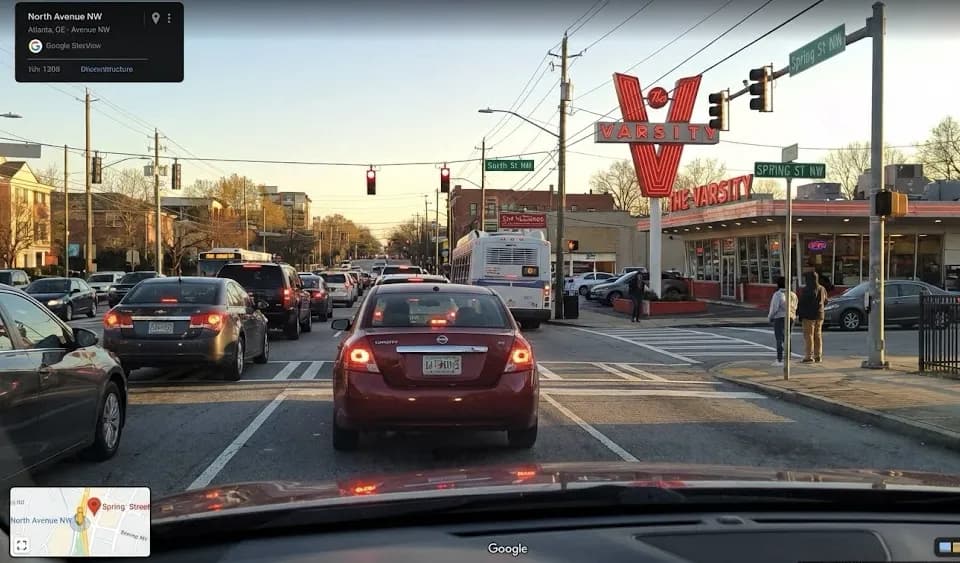
Midtown Atlanta is the beating heart of the city, but it also hosts some of our most dangerous driving corridors. Specifically, the area surrounding The Varsity serves as a funnel for thousands of vehicles daily. The intersection of North Avenue NW and Spring Street NW is particularly hazardous due to the sudden deceleration of highway traffic exiting the Downtown Connector (I-75/85) and merging onto surface streets.
When you combine aggressive lane changes from commuters with the high volume of foot traffic, the risk of injury rises significantly. Drivers often fail to yield to pedestrians or misjudge gaps in traffic when turning onto Spring Street, leading to severe T-bone and sideswipe accidents.
Why “Location” Matters in Your Injury Case Proving liability in Midtown accidents often requires the help of an experienced car accident lawyer who understands these specific local hazards. For example, knowing that the lane markings near the Connector off-ramps are frequently ignored by out-of-town drivers can be a critical detail in establishing negligence.
Community Anchors & Traffic Flow This zone is not just a transit hub; it is a cultural center. The traffic density is further compounded by events at nearby institutions.
Bobby Dodd Stadium: On game days, the influx of fans floods the streets around North Avenue, creating unpredictable stop-and-go traffic patterns that catch even experienced locals off guard.
The Fox Theatre: Just a few blocks south on Peachtree Street, evening shows release hundreds of cars simultaneously, often leading to late-night collisions as tired drivers navigate the one-way grid of Midtown.
IIf you are struck near these landmarks, documenting exactly where the collision occurred relative to these traffic generators can strengthen your claim.
Local FAQ: Midtown Atlanta Accidents
Q: I was hit by an Uber/Lyft driver dropping someone off near The Varsity. Is my case different?
A: Yes. Rideshare accidents in high-density areas like Midtown often involve complex insurance layers. Because the driver was likely “on the clock” or transporting a passenger to a specific destination like the Georgia Tech campus or a Midtown hotel, we can often access the rideshare company’s larger commercial insurance policy rather than just the driver’s personal liability coverage.
- If you were injured in a Georgia crash, a Georgia car accident lawyer can evaluate insurance coverage, fault allocation, and damages — initial consultations through our contact page are free and confidential.
Frequently Asked Questions
Should I give a recorded statement to the other driver’s insurer?
No. The adjuster’s job is to minimize the payout, and recorded statements are mined later for any admission of fault, exaggeration, or inconsistency. You can decline politely and refer them to your attorney or your own insurer.
How is fault determined in a Georgia car accident?
Fault is determined through the police report, scene photos, witness statements, traffic-camera footage where available, vehicle damage patterns, and (for serious crashes) accident-reconstruction analysis. Insurance adjusters apply Georgia’s comparative-negligence rule under O.C.G.A. § 51-12-33 when allocating fault percentages.
How long do I have to file a car-accident claim in Georgia?
Two years from the date of the crash under O.C.G.A. § 9-3-33 for personal injury and wrongful death. Property-damage-only claims have four years under O.C.G.A. § 9-3-32. Missing the deadline almost always bars the claim entirely, even if the at-fault driver clearly caused the crash.
What is modified comparative negligence in Georgia?
Under O.C.G.A. § 51-12-33, a Georgia plaintiff who is less than 50% at fault can still recover, but their damages are reduced by their percentage of fault. At 50% or more, recovery is barred entirely. This is why insurance adjusters work hard to assign you any percentage of fault they can.