Key Takeaways
- Two-year deadline. Georgia gives crash victims two years from the date of injury to file suit under O.C.G.A. § 9-3-33. Property-damage-only claims get a separate four-year window.
- Jurisdiction is Fulton County. Midtown crashes are litigated in the State Court of Fulton County or the Superior Court of Fulton County; traffic citations are handled in the Municipal Court of Atlanta.
- A six-month government clock can apply. If a City of Atlanta vehicle or a defective city street contributed, an ante litem notice must reach the City within six months under O.C.G.A. § 36-33-5 — far shorter than the two-year suit deadline.
- Modified comparative fault applies. Under O.C.G.A. § 51-12-33, you recover nothing if found 50% or more at fault, and any award is reduced by your share below that.
- Minimum coverage is low. Georgia's required auto liability minimum is just $25,000 per person under O.C.G.A. § 33-7-11, which is why your own uninsured/underinsured motorist coverage matters in serious Midtown crashes.
- Speed drives the worst outcomes. Drivers racing signal progressions on the Spring and West Peachtree one-way pairs produce high-energy T-bone and rear-end crashes near the Connector.
- Trauma routing. Grady Memorial Hospital downtown is a Level I trauma center; Emory University Hospital Midtown on Peachtree Street and Piedmont Atlanta Hospital are frequent destinations for Midtown crash victims.
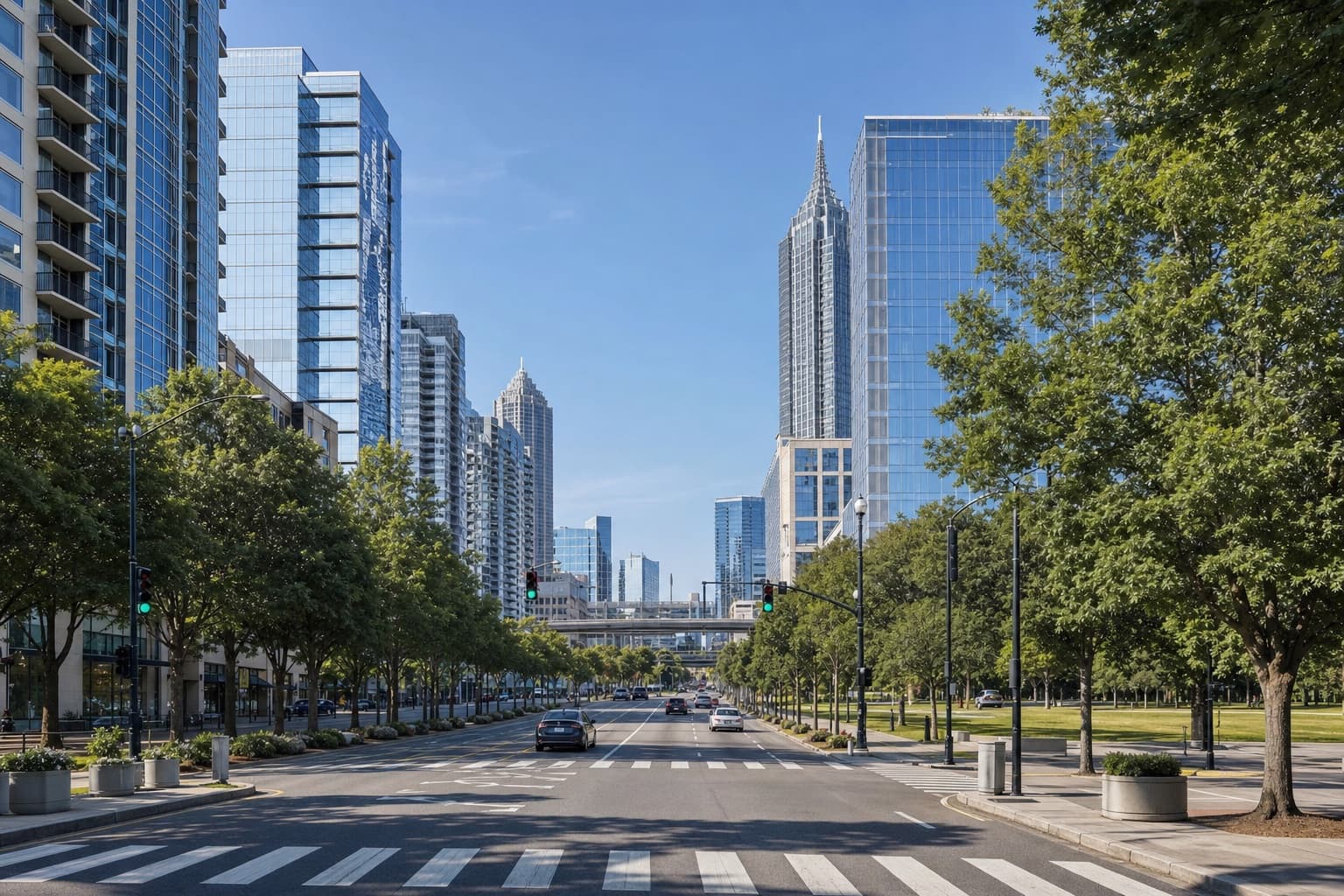
If you were hurt in a wreck at 10th Street and Peachtree, on the Spring Street and West Peachtree one-way pairs, or coming off a Downtown Connector (I-75/85) ramp, you are looking for a Midtown Atlanta car accident lawyer who knows this exact corridor — a dense urban grid where fast one-way traffic, Connector merges, and constant foot traffic near Piedmont Park collide every day. Your claim runs on Georgia's two-year deadline under O.C.G.A. § 9-3-33, it is filed in Fulton County, and it usually turns on camera footage and crash-scene evidence that can disappear within two to four weeks unless someone acts fast.
Last reviewed: June 2026
Why the Midtown Peachtree Corridor Is One of Atlanta's Hardest-Hit Crash Zones
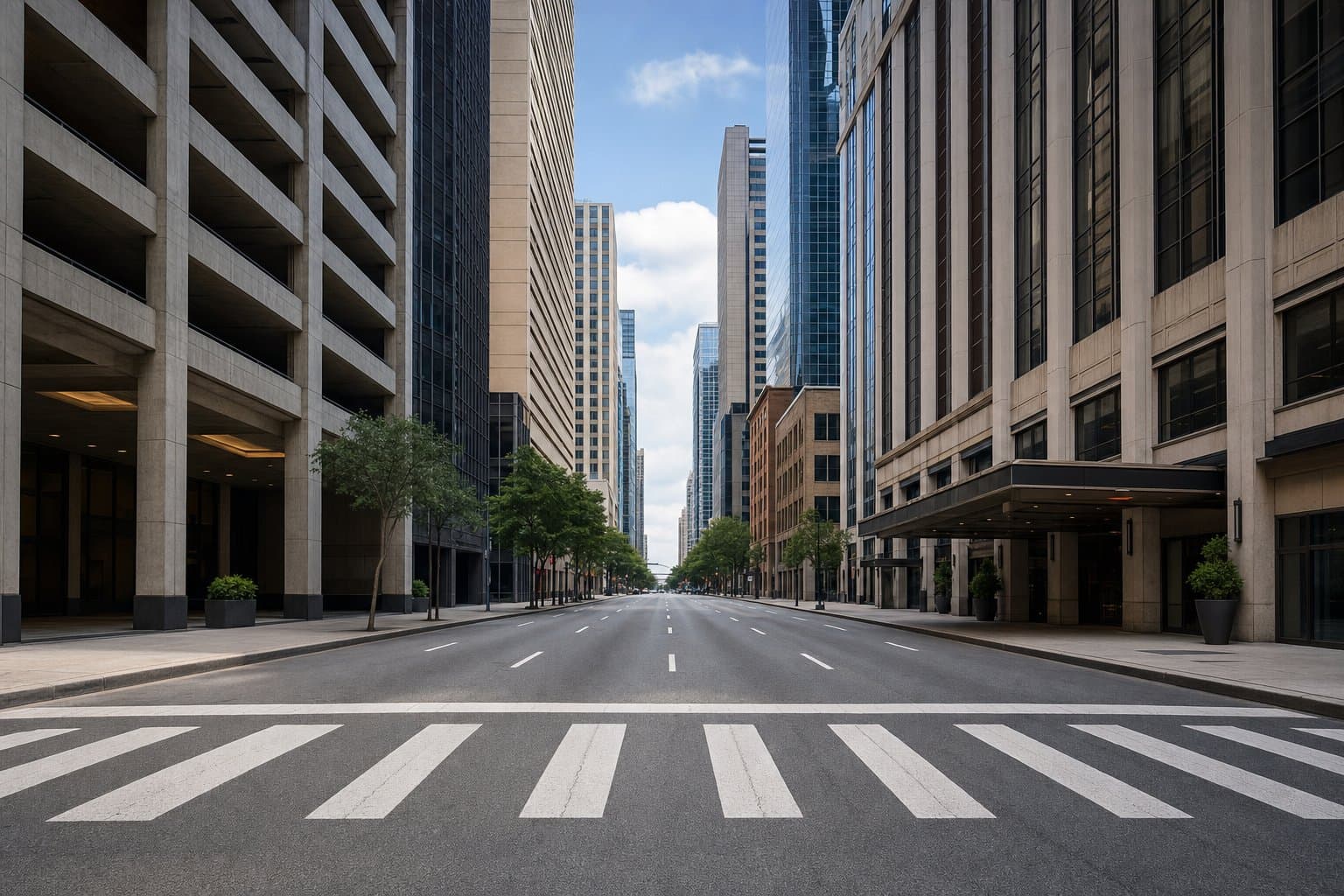
Midtown packs an unusual amount of crash risk into a small footprint. The Peachtree, West Peachtree, Spring, and Juniper one-way pairs funnel fast-moving traffic through a grid that is also the densest pedestrian, cyclist, and rideshare zone in the city. According to OpenStreetMap road data for the corridor, West Peachtree Street carries up to five lanes, 10th Street widens to six lanes at points, and Spring Street runs four lanes — all moving in one direction, which encourages drivers to race the green-wave signal timing.
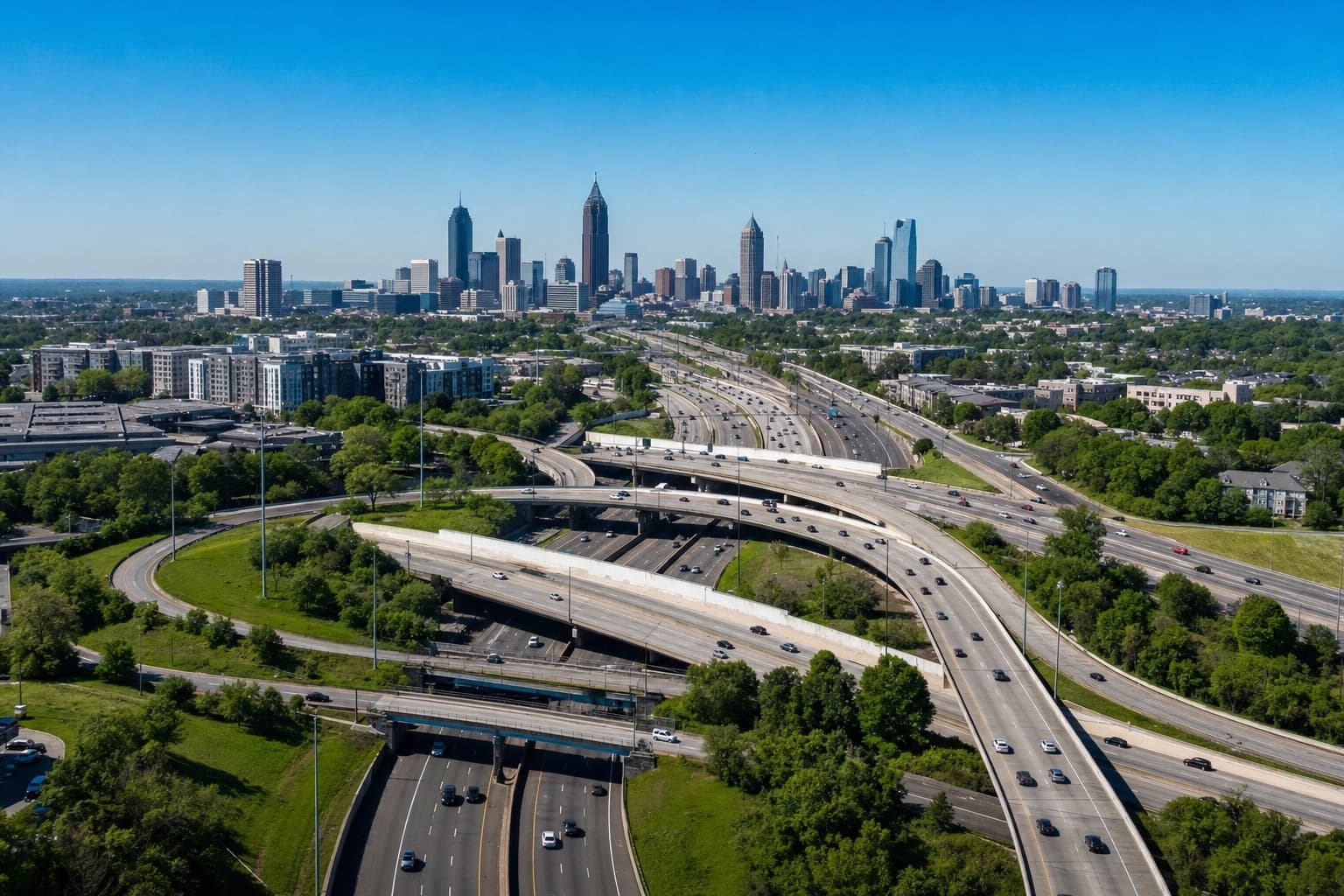
Then there is the Downtown Connector. The combined I-75/85 forms Midtown's western edge, and its high-volume on- and off-ramps at Spring Street and 10th Street create sudden merge-and-weave conflicts where surface traffic and freeway traffic fight for the same space. Add three MARTA rail stations on the corridor — Midtown, Arts Center, and North Avenue — plus heavy bus traffic, e-scooters, and bicycles, and you get a continuous mixing of vehicles and vulnerable road users.
Event traffic makes it worse. Piedmont Park festivals like Music Midtown and Atlanta Pride, Georgia Tech football at Bobby Dodd Stadium, and shows at the Fox Theatre and the Woodruff Arts Center flood the same intersections with unfamiliar drivers and rideshare pickup chaos around the 10th Street core.
According to the Georgia Department of Transportation's crash statistics, Georgia averages roughly 1,500 to 1,700 traffic deaths a year, and Fulton County consistently ranks among the highest-crash counties in the state. According to the Georgia Governor's Office of Highway Safety, the state recorded more than 1,500 roadway fatalities in a recent reporting year, with metro Atlanta corridors repeatedly flagged as high-risk — figures published by the Governor's Office of Highway Safety. According to the National Highway Traffic Safety Administration, speeding was a factor in roughly 29% of all U.S. traffic fatalities in a recent year — the precise behavior the Midtown one-way pairs reward.
Midtown Crash Types: What Changes Your Case
Where and how you were hit shapes the evidence fight. A high-speed T-bone at a signalized Peachtree intersection is a different case than a low-speed rideshare drop-off scrape outside a Midtown tower.
| Crash scenario | Where it happens in Midtown | Primary liability issue | Common injuries |
|---|---|---|---|
| T-bone / left-turn (left-hook) | Signalized intersections at 10th, 14th & Peachtree | Failure to yield on the left turn; signal phase | TBI, fractures, internal injuries |
| Rear-end in congestion | Spring & West Peachtree backing up toward the Connector | Following too closely; distraction | Whiplash, cervical disc, concussion |
| Connector merge / weave | Spring St and 10th St on/off ramps | Unsafe lane change; failure to yield on merge | High-energy impacts, spinal injury |
| Rideshare pickup/drop-off | Near Piedmont Park, the Fox Theatre, apartment towers | Double-parking; sudden stops; door conflicts | Soft-tissue, secondary impacts |
| Hit-and-run | Connector ramps and nightlife blocks at night | Fleeing driver; UM coverage | Varies; recovery via your own policy |
No matter the scenario, the case is filed in Fulton County, the two-year deadline under O.C.G.A. § 9-3-33 controls, and the same speed-versus-survivability math applies: the faster the impact on these one-way streets, the more severe the injury.
The Crash Patterns We See on the Peachtree Corridor
T-bone and left-turn crashes at signalized intersections. At 10th & Peachtree and 14th & Peachtree, turning drivers misjudge the gap and get hit broadside, or fail to yield to oncoming traffic and crossing pedestrians. These T-bone intersection crashes frequently produce the most serious injuries because the impact strikes the occupant compartment directly, with little crumple zone to absorb the force.
Rear-end collisions in Connector-bound congestion. As Spring Street and West Peachtree back up toward the I-75/85 ramps, distracted and impatient drivers strike stopped vehicles. Even at moderate speed, these rear-end collisions cause cervical disc injuries and the kind of neck and whiplash injuries that insurers routinely dismiss as "minor" until the medical record proves otherwise. Rapid deceleration in a rear-end hit can also cause concussions even without a direct blow to the head.
Connector merge and weave conflicts. The on- and off-ramps at Spring Street and 10th Street force surface traffic and freeway traffic to interlace in a short distance. Drivers cutting across lanes to reach a ramp — or merging onto the surface street at speed — cause sideswipes and high-energy collisions that are squarely a Georgia car accident lawyer matter.
Rideshare pickup and drop-off collisions. Around Piedmont Park, the Fox Theatre, and the Midtown bar district, Uber and Lyft drivers double-park, stop suddenly, and create door and pedestrian conflicts. These cases involve a different insurance framework, and an Atlanta Uber and Lyft accident lawyer untangles which coverage period applied when the crash happened.
Hit-and-run on the Connector ramps and nightlife blocks. Mixed local and pass-through traffic at night raises the odds that an at-fault driver flees. When that happens, civil recovery usually runs through your own uninsured-motorist coverage under O.C.G.A. § 33-7-11, and same-day reporting plus immediate camera preservation drive the outcome.
Have Questions About Your Case?
Get a free consultation with an experienced Georgia accident attorney.
What Mark Wade Tells Midtown Crash Clients
Mark Wade, Founder and Lead Attorney at Georgia Auto Law, points out that the single most damaging mistake a Midtown crash victim makes is giving a recorded statement to the other driver's insurance company before talking to a lawyer. The adjuster calls within days, opens with sympathy, and asks the client to "just confirm what happened" — then uses an offhand answer like "I didn't see them" to push the victim toward the 50% bar in O.C.G.A. § 51-12-33 and cut the payout. On a one-way grid like Peachtree or Spring, where fault often hinges on signal timing and lane position, that early quote can sink an otherwise strong case. The right move is to decline the recorded statement, write down the adjuster's name and claim number, and call a Midtown Atlanta car accident lawyer the same day so the statutory framework — not the insurer's script — controls the case.
Evidence a Midtown Atlanta Car Accident Lawyer Preserves First
Midtown cases are won on evidence with a short shelf life. A Midtown Atlanta car accident lawyer working a Peachtree-corridor crash immediately preserves the Atlanta Police Department crash report and any citations; intersection and business security-camera footage from the dense block of towers, which often overwrites within days; city traffic-camera footage where available; the at-fault driver's phone records when distraction is suspected; any vehicle event-data-recorder ("black box") download; the trauma-center record from Grady, Emory Midtown, or Piedmont Atlanta; and your own UM declarations under O.C.G.A. § 33-7-11.
Because the Peachtree corridor is also Atlanta's densest crosswalk zone, some of these crashes involve people on foot. If you were struck while walking, an Atlanta pedestrian accident lawyer handles the crosswalk right-of-way and driver due-care questions that those cases raise.
Where Your Midtown Case Is Filed
Midtown sits squarely in Fulton County, so the venue analysis is jurisdiction-specific: most auto-injury suits are filed in the State Court of Fulton County, while the Superior Court of Fulton County handles wrongful-death and higher-value matters. Traffic citations from the crash — the speeding or failure-to-yield ticket that can help prove fault — are resolved in the Municipal Court of Atlanta. That distinction matters: it shapes the filing rules, the jury pool, and the timeline. Our team of Atlanta personal injury attorneys tries these cases in the Fulton courts regularly, and our citywide Atlanta car accident lawyer practice covers every corridor that feeds into Midtown.
If a City of Atlanta vehicle or a dangerous city road condition contributed to your crash, the six-month ante litem notice under O.C.G.A. § 36-33-5 runs long before the two-year suit deadline — another reason to involve counsel early.
Frequently Asked Questions
Do I need a Midtown Atlanta car accident lawyer if the other driver's insurer already called me?
Especially then. The insurer calls early to lock in a recorded statement and a low offer before you understand your injuries. Decline the recorded statement, write down the claim number, and speak with a Midtown Atlanta car accident lawyer before signing anything. The consultation is free and the fee is contingent — no fee unless we recover.
What is the deadline to file a car accident claim in Fulton County?
Generally two years from the date of injury under O.C.G.A. § 9-3-33. Property-damage-only claims get four years. If a City of Atlanta vehicle or defective city street was involved, a separate six-month ante litem notice applies under O.C.G.A. § 36-33-5. Waiting is risky because Midtown camera footage often overwrites within two to four weeks.
Which court will hear my Midtown car accident case?
Because Midtown is in Fulton County, most auto-injury suits are filed in the State Court of Fulton County, while the Superior Court of Fulton County handles wrongful-death and higher-value matters. The traffic citation from the crash is handled separately in the Municipal Court of Atlanta.
The crash happened at a Connector ramp — does that change anything?
It can. Merge and weave conflicts at the Spring Street and 10th Street on/off ramps raise contested fault questions about lane position and right-of-way on the merge. Under O.C.G.A. § 51-12-33, you can still recover as long as you are less than 50% at fault, with any award reduced by your share. Event-data-recorder and camera evidence are often decisive in these cases.
What if the driver fled the scene in Midtown?
Report it the same day. We pursue two tracks: helping identify the fleeing driver through intersection, business, and traffic-camera footage and physical evidence, and filing an uninsured-motorist claim under O.C.G.A. § 33-7-11 against your own policy so you are not left paying for someone else's crime. The same approach applies to hit-and-run accidents anywhere on the corridor.
What if my Uber or Lyft was involved in the crash?
Rideshare crashes turn on which insurance period was active — whether the driver was off-app, waiting for a ride, or carrying a passenger. An Atlanta Uber and Lyft accident lawyer identifies the correct coverage layer so the right policy pays.
How much does it cost to hire Georgia Auto Law?
Nothing up front. We work on contingency — no fees unless we win your case — and the initial consultation is free. Call (404) 662-4949.
Talk to a Midtown Atlanta Car Accident Lawyer Today
If you or a loved one was hurt in a wreck on the Peachtree corridor — at 10th & Peachtree, on the Spring or West Peachtree one-way pairs, or at a Downtown Connector ramp — the two-year clock under O.C.G.A. § 9-3-33 is already running, and the footage that proves your case may overwrite within weeks. Georgia Auto Law handles Midtown and the surrounding Fulton County corridors on a contingency fee — no fees unless we recover. Call (404) 662-4949 for a free consultation with a Midtown Atlanta car accident lawyer who knows this exact stretch of Peachtree Street.