Key Takeaways
- You have two years from the crash date to file a Georgia injury lawsuit (O.C.G.A. § 9-3-33); wrongful-death claims carry the same two-year clock.
- Partial fault is not a bar. Under O.C.G.A. § 51-12-33, you recover as long as you are less than 50% at fault, with damages reduced by your share.
- The Marietta Loop concentrates risk — a one-way ring road, diagonal parking pull-outs, and 35-mph state-route arterials carrying commuter volume around the Square.
- Cobb County auto-injury suits are typically filed in the State Court of Cobb County in Marietta; higher-value and wrongful-death claims go to Superior Court.
- The investigating agency matters for your records request — Marietta Police works city crashes, Cobb County Police works county crashes.
- WellStar Kennestone, a Level II trauma center about two miles north, is the closest major hospital for serious Square-area injuries.
- Talk to a Marietta Square car accident lawyer before giving a recorded statement to the other driver's insurer.
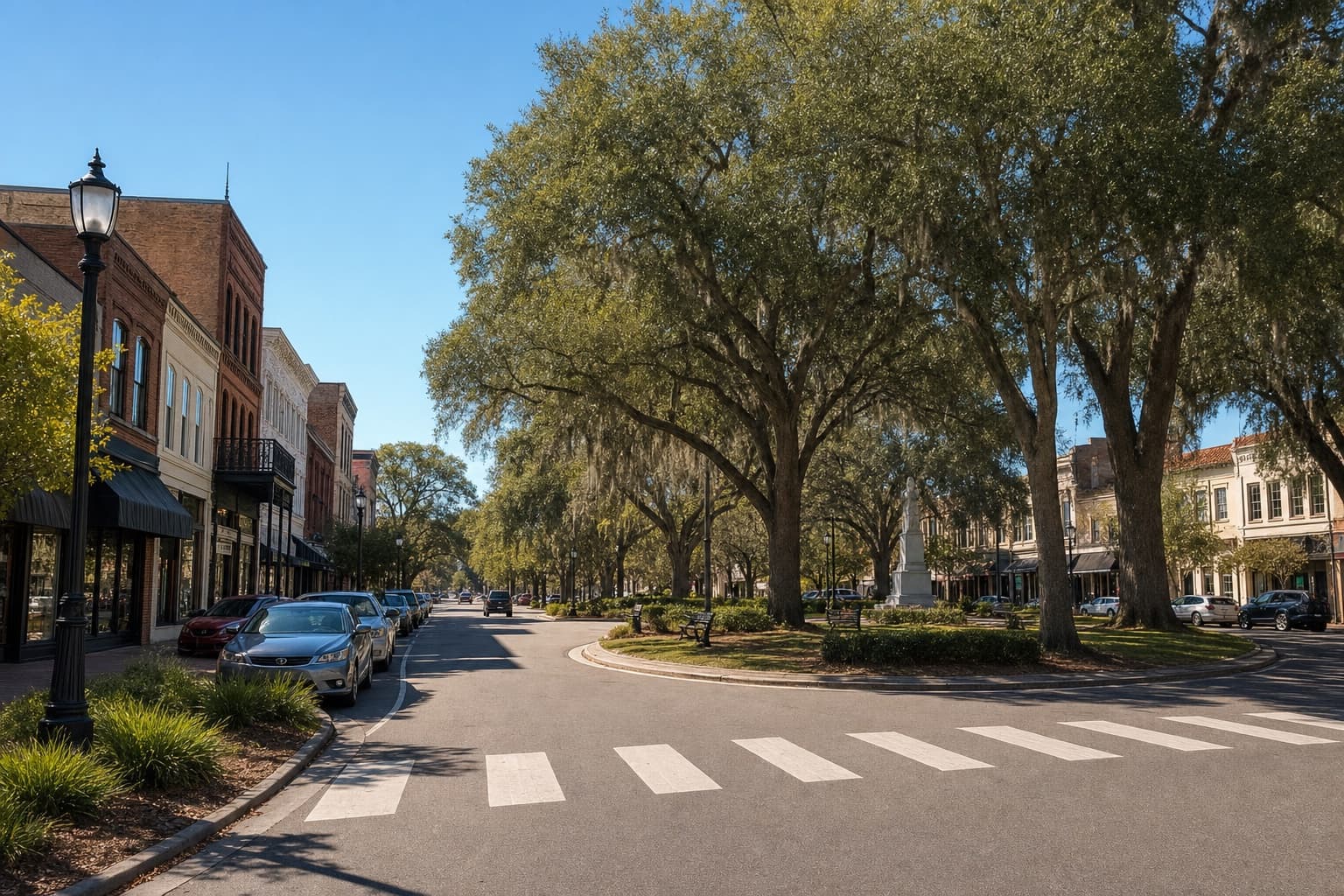
If you were just hurt in a crash on the one-way loop around the Marietta Square, the single most important thing to know is this: in Georgia you generally have two years from the date of the wreck to file an injury claim (O.C.G.A. § 9-3-33), and what you do in the first hours and days can decide what that claim is worth. A Marietta Square car accident lawyer can step in early, preserve the evidence the Loop's chaos tends to bury, and deal with the insurance company so you can focus on getting better.
This guide walks through exactly what to do after a crash on the Marietta Loop (GA 120) around Glover Park, why this specific stretch of downtown Marietta produces the collisions it does, and how Cobb County's courts and Georgia's fault rules shape your case.
Last reviewed: June 2026
Why the Marietta Loop Produces So Many Crashes
The Marietta Square is one of the most-visited spots in Cobb County, and the road network built around it is unusually unforgiving. Glover Park sits in the center, ringed by a one-way loop, and the regional traffic that wants to pass through downtown is funneled onto the same arterials that visitors use to circle for a parking space. That mix — locals who know the pattern, visitors who do not, and through-drivers who just want out — is what turns ordinary intersections into high-conflict points.
A few features of this corridor stand out:
- A one-way ring around the Square. Frequent lane changes, last-second turns, and unfamiliar visitors create the kind of merge-and-turn conflicts that drive intersection and T-bone collisions.
- Diagonal and on-street parking. Along South Park Square and Whitlock Avenue, drivers back out of angled spaces into moving traffic — a classic setup for sideswipes and pull-out collisions.
- State-route arterials posted at 35 mph. Whitlock Avenue (GA 120) and the North and South Marietta Parkway (GA 5 / GA 120) are four-to-five-lane trunk roads carrying commuter volume, where actual travel speeds often run well above the posted limit.
- Pedestrians everywhere. Foot traffic crossing between Glover Park and the surrounding shops, restaurants, and theater means crosswalk conflicts are constant, and event days make it worse.
Event traffic is its own category of risk. Art festivals, the farmers market, and concerts on the Square draw crowds, and Friday-night football at nearby Northcutt Stadium (about a quarter-mile from the Square) layers a pedestrian surge on top of drivers circling for limited parking. When the Loop is full of stop-and-go traffic, rear-end collisions spike.
According to the Federal Highway Administration, roughly half of all combined fatal and injury crashes in the U.S. occur at or near intersections, which is exactly the kind of turning and crossing conflict the Marietta Loop is built around. And according to the Insurance Institute for Highway Safety, speed is a factor in roughly 29% of U.S. traffic deaths — directly relevant on arterials where posted and actual speeds diverge.
What to Do Immediately After a Crash on the Marietta Square
The steps you take in the first hour protect both your health and your claim.
- Call 911 and get a police report. A Marietta Police or Cobb County Police officer documents the scene and assigns a report number. Note which agency responds — it determines where you later request records.
- Get checked even if you feel fine. Adrenaline masks injuries. For serious harm, the nearest major hospital is WellStar Kennestone Regional Medical Center, a Level II trauma center about two miles north.
- Photograph everything. Vehicle positions on the Loop, lane markings, parking layout, skid marks, traffic signals, and your injuries. The Square's traffic clears fast, so capture the scene before it does.
- Identify witnesses. Square-area businesses and event crowds mean potential witnesses are nearby — get names and numbers before they leave.
- Do not give a recorded statement to the other driver's insurer before talking to a lawyer.
That last point matters more than people expect. As Mark Wade, Managing Partner of Georgia Auto Law, points out, the single biggest mistake he sees car accident victims make is giving a recorded statement to the other driver's insurance company before consulting an attorney — because an adjuster's questions are designed to lock you into answers that shift blame onto you under Georgia's fault rules.
How Georgia's Fault Rules Decide Your Marietta Square Case
Georgia uses modified comparative negligence with a 50% bar (O.C.G.A. § 51-12-33). In plain terms: you can recover as long as you are less than 50% at fault, but your compensation is reduced by your share. If a jury finds you 20% responsible for a Loop collision and your damages are $100,000, you recover $80,000.
The same statute contains Georgia's apportionment rule, which lets a jury divide fault across multiple drivers. That is significant on the Marietta Loop, where multi-car intersection crashes are common and the at-fault party is rarely just one person. A skilled Marietta Square car accident lawyer uses apportionment to your advantage — pinning the larger shares of fault on the other drivers rather than on you.
Here is how the most common Square-area crash types tend to break down:
| Crash type on/near the Loop | Typical Square-area cause | Who is usually at fault |
|---|---|---|
| Intersection / turning collision | Lane changes and turns on the one-way ring | Driver who failed to yield (O.C.G.A. § 40-6-71) |
| Rear-end in stop-and-go traffic | Circling for parking, event backups | Following driver who could not stop in time |
| Parking pull-out / sideswipe | Backing out of diagonal spaces | Driver leaving the parking space |
| Pedestrian strike near a crosswalk | Foot traffic between Glover Park and shops | Driver who failed to yield to a pedestrian |
Pedestrian crashes near the Glover Park crosswalks are a real concern on event days. If you or a family member was struck on foot, pedestrian accident claims follow many of the same fault rules but carry their own evidence and injury-severity considerations.
Have Questions About Your Case?
Get a free consultation with an experienced Georgia accident attorney.
Insurance: Minimum Coverage, Uninsured Drivers, and the Coverage Gap
Georgia's minimum auto liability coverage is just 25/50/25 — $25,000 per person, $50,000 per accident, and $25,000 for property damage (O.C.G.A. § 33-7-11). On a corridor with the injury severity the Loop can produce, those minimums are frequently not enough.
That is where your own policy becomes critical. According to the Insurance Research Council, about 12% of U.S. drivers were uninsured, and Georgia's rate has historically run near or above that figure. According to the Georgia Governor's Office of Highway Safety, the state continues to record tens of thousands of serious-injury crashes each year, underscoring how often minimum-limit policies fall short. If the at-fault driver has no coverage, uninsured motorist accidents put your own UM coverage in play. If they carry only the state minimum and your damages exceed it, underinsured motorist claims can close the gap. Reviewing your declarations page for UM/UIM coverage is one of the first things we do.
Which Cobb County Court Will Handle Your Claim
Most Marietta auto-injury lawsuits are filed in the State Court of Cobb County in Marietta, which handles personal-injury cases. Higher-value disputes and wrongful-death claims are filed in the Superior Court of Cobb County, also in Marietta. Knowing which court a case belongs in — and the local practices of each — is part of why working with an attorney who handles Cobb County crashes matters.
There is also a practical records wrinkle. Crashes inside Marietta city limits are usually investigated by the Marietta Police Department, while crashes in the surrounding unincorporated county fall to the Cobb County Police Department. The originating agency controls where you request the crash report, so identifying it correctly at the scene saves time later. Our Georgia car accident lawyer team handles those requests and the broader personal injury representation that follows.
If your crash happened just outside the Square — toward nearby Kennesaw up US-41, or south toward Smyrna and Vinings — the same Cobb County courts and Georgia statutes still apply. You can also learn more on our Marietta page.
Frequently Asked Questions
How long do I have to file a car accident claim after a Marietta Square crash?
Two years from the date of the accident, under Georgia's personal-injury statute of limitations (O.C.G.A. § 9-3-33). Wrongful-death claims carry the same two-year deadline. Waiting risks losing your right to recover entirely, and it also lets crucial evidence around the Loop disappear.
Can I still recover if I was partly at fault on the Loop?
Yes. Georgia follows modified comparative negligence (O.C.G.A. § 51-12-33). As long as you are less than 50% at fault, you can recover, though your award is reduced by your percentage of responsibility. This is why a careful fault analysis matters so much on multi-car Loop intersection crashes.
Which court handles a Marietta car accident lawsuit?
Most auto-injury cases are filed in the State Court of Cobb County in Marietta. Higher-value claims and wrongful-death cases are filed in the Superior Court of Cobb County. A Marietta Square car accident lawyer can determine the correct court for your claim.
What is the closest hospital for serious injuries near the Square?
WellStar Kennestone Regional Medical Center, a Level II trauma center about two miles north of the Square, is the closest major hospital for serious Marietta-area injuries.
Who investigates a crash on the Marietta Square?
It depends on location. Crashes inside Marietta city limits are typically handled by the Marietta Police Department, while crashes in the surrounding unincorporated county are handled by the Cobb County Police Department. The investigating agency controls where you request the crash report.
What if the other driver had no insurance or only the state minimum?
Georgia's minimum liability coverage is just 25/50/25 (O.C.G.A. § 33-7-11), which often falls short of serious-injury costs. Your own uninsured and underinsured motorist coverage may apply, so reviewing your policy early is essential.
Do I need a lawyer for a minor Marietta Square crash?
Even seemingly minor crashes can produce delayed injuries and disputed-fault situations, especially on a one-way loop where lane changes are constant. A free consultation costs nothing and helps you understand whether you have a claim before you talk to the insurance company.
Talk to a Marietta Square Car Accident Lawyer
If you were injured on the Marietta Loop, around Glover Park, or anywhere in downtown Marietta, Georgia Auto Law is ready to help. The consultation is free, we work on a contingency fee, and you pay no fees unless we win. Call (404) 662-4949 to speak with a Marietta Square car accident lawyer about your case.