Key Takeaways
- In Georgia you have two years from the crash date to file a personal-injury claim against a trucking company (O.C.G.A. § 9-3-33) — missing it usually ends the case.
- Georgia uses modified comparative negligence with a 50% bar: you recover only if you are less than 50% at fault, with damages cut by your share (O.C.G.A. § 51-12-33).
- Interstate trucks on I-75 are governed by the Federal Motor Carrier Safety Regulations (49 C.F.R.), so hours-of-service logs, ELD data, and maintenance records are central evidence.
- A truck's ECM black-box data and ELD logs can be overwritten in weeks — a fast spoliation letter is often what saves the case.
- Under respondeat superior, the motor carrier — not just the driver — is typically liable, which usually means far higher insurance limits than a car crash.
- Cobb County truck-injury suits are filed in the State or Superior Court of Cobb County in Marietta.
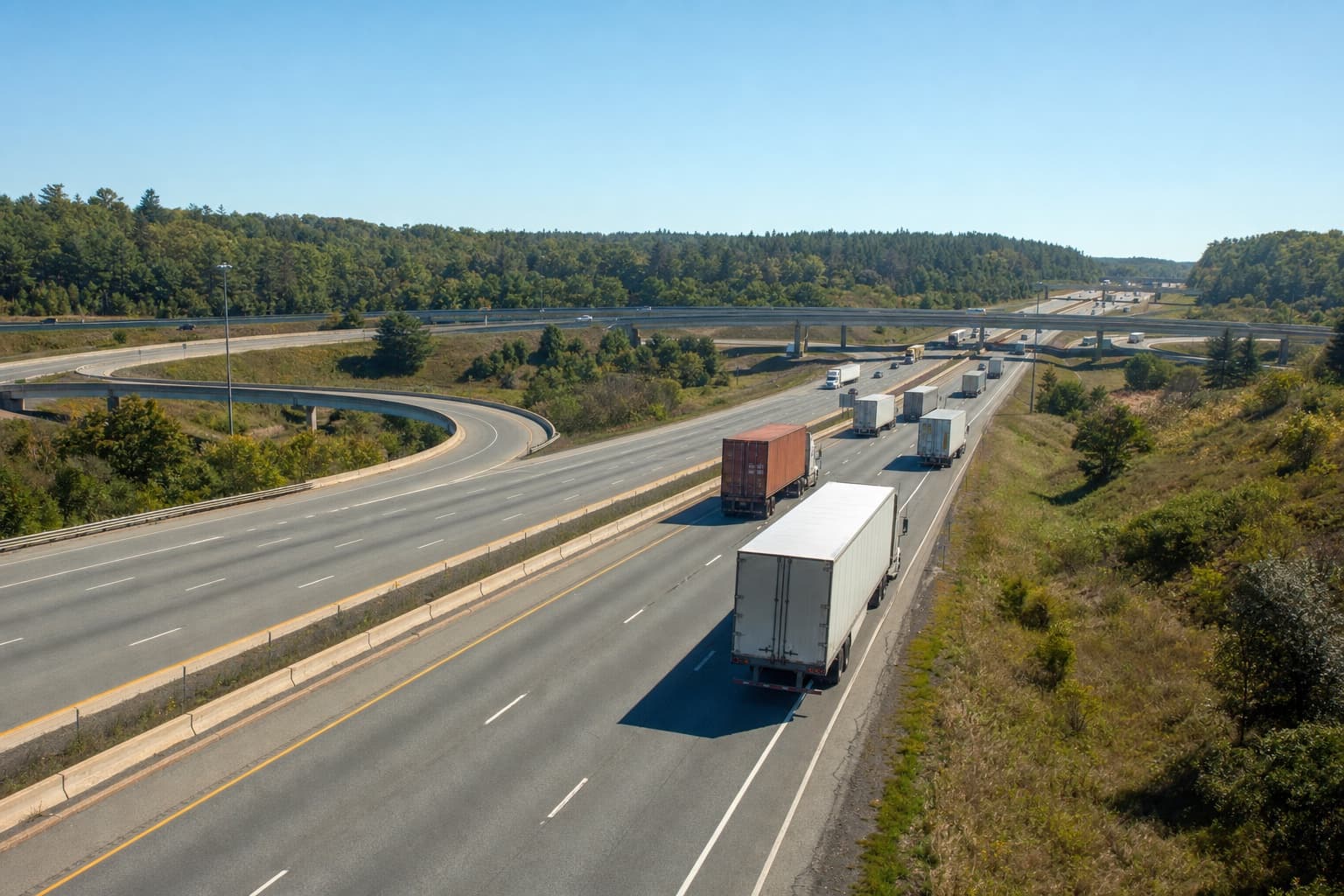
If you were hurt by a tractor-trailer on Interstate 75 through Cobb County, you need to know two things fast: who can be held responsible, and how the evidence gets preserved before it disappears. An I-75 Cobb County truck accident lawyer builds your case around federal motor-carrier rules, the truck's electronic data, and Georgia's two-year filing deadline — and the work starts in the days right after the crash, not months later. This guide walks through exactly how fault is proven after a big-rig crash on the Windy Hill Road corridor, and what an injured driver in Marietta or Smyrna should do next.
Last reviewed: June 2026
Why I-75 Through Cobb County Is a High-Risk Freight Corridor
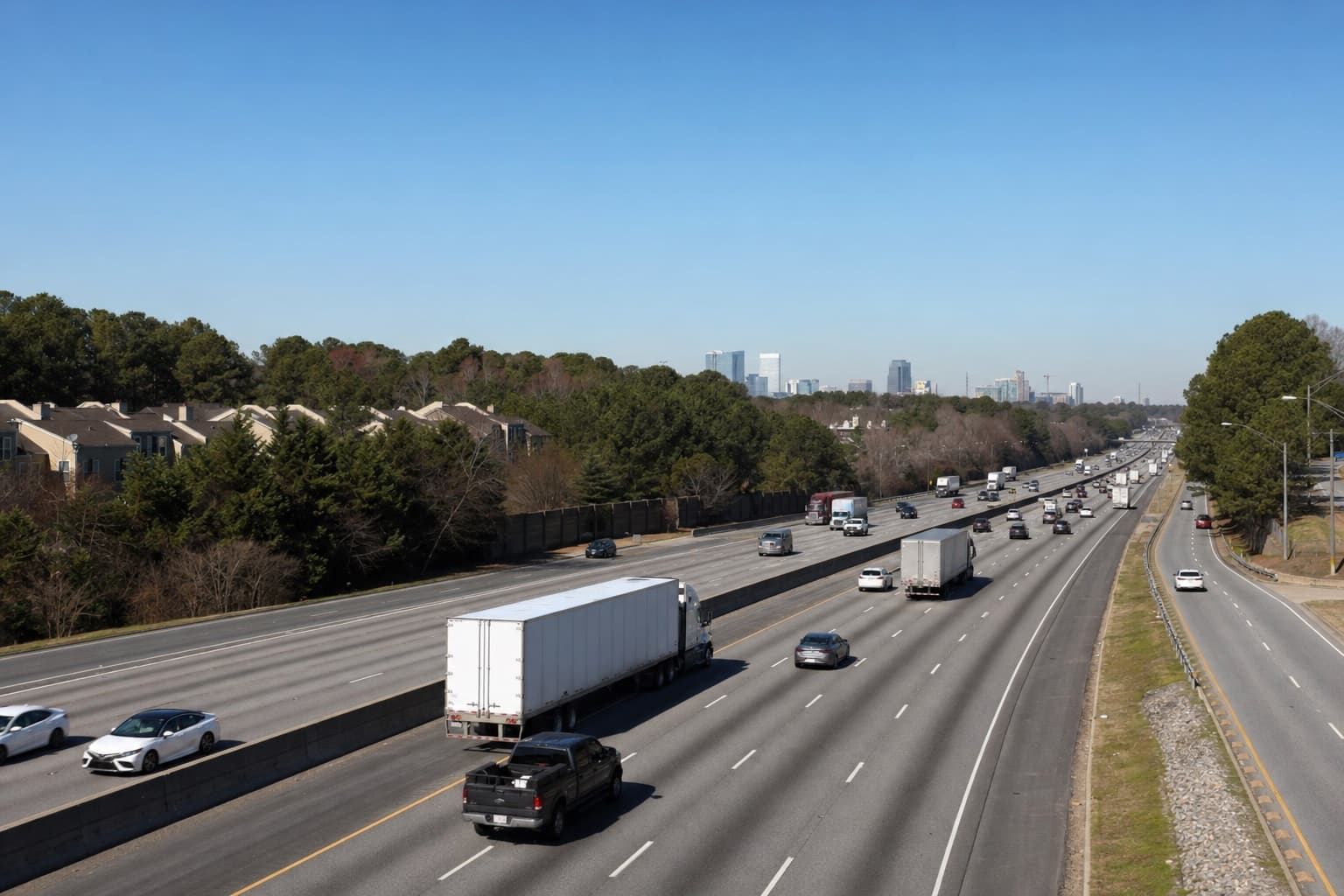
I-75 through Cobb is one of metro Atlanta's heaviest freight corridors. Tractor-trailers move almost constantly between the Chattanooga interstate trade lane to the north and the Perimeter to the south, and tight, high-volume interchanges at Windy Hill Road and Delk Road feed warehouse, distribution, and office traffic directly onto the freeway. When a loaded 80,000-pound truck meets stop-and-go commuter backups, the result is predictable — and dangerous.
According to FMCSA (Federal Motor Carrier Safety Administration) data, large trucks were involved in 5,837 fatal crashes nationally in a recent reporting year, and the vast majority of people killed in truck crashes are occupants of the other vehicle, not the truck. According to NHTSA (National Highway Traffic Safety Administration), a fully loaded tractor-trailer needs roughly 20–40% more stopping distance than a passenger car — which is exactly why sudden slowdowns on I-75 trigger truck rear-end and underride collisions.
The corridor's specific hazards line up with the crash types we see most:
- Short merge and weave zones at the Windy Hill and Delk Road interchanges, where on-ramp traffic crosses freeway lanes in a few hundred feet.
- Sudden freeway slowdowns during weekday peaks, Braves game-day traffic, and Cumberland-area events that back up the southbound lanes.
- Diverted commercial traffic spilling onto South Cobb Drive (GA 280), a four-lane, 45 mph primary arterial that parallels the interstate.
- Construction and lane closures that narrow the freeway and compress trucks and cars into tighter spacing.
Severely injured drivers are often transported to WellStar Windy Hill Hospital, about three miles east of the corridor, or to WellStar Kennestone Regional Medical Center in Marietta, a Level II trauma center equipped for the worst crashes. Those medical records become part of the damages picture in any serious case.
The Crash Types We See Most on This Stretch of I-75
A skilled Georgia truck accident lawyer matches the physical evidence to the crash mechanism. On the Windy Hill corridor, four patterns dominate.
| Crash type | Typical cause on I-75 Cobb | Key evidence |
|---|---|---|
| Rear-end / underride | Loaded truck can't stop in stop-and-go traffic | ECM speed data, brake records, dashcam |
| Jackknife / lane-departure | Hard braking or oversteer during a merge | ELD logs, weather data, road scene |
| Blind-spot / wide-turn | Truck merges across a car at a ramp | Mirror/camera config, lane-position witnesses |
| Multi-vehicle pileup | Chain reaction in a sudden backup | All carriers' ECM data, sequencing analysis |
Rear-end and highway rear-end collisions involving big rigs are among the most catastrophic, because a car can slide under the trailer in an underride impact. Jackknife accidents are common where trucks brake hard while merging at Windy Hill. And because so much of this freight is loaded for the Chattanooga–Perimeter run, overloaded cargo accidents and shifting-load failures show up here too. Each pattern is its own evidentiary puzzle, which is why generic tractor-trailer crashes experience matters.
How Fault Is Actually Proven Against a Trucking Company
Proving fault in a big-rig case is fundamentally different from a routine fender-bender. The other side is a commercial carrier with a defense team and a strong incentive to limit what you ever see. Here is how an I-75 Cobb County truck accident lawyer builds the case.
1. Federal Motor Carrier Safety Regulations set the standard of care
Interstate trucks are governed by the Federal Motor Carrier Safety Regulations (49 C.F.R.), which Georgia adopts for motor carriers operating in the state. Those rules cover driver hours-of-service limits, electronic logging devices (ELDs), vehicle inspection and maintenance, driver qualification, and cargo securement. When a carrier violates one of those rules — a driver over hours, a skipped brake inspection, an unsecured load — that violation often establishes negligence directly.
2. The truck's electronic data tells the real story
Modern trucks carry an Engine Control Module (ECM), or "black box," that records speed, braking, throttle, and engine data in the seconds before impact. Paired with ELD hours-of-service logs and any dashcam footage, this data can show whether the driver was speeding into a backup, braking too late, or behind the wheel past their legal limit. The catch: ECM and ELD data can be overwritten within weeks, and routine maintenance can wipe it entirely.
Mark Wade, Managing Partner of Georgia Auto Law, puts it plainly: in every truck case, the firm's first move is locking down the electronic evidence. ELD logs, ECM black-box data, and the driver's records can be overwritten or quietly "lost" within weeks of the crash — once it's gone, it's gone. Mark Wade sends a formal preservation demand immediately so the carrier can't run out the clock on the proof.
3. A spoliation letter freezes the evidence
A spoliation letter — also called an evidence-preservation or litigation-hold letter — is a formal written demand to the motor carrier and its insurer requiring them to preserve the ECM data, ELD logs, dashcam footage, driver qualification file, and maintenance records. Sending it fast is often the single most important early step. If a carrier destroys evidence after being put on notice, Georgia courts can sanction that conduct, and a jury can be told to assume the lost evidence would have hurt the carrier.
4. Respondeat superior puts the company on the hook
Under the doctrine of respondeat superior, an employer is liable for the negligence of an employee acting within the scope of employment. For a trucking case that means the motor carrier — not just the driver — is typically responsible. That matters enormously, because a commercial policy usually carries far higher limits than a personal auto policy, and it can open the door to claims for negligent hiring, training, or supervision of the driver.
Have Questions About Your Case?
Get a free consultation with an experienced Georgia accident attorney.
Georgia Law That Decides Your Case
Three Georgia rules drive the outcome of an I-75 truck case.
The two-year deadline. You generally have two years from the date of the crash to file a personal-injury lawsuit (O.C.G.A. § 9-3-33). It sounds like plenty of time, but evidence preservation, carrier investigation, and medical treatment can eat months — which is why early action matters.
Comparative fault. Georgia follows modified comparative negligence with a 50% bar (O.C.G.A. § 51-12-33). If you are found partly at fault, your damages are reduced by your percentage of fault, and if you are 50% or more at fault you recover nothing. Trucking defense teams lean hard on this rule, trying to pin a share of blame on the injured driver — another reason the physical and electronic evidence matters so much.
Following too closely. Many I-75 truck rear-end crashes involve a violation of Georgia's following-distance law (O.C.G.A. § 40-6-49), which requires drivers to keep a reasonable and prudent distance. For a heavy truck in stop-and-go traffic, "reasonable" distance is much longer than for a car — and a violation supports the negligence claim.
According to IIHS (Insurance Institute for Highway Safety) research, trucks' longer stopping distances are a leading factor in fatal rear-end truck crashes, which is precisely the dynamic at play when traffic stacks up on the Windy Hill corridor.
When the Trucker Doesn't Carry Enough Insurance
Catastrophic truck injuries can exhaust even a commercial policy. When the at-fault driver or carrier is underinsured — or in a hit-and-run — your own underinsured motorist claims coverage can fill the gap. Georgia's UM/UIM framework (O.C.G.A. § 33-7-11) lets injured drivers tap their own policy when the responsible party's coverage falls short, and in serious cases that coverage can be the difference between full and partial recovery. We evaluate every available layer of coverage, because a six-figure medical bill from a Kennestone trauma admission can quickly outrun a single policy.
What to Do After a Truck Crash on I-75 in Cobb County
- Get medical care immediately — at the scene, then follow up at WellStar Windy Hill Hospital or your own doctor. Gaps in treatment get used against you.
- Call 911 and get the crash report. A Cobb County or Georgia State Patrol report documents the scene before it's cleared.
- Photograph everything — vehicle positions, the trailer, skid marks, lane markings near the interchange — if you can do so safely.
- Do not give a recorded statement to the trucking company's insurer before talking to a lawyer.
- Contact an I-75 Cobb County truck accident lawyer fast so a spoliation letter goes out before the ECM and ELD data are overwritten.
For the most severely hurt, our broader personal injury representation covers long-term care, lost earning capacity, and life-altering injuries. In the rare cases where a crash is fatal, separate wrongful death claims belong to the surviving family under Georgia's "full value of the life" standard — but most corridor crashes are survivable injury cases, and that is where the bulk of this work lives.
Georgia Auto Law serves injured drivers across Marietta, Smyrna, and the rest of Cobb County. Consultations are free, and we work on contingency — no fees unless we win. Call (404) 662-4949 to talk through your options.
Frequently Asked Questions
How long do I have to file an I-75 Cobb County truck accident claim?
Generally two years from the date of the crash for a personal-injury claim in Georgia (O.C.G.A. § 9-3-33). Because evidence on a truck can disappear in weeks, you should act long before that deadline approaches.
Who can be held responsible after a big-rig crash on I-75?
Often more than just the driver. Under respondeat superior, the motor carrier is typically liable for its driver, and additional parties — a maintenance contractor, a cargo loader, or a separate trucking company — may share fault. An I-75 Cobb County truck accident lawyer identifies every responsible party and every available insurance layer.
What evidence matters most in a truck accident case?
The truck's ECM "black-box" data, ELD hours-of-service logs, dashcam footage, driver qualification file, and maintenance records — all governed by the Federal Motor Carrier Safety Regulations (49 C.F.R.). Much of it can be overwritten quickly, so a spoliation letter to preserve it is one of the first steps.
What if the crash was partly my fault?
You can still recover if you are less than 50% at fault, under Georgia's modified comparative negligence rule (O.C.G.A. § 51-12-33). Your damages are reduced by your share of fault, so reducing the percentage assigned to you is a core part of the case.
Which court handles a Cobb County truck injury lawsuit?
Cobb County truck-injury suits are typically filed in the State Court of Cobb County in Marietta for auto and truck injury cases, or in the Superior Court of Cobb County for higher-value claims. Your lawyer chooses the correct venue based on the case.
What if the trucker didn't have enough insurance?
Your own underinsured motorist coverage may apply under O.C.G.A. § 33-7-11. In catastrophic truck crashes where a commercial policy is exhausted, UM/UIM coverage can fill the gap between the available insurance and the full cost of your injuries.
How much does it cost to hire a truck accident lawyer?
Georgia Auto Law handles truck cases on a contingency-fee basis — there is no upfront cost, and no fee unless we recover for you. The initial consultation is free.