Key Takeaways
- Georgia gives you two years from the crash date to file a tractor-trailer injury claim under O.C.G.A. § 9-3-33; a Brookhaven I-85 case is venued in the State Court or Superior Court of DeKalb County.
- A fully loaded 18-wheeler can weigh up to 80,000 pounds — roughly 20 to 30 times a passenger car — which is why I-85 truck crashes cause catastrophic injuries even at legal speeds.
- Multiple parties can be liable: the driver, the motor carrier, the broker, the cargo shipper, and the maintenance contractor. Georgia apportions fault among them under O.C.G.A. § 51-12-33.
- The truck's electronic control module (ECM) "black box," ELD logs, and dashcam footage can be overwritten in weeks — a spoliation letter must go out fast.
- Commercial trucks carry far higher insurance limits than the Georgia car minimum, but carriers fight hard; underinsured-motorist coverage under O.C.G.A. § 33-7-11 can fill any gap.
If a tractor-trailer hit you on the Northeast Expressway (I-85) through Brookhaven, a Brookhaven I-85 18-wheeler accident lawyer can move immediately to lock down the electronic evidence, identify every liable party, and file your claim in DeKalb County before Georgia's two-year deadline runs out. An 18-wheeler crash is not a bigger car wreck — it is a different kind of case, governed by federal motor-carrier rules on top of Georgia negligence law, and the trucking company's investigators are often on scene before your ambulance reaches the hospital. This guide explains what makes these cases different, why the I-85 freight corridor through Brookhaven is so dangerous, and the exact steps that protect your right to recover.
Last reviewed: 2026-06-23
Why the I-85 Freight Corridor Through Brookhaven Is So Dangerous
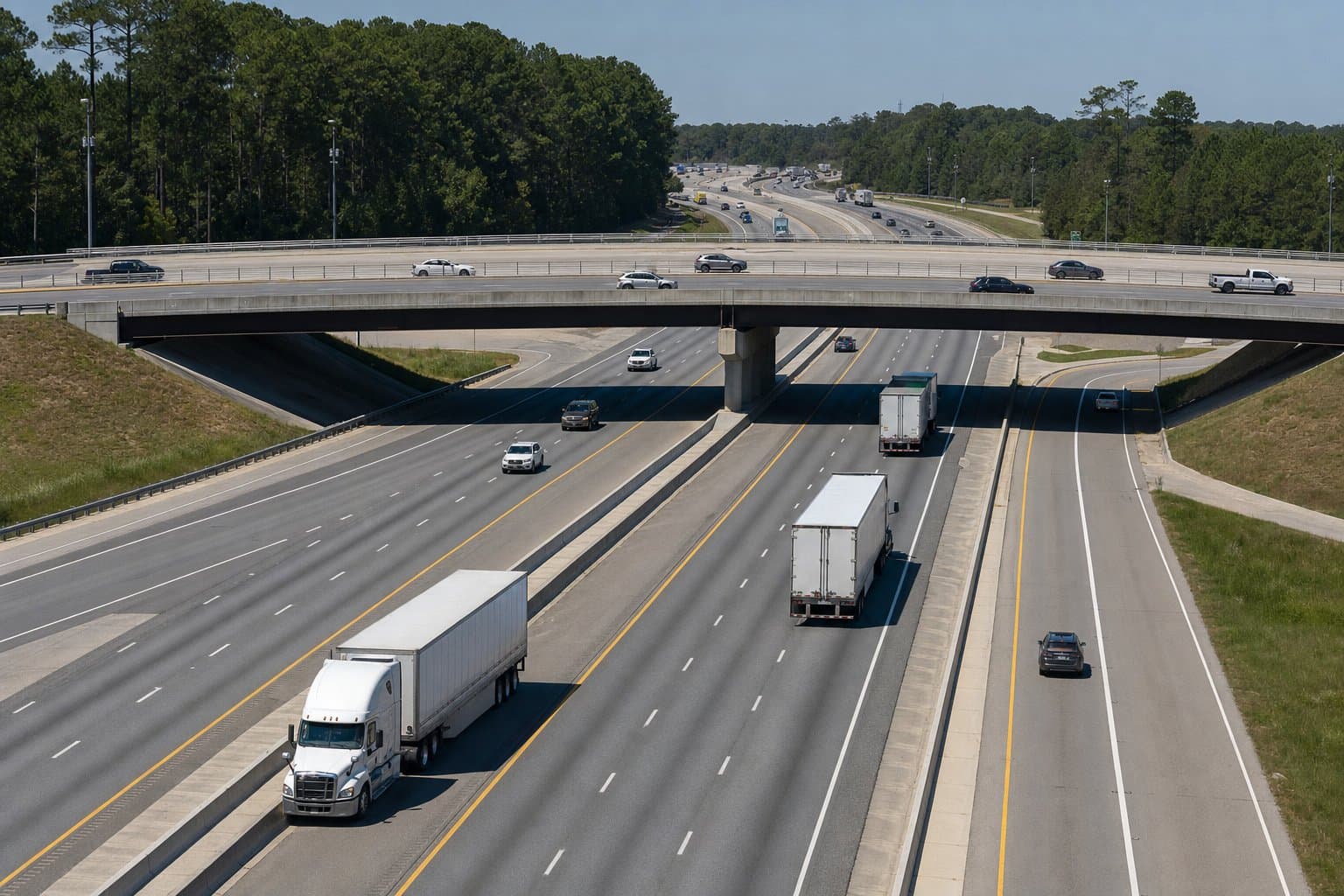
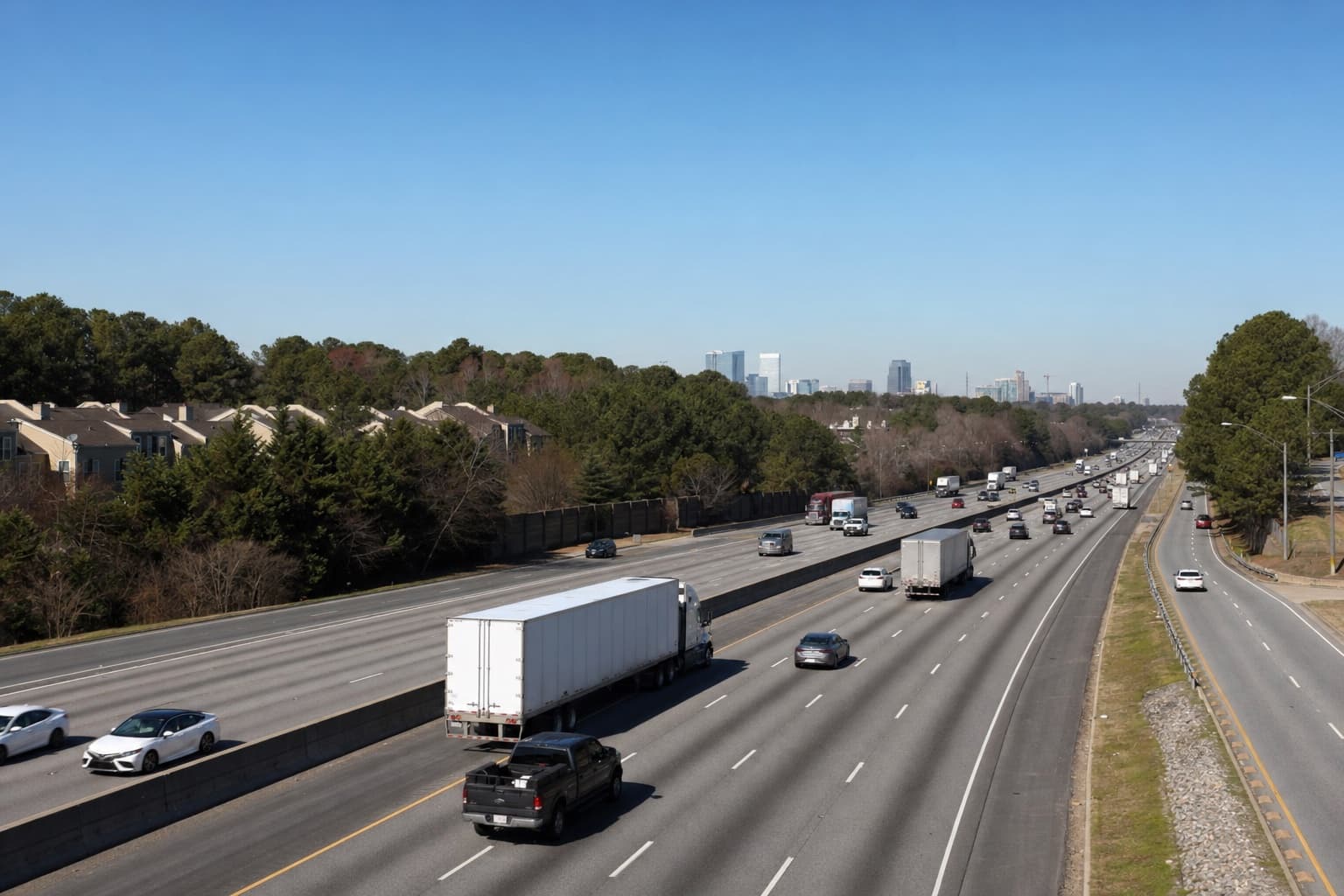
The Northeast Expressway (I-85) runs directly through Brookhaven as a six-lane motorway posted at 65 mph, fed by a parallel I-85 Access Road that channels traffic into high-speed on- and off-ramp merges. This stretch is one of metro Atlanta's primary freight arteries, carrying tractor-trailers between the city's distribution hubs and the northeast suburbs around the clock. According to Georgia Department of Transportation (GDOT) freight data, the majority of freight tonnage moving through the state travels by truck, and interstates like I-85 absorb the heaviest share of that volume.
That mix — heavy commuter traffic, constant freight, and short, fast merges near the access road — is exactly where 18-wheeler crashes cluster. A loaded tractor-trailer needs far more distance to stop than a car, so a sudden slowdown ahead of the Dresden Drive area or near the Maloof Stadium exits can turn into a rear-end override or a jackknife in seconds. The same families who walk to Charles McDaniel Park, Dresden Park, and the Saint Pius X sports fields share local streets with trucks exiting the corridor, raising the stakes for everyone nearby. A Brookhaven truck accident lawyer who knows this corridor can map the merge geometry, the sightlines, and the ramp speeds into a clear liability story.
How an 18-Wheeler Claim Differs From a Car Accident Claim
The single most important thing to understand is that a tractor-trailer case is built on evidence a passenger-car case never touches. Federal rules require commercial carriers to keep hours-of-service records, electronic logging device (ELD) data, and maintenance files — and those records are where negligence usually hides.
| Factor | Typical car accident | I-85 18-wheeler crash |
|---|---|---|
| Likely at-fault parties | Usually one driver | Driver, carrier, broker, shipper, maintenance vendor |
| Governing rules | Georgia traffic law | Georgia law plus FMCSA federal regulations |
| Key evidence | Police report, photos | ECM "black box," ELD logs, dashcam, driver qualification file |
| Insurance limits | Georgia minimum (25/50/25) | Often $750,000 to $1,000,000+ |
| Evidence urgency | Days to weeks | Hours — data can be overwritten quickly |
| Investigators on scene | Rare | Carrier "rapid response" teams, often same day |
That difference in scale is not theoretical. According to Insurance Institute for Highway Safety (IIHS) data, in two-vehicle crashes involving a large truck and a passenger vehicle, the overwhelming majority of those killed are occupants of the passenger vehicle — about 68% in a recent year — because of the enormous weight mismatch. According to National Highway Traffic Safety Administration (NHTSA) crash data, more than 5,700 people were killed in crashes involving large trucks in 2021. When you compare a routine fender-bender to a fully loaded rig, a Georgia car accident lawyer and a truck-focused team approach the same intersection of facts very differently.
Preserving the Electronic Evidence: The First 72 Hours
In a Brookhaven I-85 18-wheeler accident, the clock that matters most is not the two-year statute of limitations — it is the days before the truck's data is overwritten or the rig is repaired and returned to service.
Mark Wade, Founder and Lead Attorney at Georgia Auto Law, puts it directly: in every truck accident case, the first priority is preserving the electronic evidence, because ELD data, black box recordings, and driver logs can be overwritten or destroyed within weeks. Once that information is gone, it is gone — and the carrier knows it.
A truck-accident attorney responds by sending a spoliation letter to the motor carrier immediately, putting it on legal notice to preserve the ECM download, ELD hours-of-service logs, dashcam and telematics data, the driver's qualification file, drug- and alcohol-testing records, and the maintenance and inspection history. Under Georgia law, a company that destroys evidence after receiving such notice can face serious courtroom consequences. That is the evidentiary backbone of the tractor-trailer crash claims our firm handles, and it is why calling a lawyer early changes the outcome.
Have Questions About Your Case?
Get a free consultation with an experienced Georgia accident attorney.
Hours-of-Service and Federal Motor-Carrier Rules
Commercial drivers and the companies that employ them must follow the Federal Motor Carrier Safety Administration's (FMCSA) hours-of-service rules, which cap how long a driver can operate before mandatory rest. According to FMCSA regulations, property-carrying commercial drivers are generally limited to 11 hours of driving within a 14-hour on-duty window after 10 consecutive hours off duty. A driver who blows past those limits to make a delivery deadline on I-85 is a driver more likely to drift, brake late, or fall asleep.
ELD records are designed to make those violations visible — but only if they are preserved before they cycle out. When the logs show a fatigued driver, the case often shifts from "the driver made a mistake" to "the carrier pressured the driver," which is exactly the kind of company-level negligence that drives full and fair compensation.
Who Can Be Held Liable in a Brookhaven Truck Crash
A car wreck usually points to one negligent driver. An 18-wheeler crash on the I-85 corridor often involves a chain of companies, each of which may share fault:
- The driver — for speeding, distraction, fatigue, or unsafe lane changes at the access-road merges.
- The motor carrier — for negligent hiring, inadequate training, pushing illegal schedules, or skipping maintenance.
- The broker or shipper — for hiring an unsafe carrier or for improperly loaded, shifting, or overweight cargo.
- A maintenance contractor — for brake, tire, or coupling failures.
Georgia's apportionment statute, O.C.G.A. § 51-12-33, lets a jury assign a percentage of fault to each responsible party, and the same statute follows the state's modified comparative negligence rule: you can still recover as long as you are less than 50% at fault, with your award reduced by your own share. Identifying every liable party matters because it expands the available insurance coverage — and because the carrier's lawyers will try to pin as much blame on you as they can. A Brookhaven car accident lawyer coordinating with truck-claim specialists keeps that apportionment fight from quietly shrinking your recovery.
Insurance Limits and Underinsured-Motorist Coverage
The good news in a truck case is that interstate carriers must carry far more liability coverage than the Georgia personal-auto minimum of 25/50/25. Federal rules commonly require $750,000 or more, and many fleets carry $1 million policies or layered excess coverage. The bad news is that bigger policies bring more aggressive defense.
If the at-fault trucking company turns out to be underinsured for the severity of your injuries — or if an uninsured driver contributed to the chain-reaction crash — your own underinsured-motorist (UM/UIM) coverage under O.C.G.A. § 33-7-11 may apply. Stacking and coverage analysis is technical, and it is one of the first things a truck-injury team reviews. These same principles support the broader uninsured motorist accident claims we handle across DeKalb County.
What to Do After an I-85 Truck Crash in Brookhaven
If you are able, the steps you take in the first hour protect both your health and your claim:
- Call 911. Brookhaven Police and the Georgia State Patrol investigate crashes on this stretch; their report anchors the official record.
- Get medical care. Adult trauma in the area is handled at metro Atlanta hospitals, and pediatric trauma at Children's Healthcare of Atlanta Arthur M. Blank Hospital roughly 2.5 miles away. Document everything.
- Photograph the scene — the rig, its markings, cargo, skid marks, and the merge or ramp where it happened — if it is safe to do so.
- Get the trucking company and DOT numbers off the cab and trailer.
- Do not give a recorded statement to the carrier's insurer before talking to a lawyer.
- Call a truck-accident attorney quickly so a spoliation letter goes out before the data disappears.
The full picture of your rights as an injured person in DeKalb County is laid out by our Georgia truck accident lawyer team, and you can read more about the firm's coverage of Brookhaven, DeKalb County on our location page. While this guide focuses on 18-wheelers, the same I-85 access-road merges also injure riders; a Georgia motorcycle accident lawyer handles those high-speed merge cases.
Frequently Asked Questions
How long do I have to file an 18-wheeler accident claim in Brookhaven?
Under O.C.G.A. § 9-3-33, you generally have two years from the date of the crash to file a personal-injury lawsuit in Georgia. A Brookhaven I-85 case is filed in the State Court or Superior Court of DeKalb County. Waiting is risky, though — the truck's electronic evidence can be lost long before the legal deadline, so contact a Brookhaven I-85 18-wheeler accident lawyer early.
Why is a tractor-trailer crash treated differently from a car accident?
Because an 18-wheeler can weigh up to 80,000 pounds and is governed by federal FMCSA rules on top of Georgia law. That means more potential defendants, specialized electronic evidence like the ECM "black box" and ELD logs, and far higher insurance limits than an ordinary car wreck.
Who can be held responsible for my I-85 truck crash?
Potentially the driver, the motor carrier, the freight broker, the cargo shipper, and a maintenance contractor. Georgia's apportionment statute (O.C.G.A. § 51-12-33) lets a jury assign a share of fault to each, which is why identifying every party matters for your recovery.
What is a spoliation letter, and why does it matter so much?
It is a formal legal notice demanding that the trucking company preserve evidence — ELD logs, ECM data, dashcam footage, driver files, and maintenance records. Because that data can be overwritten within weeks, sending the letter quickly is one of the most important early steps in a truck case.
How much insurance does a commercial truck carry?
Far more than the Georgia personal-auto minimum of 25/50/25. Interstate carriers commonly carry $750,000 to $1 million or more in liability coverage. If that still falls short of your injuries, your own underinsured-motorist coverage under O.C.G.A. § 33-7-11 may apply.
What if the truck driver was fatigued or over hours?
Federal hours-of-service rules limit property-carrying drivers to 11 hours of driving in a 14-hour window. If ELD records show the driver exceeded those limits — or that the carrier pressured an illegal schedule — that evidence can establish company-level negligence, not just driver error.
Can I still recover if I was partly at fault for the crash?
Yes, as long as you were less than 50% at fault. Under Georgia's modified comparative negligence rule (O.C.G.A. § 51-12-33), your compensation is reduced by your percentage of fault but is not barred unless you reach 50% or more.
What does it cost to hire Georgia Auto Law?
Nothing up front. The consultation is free, and we work on a contingency fee — no fees unless we win your case. Call (404) 662-4949 to speak with a Brookhaven I-85 18-wheeler accident lawyer about your crash.