Key Takeaways
- Two-year deadline. Georgia gives crash victims two years from the date of injury to file suit under O.C.G.A. § 9-3-33. Property-damage-only claims have a separate four-year window.
- Fulton County is the usual venue — but check the Moreland line. Most Grant Park crashes are filed in the State Court of Fulton County or Superior Court of Fulton County; collisions east of Moreland Avenue can fall under DeKalb County jurisdiction.
- Modified comparative fault controls recovery. Under O.C.G.A. § 51-12-33, you recover nothing if found 50% or more at fault, and any award is reduced by your share below that.
- Speed and reckless-driving citations matter. Too-fast-for-conditions and reckless-driving citations under O.C.G.A. § 40-6-180 and O.C.G.A. § 40-6-390 are common on the Moreland and Memorial arterials and anchor liability.
- A city vehicle or road defect triggers a six-month clock. If a City of Atlanta vehicle or a dangerous city-maintained road condition contributed, an ante litem notice is due within six months under O.C.G.A. § 36-33-5.
- Your own UM coverage is a recovery layer. When the at-fault driver flees or carries Georgia's bare minimum limits, uninsured-motorist coverage under O.C.G.A. § 33-7-11 often fills the gap.
- Trauma routing. Grady Memorial Hospital downtown is a Level I trauma center; Emory University Hospital Midtown is a frequent destination, and Hughes Spalding Hospital handles pediatric trauma.
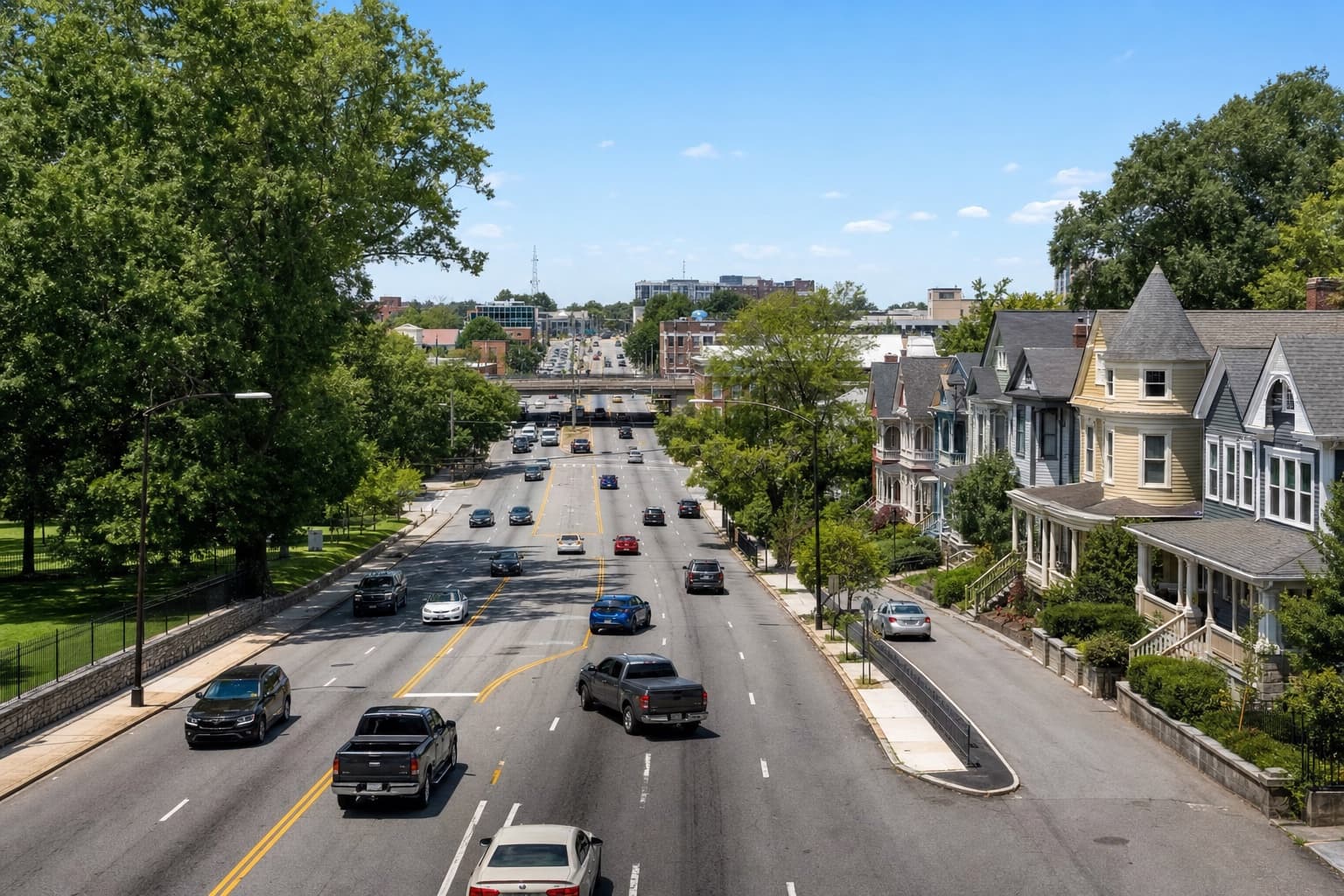
If you were hurt in a wreck near Zoo Atlanta, on the Moreland Avenue corridor, or on one of the narrow historic-district streets like Cherokee Avenue or Boulevard, you need a Grant Park car accident lawyer who already knows this geography — a National Register neighborhood boxed in by Moreland Avenue (US-23) on the east, Memorial Drive along the north, and the I-20 interchanges at Boulevard and Moreland. Your claim runs on Georgia's two-year deadline under O.C.G.A. § 9-3-33, it is usually filed in Fulton County, and it often turns on crash-scene and camera evidence that disappears within weeks.
Last reviewed: June 2026
Why the Grant Park Corridors Produce Serious Crashes
Grant Park looks like a quiet residential neighborhood, and on the inside it is — narrow two-lane streets, on-street parking, and the tree canopy of Grant Park and Zoo Atlanta. The danger sits on the edges, where high-speed arterials wrap a calm residential grid.
Moreland Avenue (US-23 / SR-42) forms the eastern boundary. OpenStreetMap classifies it as a trunk road carrying five lanes at a posted 35 mph, and it functions as a heavy commuter-and-truck artery feeding the I-20 interchange. Five lanes, frequent left turns into and out of businesses, and constant truck traffic make it the most crash-prone stretch on this side of town.
Memorial Drive runs along the northern edge as a high-speed surface arterial, now layered with the entertainment traffic of The Atlanta Dairies — its concerts and events push spikes of unfamiliar drivers onto a road built for through-commuting. Interstate 20 sits just north with high-volume interchanges at Boulevard and Moreland Avenue, where ramp merges dump fast-moving traffic into surface intersections.
Then there is the historic district itself. Cherokee Avenue, Boulevard, and Atlanta Avenue are narrow two-lane residential streets, but commuters use them as cut-throughs to dodge the arterials. On-street parking chokes sight lines, and Zoo Atlanta and Grant Park draw constant pedestrian, stroller, and cyclist traffic across those same streets — especially during the Summer Shade Festival and zoo-event weekends. Add Maynard H. Jackson High School arrival and dismissal traffic and youth-sports weekends at Brownwood Park, and you have predictable surges of conflict.
According to Georgia's Governor's Office of Highway Safety, the state has recorded well over 1,500 traffic fatalities in recent reporting years, with Fulton County consistently among the highest-crash counties in Georgia. According to Georgia Department of Transportation crash data, the state logs roughly 350,000 to 400,000 reportable crashes annually, with the dense metro-Atlanta arterial network like Moreland Avenue concentrating a disproportionate share. According to NHTSA research, speeding is a factor in roughly 29% of all U.S. traffic deaths — which is exactly why too-fast-for-conditions citations on Moreland and Memorial carry so much weight in a liability fight.
Moreland Avenue vs. the Historic-District Streets: What Changes Your Case
Where the crash happened reshapes the evidence, the likely crash type, and sometimes even the county. A T-bone at a five-lane Moreland intersection is a different fight than a sideswipe on a parked-up stretch of Cherokee Avenue.
| Factor | Moreland Ave / Memorial Dr (arterials) | Cherokee Ave / Boulevard / Atlanta Ave (historic grid) |
|---|---|---|
| Road classification | Trunk / high-speed arterial | Two-lane residential |
| Posted speed | 35 mph (often exceeded) | Typically 25 mph |
| Through-traffic | Commuter, truck, event pass-through | Local plus commuter cut-throughs |
| Common crash type | Rear-end, left-turn, T-bone, delivery-truck | Sideswipe, low-speed turning, parked-car conflicts |
| Sight-line problem | Ramp merges, turn-lane weaving | On-street parking blocks visibility |
| Likely county | Fulton (DeKalb east of Moreland) | Fulton County |
| Key citations | § 40-6-180, § 40-6-390 | § 40-6-180, parking/right-of-way |
| Nearest trauma care | Grady Memorial (Level I); Emory Midtown | Same |
Either way, the survivability math does not change with the address: speed kills, and the Moreland and Memorial arterials are built for the kind of speed that turns a survivable wreck into a life-altering one. A seasoned Atlanta car accident lawyer reads the location first, because it dictates the whole strategy.
The Crash Patterns We See in Grant Park
T-bone crashes at the historic-district intersections. At the Cherokee Avenue, Boulevard, and Atlanta Avenue crossings, a driver running a stop control or misjudging a gap broadsides a car with right-of-way. These T-bone intersection crashes cause some of the most severe injuries in the neighborhood because the impact strikes the occupant compartment directly. Liability usually rests on the failure-to-yield driver, proven with the Atlanta Police crash report, intersection-camera footage, and event-data-recorder downloads.
Rear-end and left-turn collisions on Moreland and Memorial. Stop-and-go arterial traffic produces rear-end chains, and the constant left turns across five lanes of Moreland produce left-turn broadsides. Citations under O.C.G.A. § 40-6-180 (too fast for conditions) and § 40-6-390 (reckless driving) frequently anchor fault here.
Delivery-truck and commercial-vehicle collisions on the Moreland corridor. Moreland's commercial traffic includes box trucks and delivery vehicles servicing the corridor's businesses. Delivery-truck accidents add layers — a company employer, a commercial insurance policy, and electronic logs that can be overwritten — so evidence preservation moves to the top of the list immediately.
Sideswipes on the narrow parked-up streets. On-street parking on Cherokee Avenue and Boulevard narrows the usable lane, and two cars meeting on a tight historic block produce mirror-clipping sideswipes and parked-car strikes. Low speed does not mean low injury when necks and backs are involved.
Hit-and-run and uninsured-driver crashes. Mixed local and cut-through traffic raises the odds an at-fault driver flees or carries no insurance. Civil recovery then runs through uninsured motorist accidents coverage under O.C.G.A. § 33-7-11, and the criminal duty-to-stop framework is separate from your civil claim. Same-day reporting and immediate camera preservation drive the outcome on hit-and-run accidents; because Zoo Atlanta and the Beltline draw heavy foot traffic, an Atlanta pedestrian accident lawyer often handles the related walker-and-cyclist conflicts on the same blocks.
Have Questions About Your Case?
Get a free consultation with an experienced Georgia accident attorney.
What Mark Wade Tells Grant Park Clients
Mark Wade, Founder and Lead Attorney at Georgia Auto Law, points out that the single most damaging mistake a Grant Park crash victim makes is giving a recorded statement to the other driver's insurance company before talking to a lawyer. The adjuster opens with sympathy and a simple request to "just confirm what happened," then mines that quote for any admission that nudges the victim toward the 50% bar in O.C.G.A. § 51-12-33. The right move is to decline politely, write down the adjuster's name and claim number, and call a Georgia car accident lawyer the same day so the statutory framework — not the insurer's script — controls the case from the start.
Evidence a Grant Park Car Accident Lawyer Preserves First
Crash cases are won on evidence with a short shelf life. A Grant Park car accident lawyer working a Moreland Avenue or historic-district wreck immediately preserves the Atlanta Police Department crash report and any citations issued under O.C.G.A. § 40-6-180 or § 40-6-390; EMS run sheets and the trauma-center record from Grady, Emory Midtown, or Hughes Spalding; nearby business, residential, and doorbell-camera footage before it overwrites; the at-fault driver's phone records where distraction is suspected; any vehicle event-data-recorder download; commercial logs and insurance policies when a delivery truck is involved; and your own UM declarations under O.C.G.A. § 33-7-11. Serious wrecks on these corridors frequently produce back and spinal injuries, and documenting them early — before the insurer can argue they were pre-existing — is decisive.
Where Your Grant Park Case Is Filed
Grant Park sits inside the City of Atlanta in Fulton County, so the venue analysis is usually clean: most auto-injury suits are filed in the State Court of Fulton County, while the Superior Court of Fulton County handles wrongful-death and higher-value matters. The wrinkle is Moreland Avenue — it runs near the Fulton/DeKalb line, and a collision on the east side of Moreland can fall under the State Court of DeKalb County instead. That distinction shapes the clerk's filing rules and the jury pool, so it gets nailed down at intake. If a City of Atlanta vehicle or a city-maintained road defect contributed, the six-month ante litem clock under O.C.G.A. § 36-33-5 runs much faster than the two-year filing deadline. Our Grant Park personal injury attorneys and broader team of Atlanta personal injury attorneys handle these Fulton and DeKalb courts regularly.
Frequently Asked Questions
Do I need a Grant Park car accident lawyer if the other driver's insurer already called me?
Especially then. The insurer calls early to lock in a recorded statement and a low number before you know the full extent of your injuries. Decline the recorded statement, get the claim number, and speak with a Georgia car accident lawyer before signing anything. The consultation is free and the fee is contingent — no fee unless we recover.
What is the deadline to file a car accident claim after a Grant Park crash?
Generally two years from the date of injury under O.C.G.A. § 9-3-33. Property-damage-only claims get four years. If a City of Atlanta vehicle or a city road defect contributed, an ante litem notice is due within six months under O.C.G.A. § 36-33-5 — much sooner — so do not wait.
Which court will hear my Grant Park car accident case?
Most are filed in the State Court of Fulton County, with the Superior Court of Fulton County handling wrongful-death and higher-value matters. Because Moreland Avenue runs near the county line, a crash on the east side of Moreland can fall under the State Court of DeKalb County instead. We confirm venue at intake.
The other driver fled the scene on Moreland Avenue. Can I still recover?
Often, yes. We pursue two tracks: helping identify the fleeing driver through camera and physical evidence, and filing an uninsured-motorist claim under O.C.G.A. § 33-7-11 against your own policy so you are not left paying for someone else's crime. Report the crash to police the same day.
A delivery truck hit me on the Moreland corridor. Is that different from a regular car crash?
Yes. A commercial vehicle usually means an employer, a commercial insurance policy, and electronic logs that can be overwritten within weeks. Evidence preservation becomes urgent, and the available coverage is typically larger than a personal auto policy's minimum limits under O.C.G.A. § 33-7-11.
What if the crash was partly my fault?
Under Georgia's modified comparative fault rule, O.C.G.A. § 51-12-33, you can still recover as long as you are less than 50% at fault — your award is simply reduced by your percentage of fault. This is exactly why insurers push so hard for a recorded statement that shifts blame onto you.
How much does it cost to hire Georgia Auto Law?
Nothing up front. We work on contingency — no fees unless we win your case — and the initial consultation is free. Call (404) 662-4949.
Talk to a Grant Park Car Accident Lawyer Today
If you or a loved one was hurt on Moreland Avenue, on Memorial Drive near The Atlanta Dairies, at an I-20 interchange, or on a historic-district street like Cherokee Avenue or Boulevard, the two-year clock under O.C.G.A. § 9-3-33 is already running — and the footage that proves your case may overwrite within weeks. Georgia Auto Law handles Grant Park and the surrounding Fulton County corridor on a contingency fee — no fees unless we recover. Call (404) 662-4949 for a free consultation with a Grant Park car accident lawyer who knows this exact stretch of Moreland Avenue and the streets around Zoo Atlanta.