Key Takeaways
- A Sandy Springs East Palisades bicycle accident lawyer typically files in Fulton County State Court (civil, no monetary cap). Wrongful-death and equity claims go to Fulton County Superior Court. Sandy Springs Municipal Court handles traffic citations only.
- Georgia gives you two years from the crash to file a personal-injury suit under O.C.G.A. § 9-3-33.
- A driver must give a cyclist at least three feet of clearance when passing under O.C.G.A. § 40-6-296 and must yield before turning under O.C.G.A. § 40-6-91. Cyclist lane position is governed by O.C.G.A. § 40-6-294 — the defense's favorite statute on East Palisades cases.
- Georgia has no mandatory adult bicycle-helmet law. Helmet non-use is a separate evidentiary fight under modified comparative negligence (O.C.G.A. § 51-12-33), not an automatic fault deduction.
- If the crash happened on Chattahoochee River National Recreation Area land — inside the federal park boundary — a Federal Tort Claims Act notice under 28 U.S.C. § 2675 can become a parallel two-year deadline.
- Cycling-specific digital evidence (helmet-cam, GPS bike-computer, Strava ride file) is decisive — and often overwrites within 30 days.

A Sandy Springs East Palisades bicycle accident lawyer handles a specific kind of Georgia personal-injury case: a cyclist riding to, from, or between the trailheads of the Chattahoochee River National Recreation Area is struck by a driver on one of the narrow approach roads — Indian Trail Road, Whitewater Creek Road, Northridge Road, Mt. Vernon Highway, or Riverside Drive — at a road-to-trail or trail-to-road transition. The case is filed in Fulton County under Georgia's two-year personal-injury statute, O.C.G.A. § 9-3-33, and is often complicated by a federal-park-jurisdiction wrinkle most metro Atlanta cyclist claims never see.
Why the East Palisades Trailhead Cluster Generates So Many Cyclist Crashes
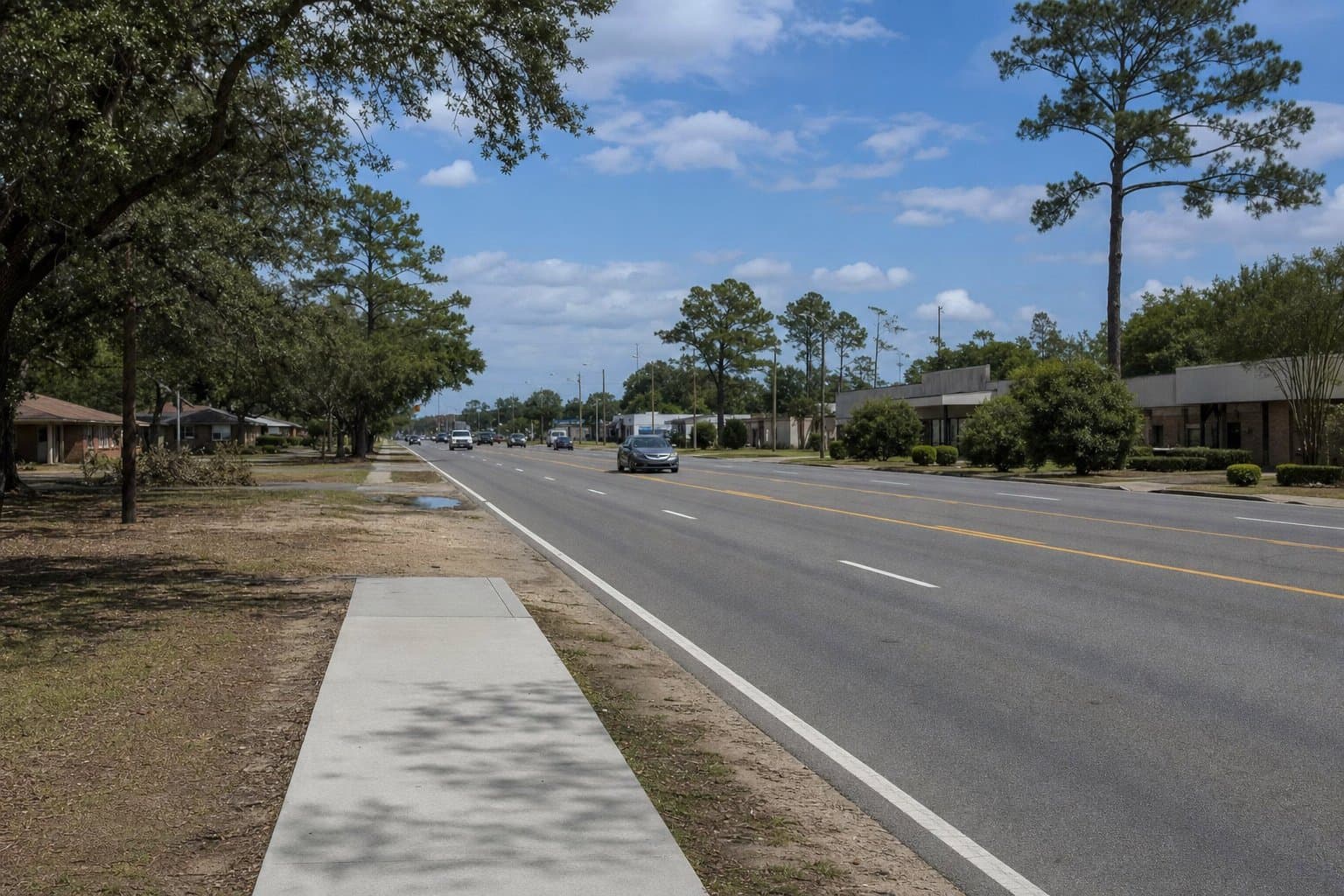
The East Palisades Unit of the Chattahoochee River National Recreation Area sits at the end of Indian Trail Road, a half-mile of narrow, no-shoulder residential asphalt in northwest Sandy Springs. Two more federal trailheads are within a mile — the Akers Mill Unit to the north and the Paces Mill Unit to the south — and they collectively pull tens of thousands of cyclists, runners, and hikers a year. The Bamboo Forest inside the East Palisades Unit drives a weekend volume spike.
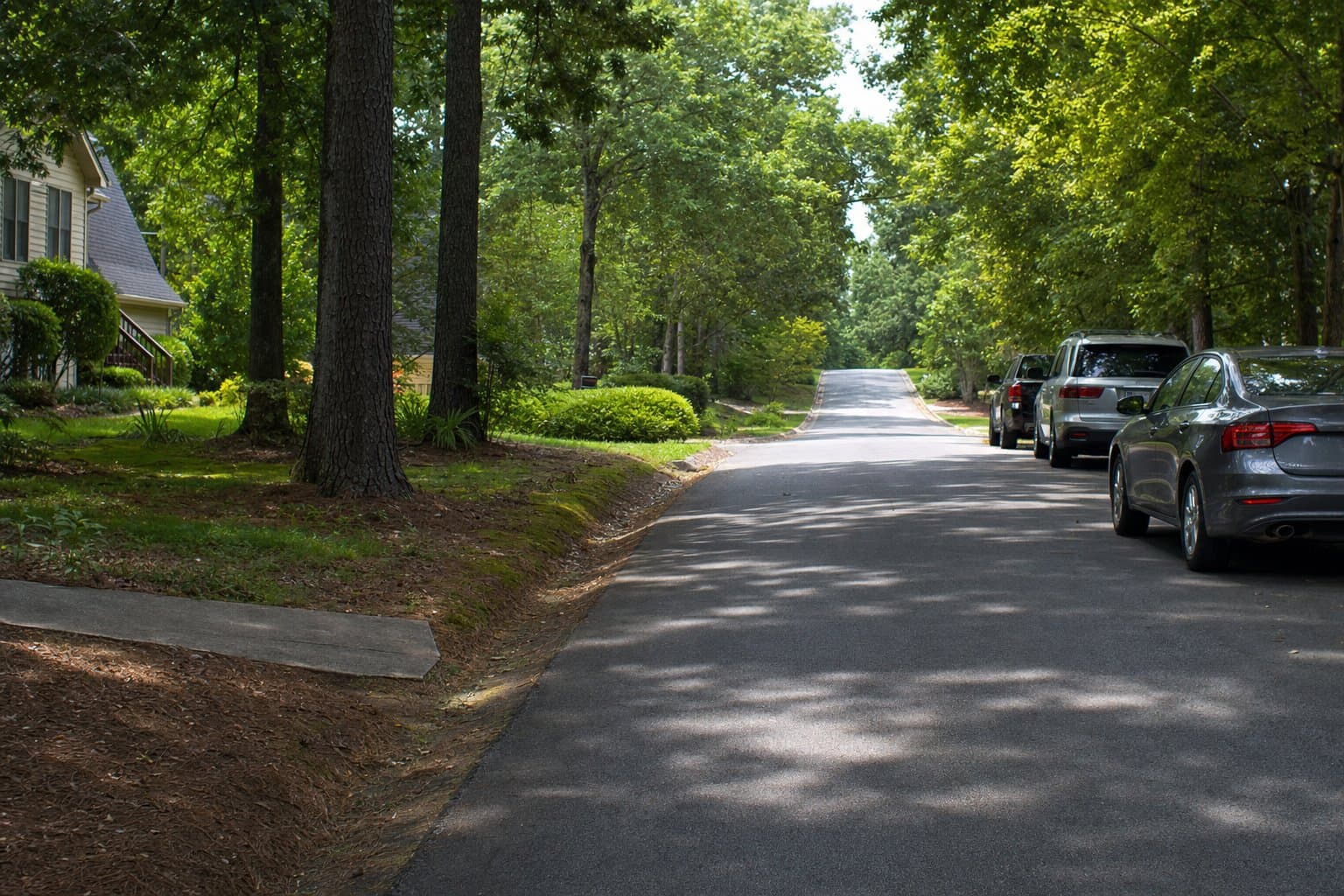
Cyclists riding from the Riverside, Heards Ferry, Powers Ferry, and Mt. Vernon neighborhoods follow a familiar route: a residential street with no bike lane, then a brief stint on Mt. Vernon Highway or Northside Drive, then a sharp transition into a trailhead-access road and finally into the unpaved park trail itself. Each of those transitions — pavement to gravel driveway, road shoulder to trail entrance, parking-lot apron back to pavement — is a conflict point where drivers do not expect a cyclist to be where the cyclist is.
Two other geographic facts amplify risk. First, I-75 (the Horace E. Tate Freeway) runs immediately west of the cluster, and when the interstate backs up at the Mt. Vernon and Cumberland exits, commercial trucks "shortcut" through Riverside Drive — sharing the same blind-curve segments cyclists descend toward the Paces Mill Unit. Second, Truist Park gameday traffic spills out of Cobb County across the Chattahoochee, with rideshare and party-bus drivers using Mt. Vernon Highway as a relief valve on Friday and Saturday nights.
The Numbers: Cyclist Crashes Are Climbing, and the Severity Is Worse
Real numbers from named federal and industry sources, not vague "studies show" framing.
- NHTSA national fatalities. According to the National Highway Traffic Safety Administration's most recent Traffic Safety Facts report, 1,105 pedalcyclists were killed in U.S. motor-vehicle crashes in 2022 — a 13% increase from 2021 and the highest pedalcyclist death toll since 1975. Roughly 84% of those killed were male, and median age was 50, mirroring the recreational-cyclist demographic that fills the East Palisades trailhead parking lots on weekends.
- NHTSA crash circumstances. According to NHTSA, more than 75% of fatal pedalcyclist crashes occur in urban areas, and 20% happen at intersections — both characteristics of the Mt. Vernon Highway / Riverside Drive / Northside Drive corridor.
- NPS visitation context. According to the National Park Service Integrated Resource Management Applications database, the Chattahoochee River National Recreation Area drew more than 3.3 million recreation visits in 2023, with the Palisades and Cochran Shoals units carrying a disproportionate share of weekend volume — the trail-user denominator behind every road-to-trail transition crash in this cluster.
- GHSA on vulnerable users. According to the Governor's Office of Highway Safety, Georgia's pedestrian and pedalcyclist fatalities both exceeded their five-year averages in recent reporting years, with metro Atlanta and Fulton County flagged as elevated-risk corridors.
- IIHS on the three-foot pass. According to the Insurance Institute for Highway Safety, side-swipe and overtaking impacts account for a significant share of fatal urban-cyclist crashes — the exact mechanism Georgia's three-foot-passing rule under O.C.G.A. § 40-6-296 is meant to address.
For a Sandy Springs East Palisades bicycle accident lawyer, those numbers translate to one practical point: the insurance defense bar walks into the case assuming a jury that has read those same headlines. The fight is over whether the cyclist was where the law lets them be — and the proof lives in the cyclist's own digital evidence.
What Actually Hits Cyclists on the East Palisades Approaches
The fact patterns we see most often:
- Right-hook collisions on Mt. Vernon Highway and Riverside Drive. A driver passes a cyclist who is riding in or near the right traffic lane, then turns right across the cyclist's path — into a residential driveway, a trailhead lot, or a side street. Liability anchors under O.C.G.A. § 40-6-91 (duty to yield before turning) and O.C.G.A. § 40-6-296 (three-foot pass). The defense argues O.C.G.A. § 40-6-294 — that the cyclist was not "as far right as practicable."
- Sideswipe and close-pass impacts on the Riverside Drive descent. The road narrows toward the Paces Mill Unit; drivers underestimate closing speed on a downhill cyclist and brush past at well under three feet. The injury pattern is shoulder, clavicle, and wrist broken bones and fractures, plus concussion when the rider is thrown.
- Pull-outs at trailhead driveways. A driver entering or exiting the East Palisades, Akers Mill, or Paces Mill parking apron — or a rideshare drop-off cutting back into the lane — strikes a through-riding cyclist whose path the driver did not check.
- Pavement-to-trail and trail-to-pavement transitions. A cyclist exiting the unpaved park trail onto Indian Trail Road, Whitewater Creek Road, or Northridge Road meets a driver who does not expect a bike to emerge there.
- Dooring and parked-lot apron conflicts on weekends. Overflow parking lines Indian Trail Road; a driver opening a door into the lane catches a passing cyclist.
- Dusk and after-dark crashes on the unlit approaches. Indian Trail Road and Whitewater Creek Road have no continuous lighting; an evening cyclist returning from the trail is struck by a driver whose headlights "missed" the rider — the same dark-road geometry that makes these streets a hit-and-run claim generator.
Each of those mechanisms maps to a different statute, a different defense narrative, and a different evidentiary chokepoint.
Have Questions About Your Case?
Get a free consultation with an experienced Georgia accident attorney.
The Statute the Defense Always Reaches For: O.C.G.A. § 40-6-294
O.C.G.A. § 40-6-294 governs where a cyclist is supposed to ride. The shorthand version — "as far to the right as practicable" — is rarely the full rule. The statute lets a cyclist take the lane when the lane is too narrow to share safely, when the cyclist is preparing for a left turn, when avoiding fixed or moving hazards, and on a road with substandard right-edge conditions (debris, drainage grates, glass, deteriorated pavement). Defense insurers in Sandy Springs cyclist cases almost always argue the cyclist was outside the safe-zone the statute requires; an effective Sandy Springs East Palisades bicycle accident lawyer answers with the statute's own exceptions and with photographic proof of the road's actual right-edge condition.
The table below maps how the same crash looks from each side.
| Issue | Cyclist's argument under O.C.G.A. § 40-6-294 | Driver's argument under O.C.G.A. § 40-6-294 |
|---|---|---|
| Lane position | Rider was as far right as practicable given debris, narrow lane, parked-car door zone, or descent speed matching traffic flow. | Rider was outside the bike lane / out in the travel lane / "took the lane" without justification. |
| Substandard-width lane | Mt. Vernon and Riverside lanes are too narrow to share with a passenger vehicle plus three-foot clearance; cyclist was entitled to control the lane. | Lane was wide enough; cyclist forced overtaking traffic to cross the center line. |
| Hazard avoidance | Cyclist moved left to avoid a drainage grate, broken pavement, leaf litter, or a parked-car door zone — a statutory exception. | No documented hazard; cyclist swerved without warning. |
| Three-foot pass | Driver violated O.C.G.A. § 40-6-296 by overtaking inside three feet; the cyclist's position is irrelevant if the pass itself was illegal. | Cyclist's lane position made a safe pass impossible; comparative-fault deduction applies. |
| Helmet non-use | Georgia has no adult helmet mandate; non-use is admissible only on a properly-laid foundation tying head impact to outcome. | Helmet non-use should reduce damages under § 51-12-33 as failure to mitigate. |
| Lighting at dusk / after dark | Cyclist had front white light and rear reflector under O.C.G.A. § 40-6-296(c); driver's headlights should have illuminated the rider. | Cyclist was inadequately lit; comparative fault under § 51-12-33. |
In Georgia's modified-comparative-negligence regime, every one of those rows is the insurer trying to push the cyclist's fault share toward the 50% recovery bar in O.C.G.A. § 51-12-33. Documented evidence — helmet-cam video, the bike-computer GPS file, daylight photos of the road's right-edge condition — is what keeps a defensible case on the cyclist's side of that bar.
The Helmet-Use Question: Why "He Wasn't Wearing a Helmet" Is Not an Automatic Loss
Georgia law does not require adults to wear a bicycle helmet. (O.C.G.A. § 40-6-296(d) requires helmets only for riders under 16.) Insurance adjusters still raise helmet non-use on every adult head-injury claim because they want a percentage off the top under the comparative-fault statute.
Mark Wade, lead attorney at Georgia Auto Law, points out that helmet non-use is an evidentiary fight, not an automatic comparative-fault deduction — a defendant cannot just say "no helmet" and shave the verdict. The defense has to lay foundation that a helmet would have prevented or mitigated this injury through testimony from a properly qualified biomechanics expert, and the cyclist's response is usually a treating neurosurgeon explaining that the documented impact location, energy, and rotation would have produced the same outcome regardless of headgear. On the East Palisades approach roads in particular, where impact speeds run 35 to 45 mph, the helmet-defense rarely survives a Daubert-style challenge in Fulton County State Court.
A serious cyclist case also turns on getting the head injury documented correctly. Cyclist head impacts produce both immediate diffuse-axonal injury and delayed-onset post-concussive syndrome; an East Palisades client should expect to see a traumatic brain injury attorney routing them to neuro-trauma follow-up alongside emergency orthopedic care. Concussion injury claims ride or die on the gap between the ER chart and the cognitive-symptom diary the cyclist keeps in the first 30 days.
The Federal-Park Jurisdiction Wrinkle on Cyclist Cases
Most cyclist crashes in this cluster happen on Sandy Springs streets — state-court cases in Fulton County. But the boundary of the Chattahoochee River National Recreation Area cuts through this corridor, and the trailhead lots at the East Palisades, Akers Mill, Paces Mill, and Cochran Shoals units sit on federal land.
If your crash occurred inside that NPS boundary — or if a National Park Service vehicle, a federal employee acting in scope, or a dangerous condition on NPS property contributed — the Federal Tort Claims Act governs the federal piece. Under 28 U.S.C. § 2675, you must present a written administrative claim to the relevant federal agency before filing federal suit, and the two-year FTCA deadline runs in parallel with the two-year Georgia personal-injury deadline under O.C.G.A. § 9-3-33. Missing the administrative filing is usually fatal to the federal piece even when the state-court claim against a private driver is still alive.
This is the most-missed wrinkle in this corridor. A cyclist who crashes in the gravel transition at the mouth of the East Palisades parking lot, or who is struck in the lot itself by a driver pulling out, may have both a state claim and a parallel federal claim — and the first 30 days are about preserving NPS gate logs, lot security footage, and any park-vehicle dash-cam before the agency overwrites it.
Fault, Forum, and Comparative Negligence
Georgia is a modified-comparative-negligence state under O.C.G.A. § 51-12-33. A cyclist can recover only if assigned less than 50% of the fault; damages are reduced by the cyclist's percentage share. Defense insurers spend most of their resources trying to push the cyclist past the 50% bar by stacking arguments: rode outside the bike lane, no hand signal, no helmet, no front light at dusk, "darted" out of the trail onto the road.
The forum question is simpler than insurers like to make it sound. A typical East Palisades cyclist case is filed in Fulton County State Court — civil cases, no monetary cap, jury exposure that insurer panels evaluate higher than in suburban Georgia counties. Fulton County Superior Court handles wrongful-death and equity-joined claims. Sandy Springs Municipal Court handles only traffic citations against a charged driver — it is not a civil-recovery forum. If FTCA is in play, the federal piece sits in the U.S. District Court for the Northern District of Georgia after the administrative claim runs out. A Sandy Springs personal injury lawyer handling these cases needs to know how each forum runs its calendar — and how Fulton State Court treats cyclist comparative-fault arguments in voir dire.
What Counts as Evidence in an East Palisades Cyclist Case
The shape of a cyclist case is different from a car-crash case. The evidence the defense wants — driver-side dash-cam, police body-cam — is rarely the deciding piece. The evidence the cyclist controls is.
- Helmet-cam or handlebar-cam footage. Even an old GoPro mounted on the stem captures the close pass that the driver's insurer will later deny. These files overwrite in a loop; pull and back up the SD card within 24 hours.
- GPS bike-computer file. A Garmin, Wahoo, or Karoo unit records second-by-second speed, position, and elevation. The .fit file is decisive when the defense claims the cyclist was speeding downhill or swerved.
- Strava ride file. Auto-uploads from the head unit; the segment data and ride map become contemporaneous corroboration of position and speed at impact.
- Bike damage pattern. Paint transfer, fork bend angle, drivetrain damage, and broken spoke location tell a reconstructionist where the impact landed and from what side.
- Doorbell and trailhead-lot video. Ring and similar systems overwrite in 14 to 30 days. NPS lot cameras have different retention; preservation letters need to go out immediately for both.
- Sandy Springs PD report and any school-zone speed-camera footage. The crash report is typically available 5–7 business days after the crash from the Sandy Springs Records Unit. School-zone camera footage on Northside Drive can be subpoenaed and is sometimes useful corroboration of vehicle speed.
The Atlanta bicycle accident lawyers at Georgia Auto Law route every cyclist client through a same-week digital preservation checklist before turning to the medical and insurance fronts of the case.
Injuries, Trauma Routing, and the Medical Timeline
Cyclist impacts produce a recognizable injury cluster: closed head injury, cervical and thoracic spinal injuries, collarbone and wrist fractures, hip and pelvic fractures from passenger-vehicle hood impact, and rib fractures from secondary ground impact. Internal injuries — splenic laceration, pulmonary contusion — are common and easy to miss in the first ER assessment.
For a cyclist down on the East Palisades approaches, WellStar Windy Hill Hospital (2.58 miles) is closest but is not a Level I trauma center. Northside Hospital Atlanta is the nearest Level III trauma center, roughly three miles east on Johnson Ferry Road. Severe TBI, polytrauma, or unstable patients route to Grady Memorial Hospital — Atlanta's Level I trauma center, about twelve miles south. WellStar Kennestone Hospital in Marietta (Level II) sometimes catches I-75 crashes from north of the I-285 split. The trauma routing decision belongs to the EMS crew; the client's job is to follow the discharge plan and to keep every neuro and orthopedic follow-up appointment, because gaps in care are the second-most-quoted defense argument after lane position.
If the driver who hit the cyclist fled — and Indian Trail Road, Whitewater Creek Road, and Northridge Road make flight unusually easy — civil recovery typically routes through the cyclist's own uninsured-motorist coverage under O.C.G.A. § 33-7-11. Same-day police report, prompt insurer notice, and aggressive doorbell-camera canvassing within 24 to 48 hours are decisive on phantom-vehicle UM claims. Other corridor crashes — driver-on-driver rear-ends at the Mt. Vernon and Cumberland I-75 exits — are an Atlanta car accident attorneys fight in parallel, but the cyclist's own claim is the priority.
What to Do in the First 72 Hours
- Call 911. Sandy Springs Police writes the report inside city limits; Georgia State Patrol works the I-75 segments. Get the case number on scene.
- Get medical attention even if you feel fine. Closed-head, internal, and spinal injuries can present hours later. Tell the ER you were on a bicycle; the injury workup is different.
- Preserve digital evidence within 24 hours. Pull and back up the helmet-cam SD card, export the .fit file from your bike computer, save the Strava ride, and photograph bike damage from every side before any repair.
- Send preservation letters. Ring/doorbell footage in the residential approach overwrites in 14 to 30 days; NPS lot cameras have their own retention. A lawyer should fire those letters in the first week.
- Notify your insurer within 24 hours — but do not give a recorded statement. Recorded statements taken before you have counsel are the single most-used document against the injured cyclist on a Sandy Springs case.
- Flag any federal-jurisdiction issue immediately. If the crash touched NPS land or an NPS vehicle/employee/condition, the 28 U.S.C. § 2675 clock starts the day of the crash.
- Request the crash report from the Sandy Springs Police Records Unit on day 6 — typical availability is 5–7 business days.
These same first-72-hour steps recur on rideshare-driver pull-outs, suburban-driver right-hooks, and after-dark hit-and-run hits. Sandy Springs car accident lawyers handling cyclist cases use the same opening playbook.
Last reviewed: May 26, 2026
Frequently Asked Questions
Do I really need a bicycle accident lawyer for an East Palisades trailhead crash, or can I handle the claim myself?
You can handle a property-only or minor-injury claim yourself, but a cyclist case at this trailhead cluster has three accelerants that make solo handling risky: a defense bar that leans hard on O.C.G.A. § 40-6-294 to push fault past 50%; a federal-jurisdiction wrinkle if any part of the crash touched Chattahoochee River National Recreation Area land; and time-sensitive digital evidence (helmet-cam, GPS bike-computer, doorbell video) that overwrites inside a month. If injuries required ER care or follow-up, getting counsel inside the first week is the lower-risk path.
How long do I have to file an East Palisades cyclist injury claim?
Two years from the crash for personal injury and wrongful death under O.C.G.A. § 9-3-33. If a National Park Service vehicle, employee, or condition on Chattahoochee NRA land contributed, you must also present a Federal Tort Claims Act administrative claim under 28 U.S.C. § 2675 within two years. Your own auto policy contains notice and cooperation conditions that can bite within days, not years.
What if I was not wearing a helmet?
Georgia has no adult bicycle-helmet law. Helmet non-use is admissible only with a proper evidentiary foundation tying head impact to outcome, and even then it is a comparative-fault argument under O.C.G.A. § 51-12-33 — not an automatic deduction. The defense has to prove that a helmet would have prevented or mitigated the specific injury. A treating neurosurgeon's testimony usually neutralizes the argument when impact speeds are typical for the Mt. Vernon Highway or Riverside Drive geometry.
The driver says I was outside the bike lane — does that end my case?
No. O.C.G.A. § 40-6-294 requires a cyclist to ride "as far right as practicable" with statutory exceptions for substandard-width lanes, hazards in the right edge, left-turn preparation, and matching the speed of traffic. Mt. Vernon Highway and Riverside Drive have lane widths that, combined with the three-foot-passing rule in O.C.G.A. § 40-6-296, frequently entitle the cyclist to take the lane. The fight is documentary — photographic proof of the road's right-edge condition almost always resolves the question.
What if the driver fled the scene on Indian Trail Road or Whitewater Creek Road?
You file a hit-and-run claim under your own uninsured-motorist coverage. Under O.C.G.A. § 33-7-11, a fleeing or unidentified driver is treated as uninsured, and your UM coverage becomes the primary recovery source. The strongest hit-and-run UM claims have a same-day Sandy Springs Police report, prompt insurer notice (inside 24 hours), and documentation of the fleeing vehicle — paint transfer, debris, partial plate, direction of travel — plus doorbell-camera canvassing inside 48 hours before residential footage overwrites.
Where will my Sandy Springs cyclist case actually be filed?
In Fulton County. Most Sandy Springs East Palisades bicycle accident lawyer files in Fulton County State Court — civil cases with no monetary cap. Fulton County Superior Court hears wrongful-death claims and cases joined with equity. Sandy Springs Municipal Court is traffic-citation only and is not a civil-recovery forum. If FTCA is in play, the federal piece sits in the U.S. District Court for the Northern District of Georgia after the administrative claim runs.
What is my case worth?
There is no honest number without knowing the medical workup, the disability rating, the wage loss, and the available coverage — including any UM tower stacked above the at-fault driver's policy. What changes the order-of-magnitude on a cyclist case at this cluster is whether the head injury is documented as concussion versus structural TBI, whether the cervical or thoracic spine took a load, and whether the fault analysis stays well under the 50% bar in O.C.G.A. § 51-12-33. Get a free case review before you accept any first offer from a driver's insurer.
Talk to a Sandy Springs East Palisades Bicycle Accident Lawyer
If you or a family member was struck on a bicycle near the East Palisades trailhead, the Akers Mill Unit, the Paces Mill Unit, or along Mt. Vernon Highway, Riverside Drive, Northside Drive, Indian Trail Road, Whitewater Creek Road, or Northridge Road on the Sandy Springs side of the Chattahoochee, Georgia Auto Law can help. We handle cyclist cases with the full mechanical, statutory, and federal-jurisdiction context the corridor demands — helmet-cam and bike-computer preservation, three-foot-pass and lane-position fights under O.C.G.A. § 40-6-294 and § 40-6-296, FTCA notice when NPS land is involved, and filing in Fulton County State Court. Consultations are free and you pay nothing unless we recover for you.
Disclaimer: This article is for general informational purposes only and is not legal advice. Reading it does not create an attorney-client relationship. Statutory deadlines — including the two-year personal-injury statute of limitations under O.C.G.A. § 9-3-33 and the Federal Tort Claims Act administrative-notice deadline under 28 U.S.C. § 2675 — are time-sensitive; consult a qualified Georgia personal injury attorney about your particular situation as soon as possible.