Key Takeaways
- Two-year deadline. Georgia gives pedestrian victims two years from the date of injury to file suit under O.C.G.A. § 9-3-33. Property-damage-only claims have a separate four-year window.
- Jurisdiction is DeKalb, not Fulton. Candler-McAfee is unincorporated DeKalb County; most auto-injury suits are filed in the State Court of DeKalb County, with the Superior Court of DeKalb County handling wrongful-death and higher-value matters.
- Drivers owe pedestrians due care. O.C.G.A. § 40-6-93 imposes an explicit duty on every driver to exercise due care to avoid striking a pedestrian — the "they darted out" excuse does not erase that duty.
- Crosswalk right-of-way is statutory. O.C.G.A. § 40-6-91 requires drivers to yield to pedestrians lawfully within a crosswalk.
- Modified comparative fault applies. Under O.C.G.A. § 51-12-33, a pedestrian recovers nothing if found 50% or more at fault, and any award is reduced by their share below that.
- Hit-and-run triggers your own coverage. O.C.G.A. § 40-6-270 is the duty-to-stop statute; when a driver flees, victims usually recover through their own uninsured-motorist coverage under O.C.G.A. § 33-7-11.
- Trauma routing. Grady Memorial Hospital downtown is a Level I trauma center; Emory Decatur Hospital serves DeKalb directly, and Emory University Hospital Midtown is a frequent destination.
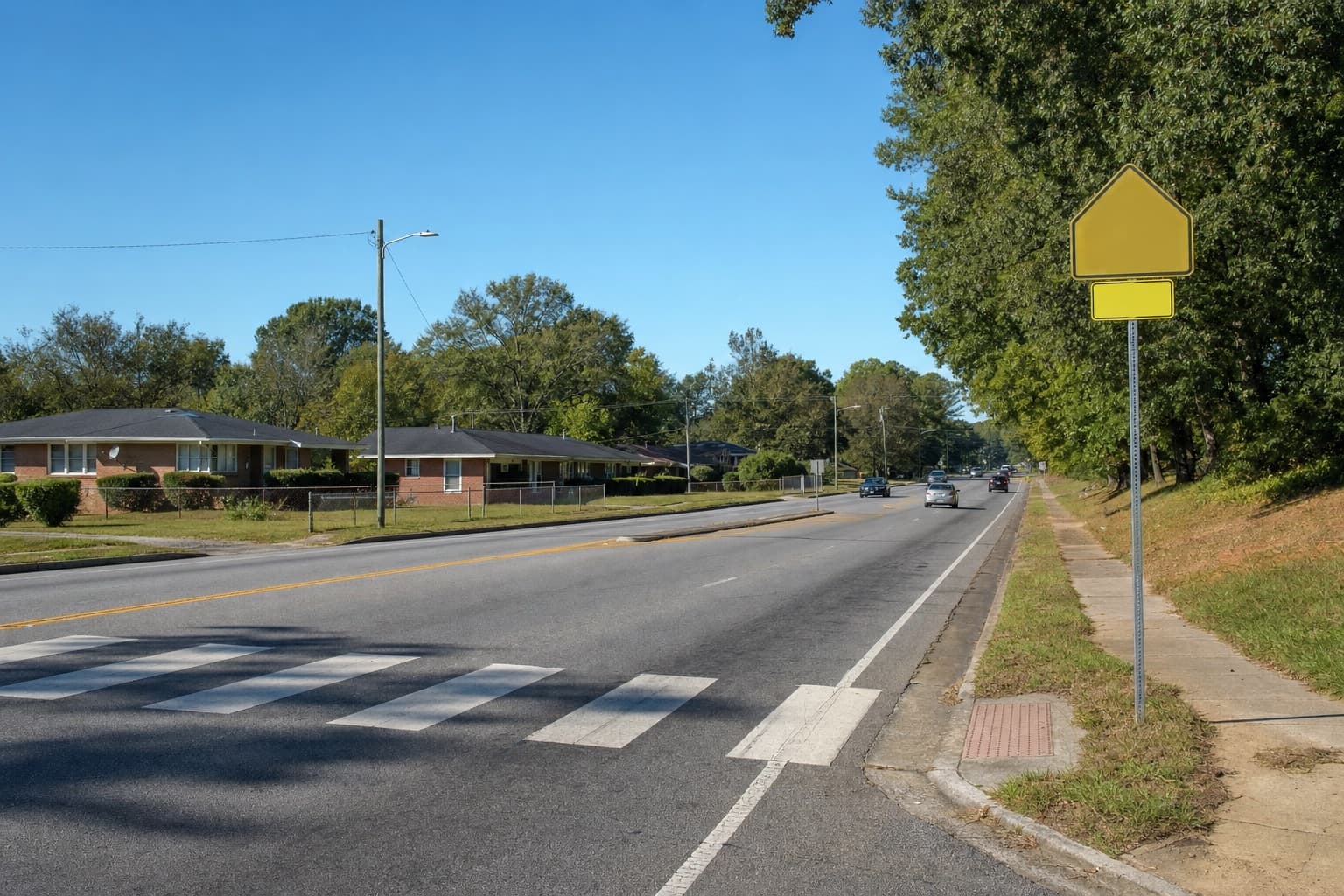
If you or your child was struck while walking near Burgess-Peterson Academy, Terry Mill Elementary School, or anywhere along Glenwood Avenue SE, you are looking for a Candler-McAfee Glenwood Avenue pedestrian accident lawyer who knows this exact corridor — a 35 mph state route (GA 260) that funnels commuter and commercial traffic past a half-mile cluster of schools, on streets where the sidewalk simply stops. Your claim runs on Georgia's two-year deadline under O.C.G.A. § 9-3-33, it is filed in DeKalb County (not Fulton), and it usually turns on evidence that disappears within 14 to 30 days unless someone moves quickly.
Last reviewed: 2026-06-23
Why Glenwood Avenue SE Is a Pedestrian-Hostile Corridor
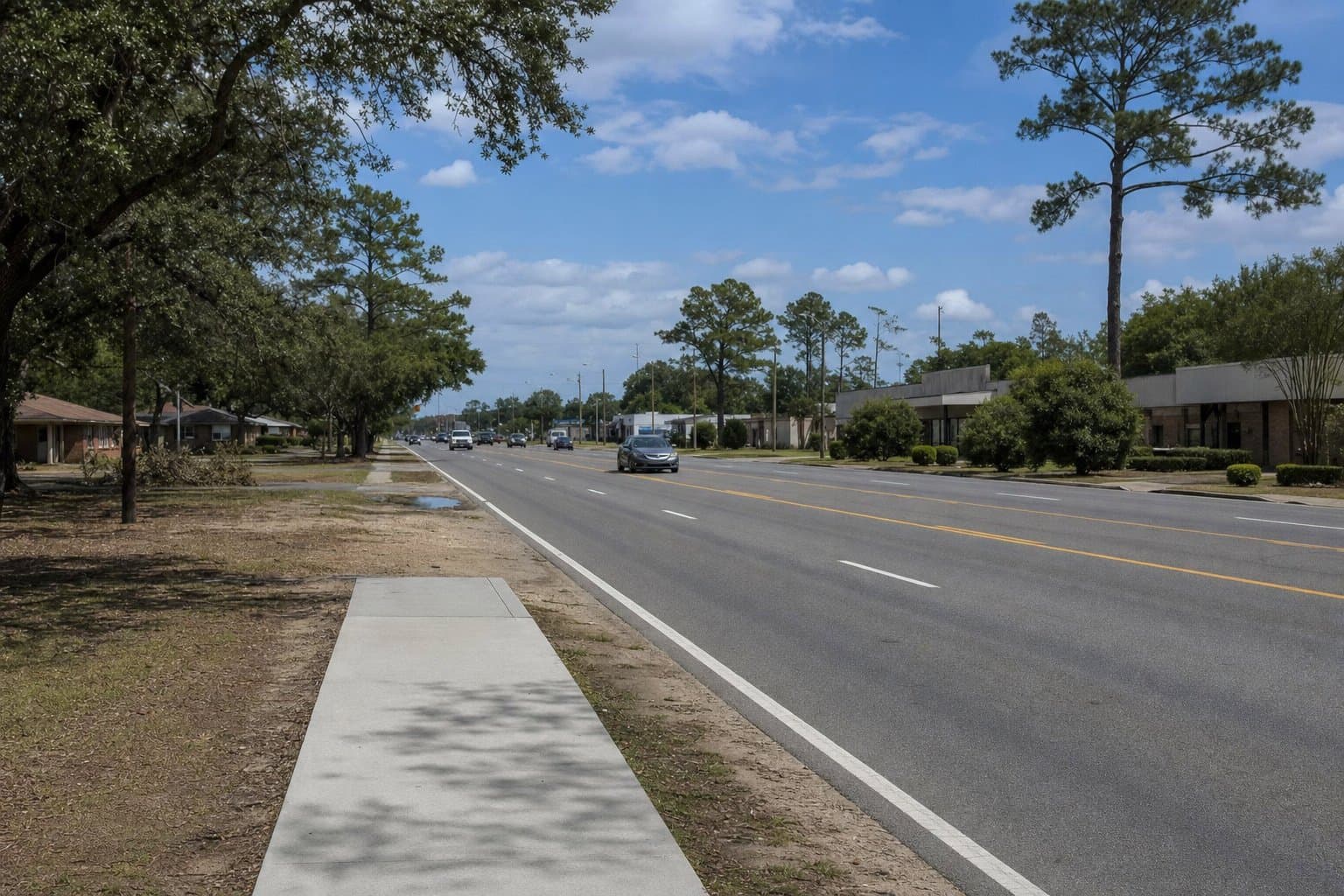
Glenwood Avenue Southeast is the primary surface artery through Candler-McAfee. OpenStreetMap classifies it as a secondary road, it carries the GA 260 state-route designation, and its posted limit is 35 mph as it runs between East Atlanta and Gresham Park. That sounds modest until you stand at the curb: it carries commuter and commercial through-traffic, the residential grid around Braeburn Circle SE feeds onto it from dozens of side streets and driveways, and sidewalk coverage along the corridor is intermittent — it appears, then ends at a grassy shoulder.
Now add the schools. Within a half-mile of the Braeburn Circle area sit Burgess-Peterson Academy, Terry Mill Elementary School, East Atlanta Middle School, and Charles R Drew Charter School. That cluster generates concentrated foot traffic and school-bus activity in the 7:00–8:00 a.m. and 2:30–3:30 p.m. windows — exactly when drivers are rushing toward I-20. The Ralph David Abernathy Freeway (I-20) bounds the community on the south as a five-lane, 60 mph motorway, and rush-hour congestion backs onto the interchange ramps, pushing frustrated, fast-moving traffic onto the same neighborhood streets children cross on foot.
According to NHTSA's Fatality Analysis Reporting System, 7,522 pedestrians were killed in U.S. traffic crashes in 2022 — the highest annual total since 1981 and a 77% increase since 2010. The deaths cluster on exactly the kind of arterial Glenwood Avenue represents.
According to Georgia's Governor's Office of Highway Safety, the state recorded 333 pedestrian fatalities in 2022, with metro Atlanta counties repeatedly flagged among the highest-risk jurisdictions in the state.
According to CDC research, a pedestrian struck at 30 mph faces roughly a 45% risk of severe injury or death; at 40 mph that risk climbs to about 85% — figures published by the Centers for Disease Control and Prevention. A driver running just 5 mph over Glenwood's posted 35 mph puts a struck pedestrian squarely inside the high-fatality band.
According to Federal Highway Administration data — reinforced by Smart Growth America's Dangerous by Design reporting and the Federal Highway Administration's pedestrian-safety program — arterial roads with multiple travel lanes and posted speeds at or above 30 mph account for a disproportionate share of pedestrian deaths, and patchy sidewalk coverage forces pedestrians into the roadway, compounding the risk.
Glenwood Avenue SE vs. the Residential Grid: What Changes Your Case
The legal picture shifts depending on where you were struck. A strike at a marked Glenwood crosswalk is a different evidentiary fight than a strike on an unlit residential lane with no sidewalk at all.
| Factor | Glenwood Avenue SE (GA 260) | Braeburn Circle SE / residential grid |
|---|---|---|
| OSM road classification | Secondary state route (GA 260) | Residential |
| Posted speed | 35 mph | Typically 25 mph |
| Through-traffic | Commuter and commercial pass-through | Mostly local |
| Sidewalk coverage | Intermittent; gaps force road walking | Frequently absent |
| Crossing protection | Limited marked crosswalks, long gaps | Largely uncontrolled |
| Common crash type | Crosswalk and mid-block strikes; turning conflicts | Backing, low-speed turning, hit-and-run |
| Key statute | § 40-6-91 (crosswalk right-of-way) | § 40-6-93 (driver due care) |
| Nearest trauma care | Grady Memorial (Level I); Emory Decatur | Same |
Either way, the case is filed in DeKalb County, and the survivability math from the CDC figures above does not change: speed kills pedestrians, and Glenwood's design speed sits right at the inflection point.
The Pedestrian-Strike Patterns We See in Candler-McAfee
School-zone strikes near Burgess-Peterson Academy and Terry Mill Elementary. A student, parent, or staff member crosses during morning arrival or afternoon dismissal and is struck by a commuter who never adjusted to the reduced school-zone limit. The driver's duty under O.C.G.A. § 40-6-93, paired with crosswalk right-of-way under O.C.G.A. § 40-6-91, anchors liability. A Georgia pedestrian accident lawyer defeats the "darted out" defense with school-zone signage records, DeKalb County Police crash reports, and any corridor or doorbell-camera footage.
Mid-block strikes where the sidewalk ends. When the sidewalk along Glenwood disappears, pedestrians are pushed into the travel lane or onto the shoulder. A driver who strikes someone walking where the infrastructure forced them carries the due-care burden under O.C.G.A. § 40-6-93 — the absence of a sidewalk is the road owner's failing, not the victim's.
Turning-conflict strikes at side-street intersections. Drivers turning off Glenwood onto the Braeburn Circle grid (or vice versa) routinely fail to scan for people in the crosswalk. These low-speed turning strikes still cause serious injuries and are squarely covered by the crosswalk right-of-way rule.
Hit-and-run strikes on the residential grid. Mixed local and pass-through traffic raises the odds that an at-fault driver flees. The criminal duty to stop is in O.C.G.A. § 40-6-270, but civil recovery typically runs through the victim's own UM policy under O.C.G.A. § 33-7-11. Same-day reporting and immediate camera preservation drive hit-and-run accident claims outcomes; an experienced Atlanta hit-and-run lawyer moves on both tracks at once.
Have Questions About Your Case?
Get a free consultation with an experienced Georgia accident attorney.
What Mark Wade Tells Pedestrian Clients in Candler-McAfee
Mark Wade, Founder and Lead Attorney at Georgia Auto Law, points out that the single most damaging mistake a Candler-McAfee pedestrian victim makes is giving a recorded statement to the driver's insurance company before retaining counsel. The adjuster opens with sympathy and a request to "just confirm what happened," then uses that quote to nudge the pedestrian above the 50% bar in O.C.G.A. § 51-12-33. The right move is to decline politely, write down the adjuster's name and claim number, and call a Atlanta pedestrian accident lawyer the same day so the statutory framework — not the insurer's script — controls the case from day one.
Evidence a Candler-McAfee Glenwood Avenue Pedestrian Accident Lawyer Preserves First
Pedestrian cases are won on evidence that has a short shelf life. A Georgia car accident lawyer working a Glenwood corridor strike immediately preserves the DeKalb County Police crash report and any citations issued under O.C.G.A. § 40-6-91 or § 40-6-93; EMS run sheets and the trauma-center record from Grady, Emory Decatur, or Emory Midtown; nearby business, residential, and doorbell-camera footage before it overwrites; the at-fault driver's phone records where distraction is suspected; any vehicle event-data-recorder download; and your own UM declarations under O.C.G.A. § 33-7-11 — the recovery layer in every hit-and-run or uninsured-driver scenario on these streets.
Where Your Case Is Filed
Candler-McAfee is unincorporated DeKalb County, so the venue analysis is straightforward but jurisdiction-specific: most auto-injury suits are filed in the State Court of DeKalb County, while the Superior Court of DeKalb County handles wrongful-death and higher-value matters. This is not Fulton County, and that distinction shapes everything from the clerk's filing rules to the jury pool. Our East Atlanta personal injury attorneys handle the neighboring DeKalb corridor, and our Decatur DeKalb County injury lawyers try cases in these same DeKalb courts regularly.
Frequently Asked Questions
Do I need a Candler-McAfee Glenwood Avenue pedestrian accident lawyer if the driver's insurer already called me?
Especially then. The insurer calls early to lock in a recorded statement and a low number before you understand your injuries. Decline the recorded statement, get the claim number, and speak with a Georgia pedestrian accident lawyer before signing anything. The consultation is free and the fee is contingent — no fee unless we recover.
What is the deadline to file a pedestrian injury claim in DeKalb County?
Generally two years from the date of injury under O.C.G.A. § 9-3-33. Wrongful-death claims also run two years; property-damage-only claims get four. Waiting is risky because crash-scene and camera evidence is often gone in 14 to 30 days.
Which court will hear my Candler-McAfee pedestrian case?
Because Candler-McAfee is in DeKalb County, most auto-injury suits are filed in the State Court of DeKalb County. The Superior Court of DeKalb County handles wrongful-death and higher-value matters. These are DeKalb courts, not Fulton.
The driver says my child "ran out" near the school. Can we still recover?
Often, yes. O.C.G.A. § 40-6-93 requires every driver to exercise due care to avoid striking a pedestrian, and that duty is heightened in a posted school zone near Burgess-Peterson Academy or Terry Mill Elementary. Under O.C.G.A. § 51-12-33 you can recover as long as you are less than 50% at fault, with any award reduced by your share.
What if the driver fled the scene on Glenwood Avenue?
That is a hit-and-run under O.C.G.A. § 40-6-270. Report it the same day, and we pursue two tracks: helping identify the fleeing driver through camera and physical evidence, and filing an uninsured-motorist claim under O.C.G.A. § 33-7-11 against your own policy so you are not left paying for someone else's crime.
What compensation can a pedestrian recover?
Medical bills (current and future), lost wages and lost earning capacity, pain and suffering, and — in fatal cases — the full value of the life of the deceased through a wrongful-death claim. The right number depends on injury severity and the available insurance and UM layers.
How much does it cost to hire Georgia Auto Law?
Nothing up front. We work on contingency — no fees unless we win your case — and the initial consultation is free. Call (404) 662-4949.
Talk to a Candler-McAfee Glenwood Avenue Pedestrian Accident Lawyer Today
If you or a loved one was struck on Glenwood Avenue SE — at a school crosswalk near Burgess-Peterson Academy, mid-block where the sidewalk ends, or on a Braeburn Circle side street — the two-year clock under O.C.G.A. § 9-3-33 is already running, and the footage that proves your case may overwrite within weeks. Georgia Auto Law handles Candler-McAfee and the surrounding DeKalb County corridor on a contingency fee — no fees unless we recover. Call (404) 662-4949 for a free consultation with a Georgia pedestrian accident lawyer who knows this exact stretch of Glenwood Avenue.